
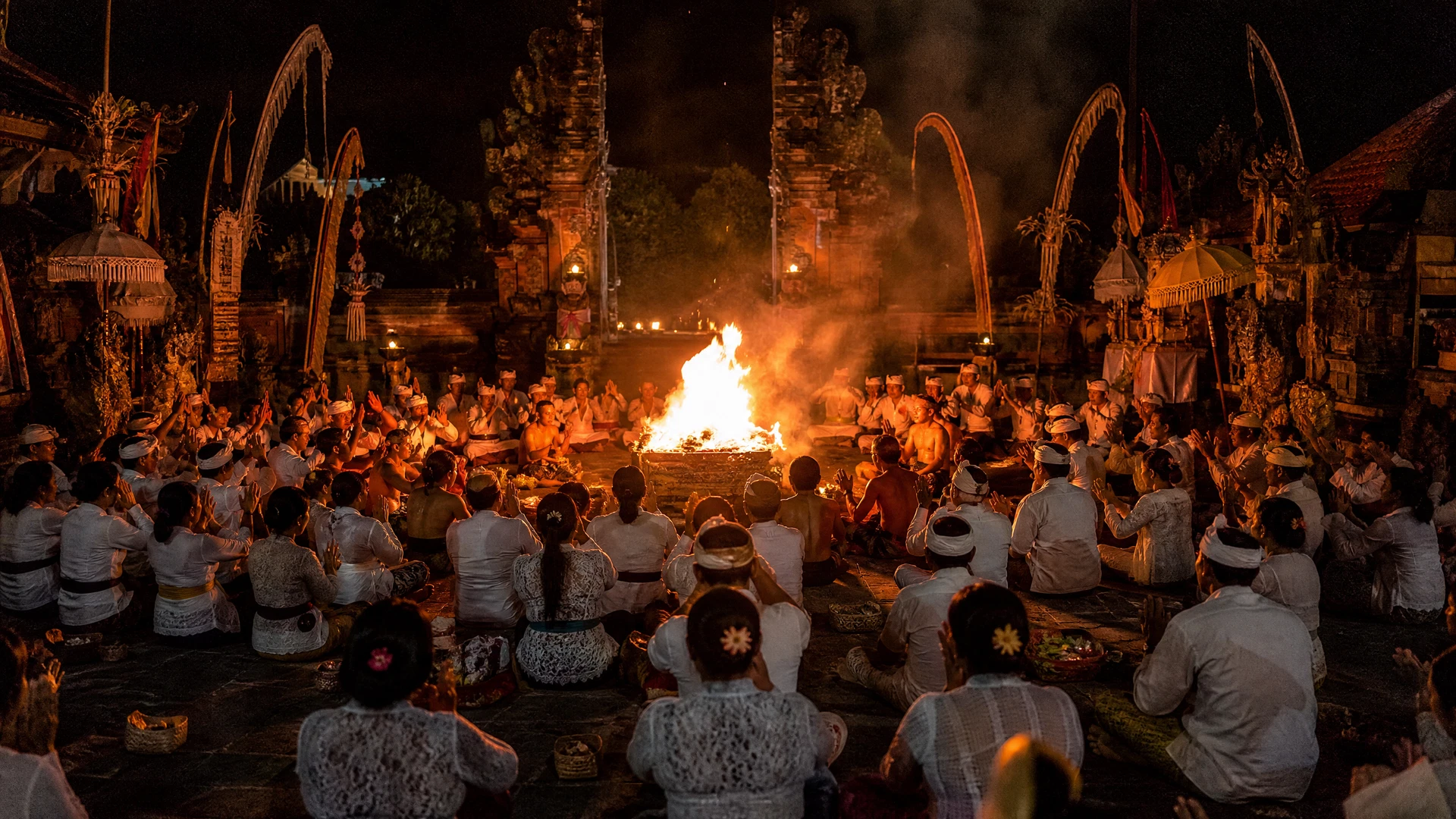
The Balinese fire ceremony is the moment most retreat guests remember longest — including the sceptics, and sometimes especially them. Rooted in the Hindu ritual of agni hotra, the ceremony treats fire as a sacred witness: what you give to the flames, sincerely, does not return to you. This article explains where the tradition comes from, what actually happens, and why a ritual thousands of years old still works on modern nervous systems.
Fire in Balinese Hindu Tradition
Bali practises a distinctive form of Hinduism — Agama Hindu Dharma — that weaves Indian Vedic roots together with older island traditions of ancestor and nature reverence. Within it, Agni, the fire deity, serves as messenger: fire carries offerings from the human world to the divine one, and burns away impurity in the crossing. Balinese life is saturated with this symbolism, from cremation rites that free the soul to the small flames on daily household offerings.
The agni hotra fire ritual itself is among the oldest continuously practised ceremonies on earth, with Vedic origins stretching back roughly three thousand years. When you sit at a ceremonial fire in Bali, you are joining an extremely long queue of humans who brought their burdens to a flame.
What Happens During the Ceremony
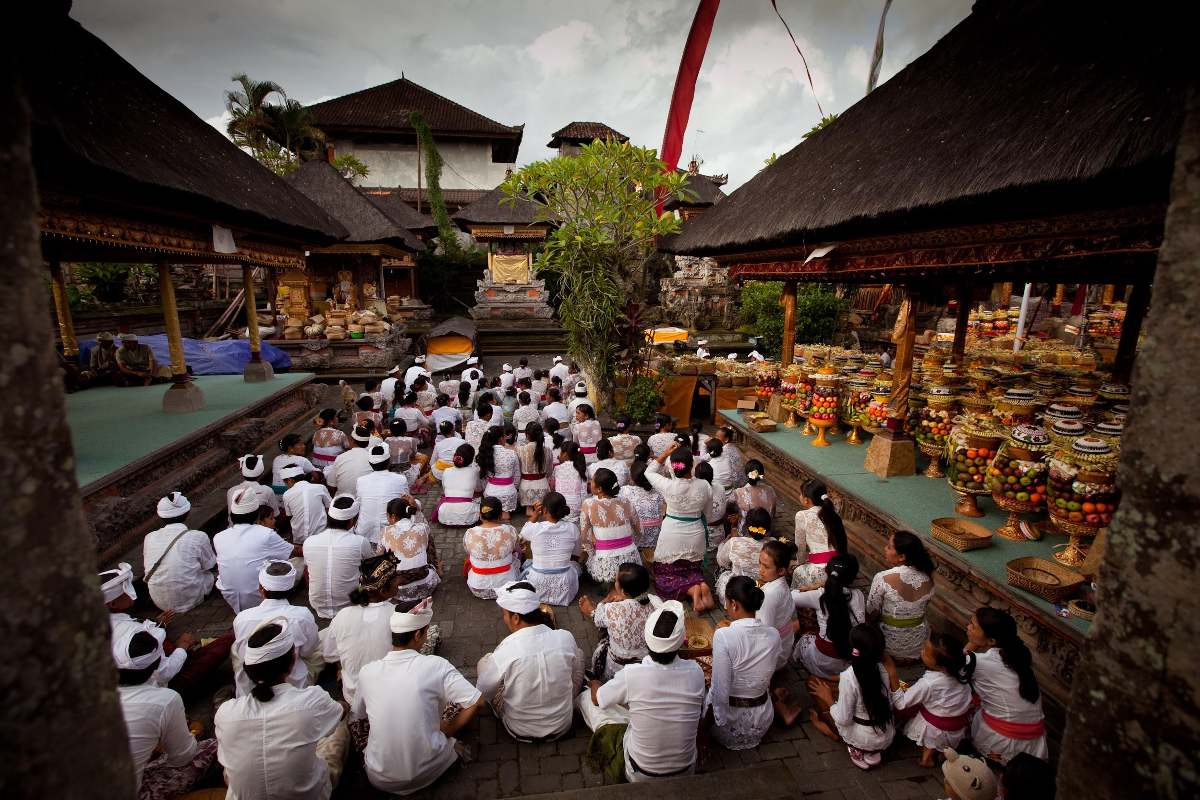
A traditional ceremony is led by a Balinese priest — a pemangku — usually in the evening, in ceremonial dress, with offerings of flowers, rice and incense prepared beforehand. Guests sit in a circle around the fire as prayers and mantras are chanted. Then comes the part everyone remembers: each person writes on paper what they intend to release — a fear, a habit, a grief, a story about themselves that has expired — and, one by one, gives the paper to the flames.
There is no audience and no performance. The fire does not care whether your handwriting is neat or your belief is complete. It burns what it is given, in front of witnesses, and something in that combination is remarkably difficult to fake your way through.
Why the Ritual Works — Even on Sceptics
Psychology offers a respectful explanation. Writing an intention forces vague inner weight into specific words — already a therapeutic act. Destroying the paper enacts the decision physically, and embodied actions imprint more deeply than thoughts alone. Witnesses make it social: a commitment observed is a commitment strengthened. And ritual solemnity marks a boundary in time — before the fire and after it — that gives change a date. None of this requires belief in Agni. All of it explains why guests describe the evening as unexpectedly moving.
Taking Part Respectfully
Visitors are welcome at ceremonies arranged with local priests, and respect is straightforward: wear the sarong and sash provided, follow the pemangku's lead, keep phones away, and treat the offerings as sacred objects rather than props. Balinese hosts are generous with their tradition; meeting that generosity with sincerity is the entire etiquette.
Beyond the Fire: Bali's Wider Ceremonial Life
The fire ceremony is one thread in an island woven from ritual. Every morning, women lay canang sari — small palm-leaf trays of flowers, rice and incense — on doorsteps, dashboards and shrine ledges: several million offerings a day, made without fuss, as ordinary as breakfast. Water blessings at temples like Tirta Empul draw locals and visitors into the same cool springs. Nyepi, the day of silence, closes the entire island once a year — even the airport. Guests who arrive for yoga often leave most moved by this: a society that still makes time, publicly and daily, for the sacred.
What Guests Write, and What They Say After
Organisers never read the papers — that is the covenant of the ritual — but guests often share afterwards, unprompted. The themes repeat across every group: a resentment carried for years; a version of themselves that a job built and a body paid for; a grief that never found a funeral; the word "should," written alone, underlined twice. What people report weeks later is not that the released thing vanished — fire is not magic — but that it changed weight. The commitment made in front of the flames, witnessed by twenty people who spent a week becoming real to each other, holds differently from a promise made alone in January. That, perhaps, is the ceremony's honest mechanism: not the burning, but the witnessing.
Fire as the Week's Full Stop
On the YogaFX retreat, the Balinese fire ceremony closes the week deliberately: five days of physical detox, strong practice and quiet reckoning, gathered into one evening of release. What you wrote down does not come home with you. See where the ceremony sits in the 6-day journey, read about our local partnerships, and register your interest to experience it beside the fire yourself.