A meditation retreat in Bali answers the complaint every beginner makes: "I can't meditate — my mind is too busy." Of course it is. You have been asking it to fall silent in the ninety seconds between emails, in a home full of noise, guided by a phone that is itself the biggest interruption in your life. Change the conditions and the practice changes. That is the entire argument for a retreat, and this article explains it honestly.
Why Meditation Fails at Home
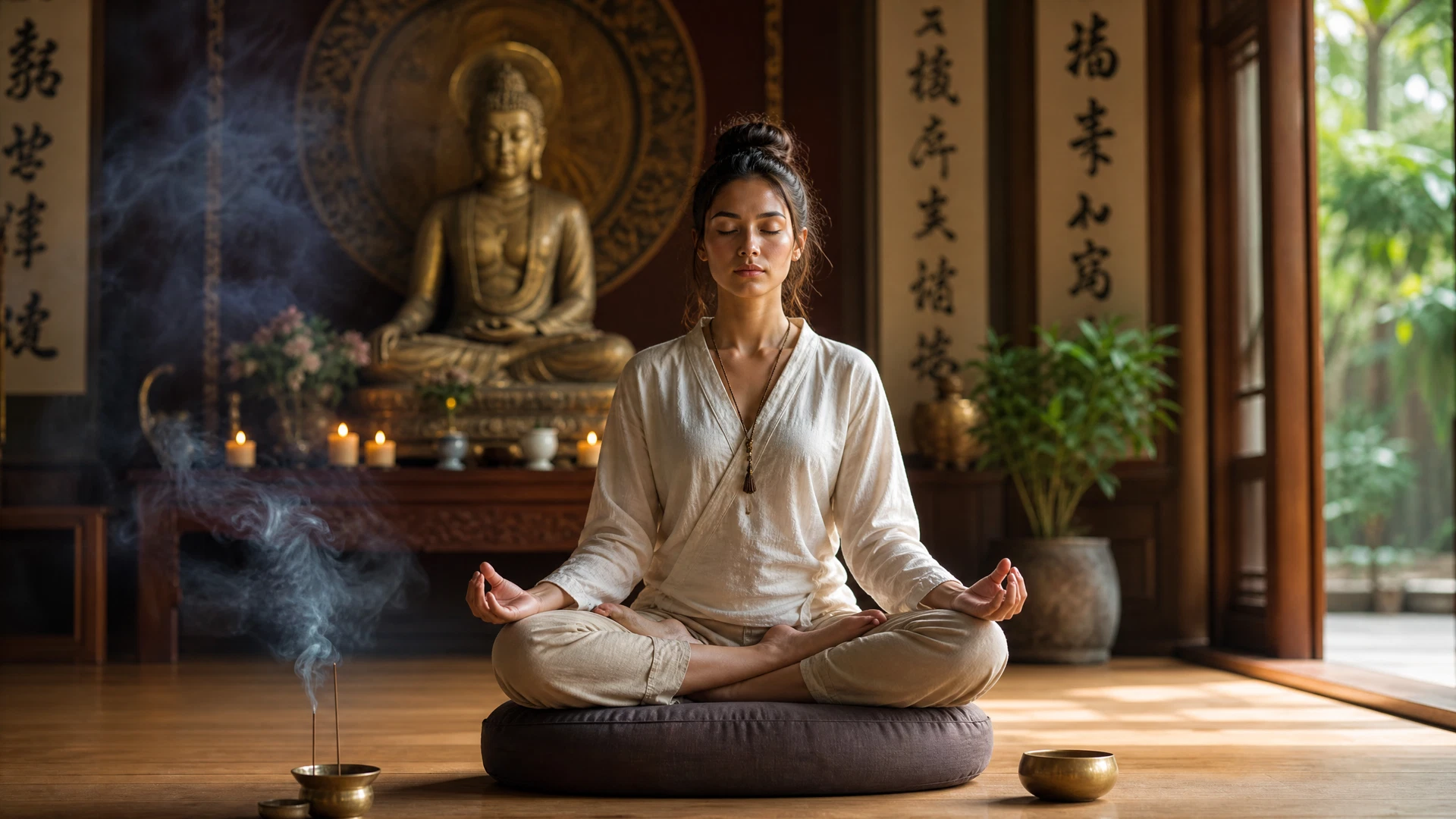
Meditation is not a talent; it is a training that depends heavily on environment. At home, your nervous system stays partially alert — for the doorbell, the children, the notification you swore you silenced. Ten borrowed minutes cannot compete. Neuroscience is clear that attention training works, lowering stress reactivity and improving focus; it is equally clear that dosage and conditions determine results. A retreat supplies both.
What a Meditation Retreat in Bali Provides
Four things, none replicable by an app. Silence as infrastructure: the North Bali highlands offer mornings where the loudest sound is birdsong, and silence you do not have to manufacture is silence your body actually trusts. A live teacher: someone who has sat with every difficulty you will meet — restlessness, sleepiness, doubt — and can answer yours specifically. Repetition: several sessions daily, so each sit begins where the last ended instead of starting from zero. And the group: twenty people sitting together generate a settled quality of attention that surprises every sceptic who feels it.
The Techniques You Will Actually Practise
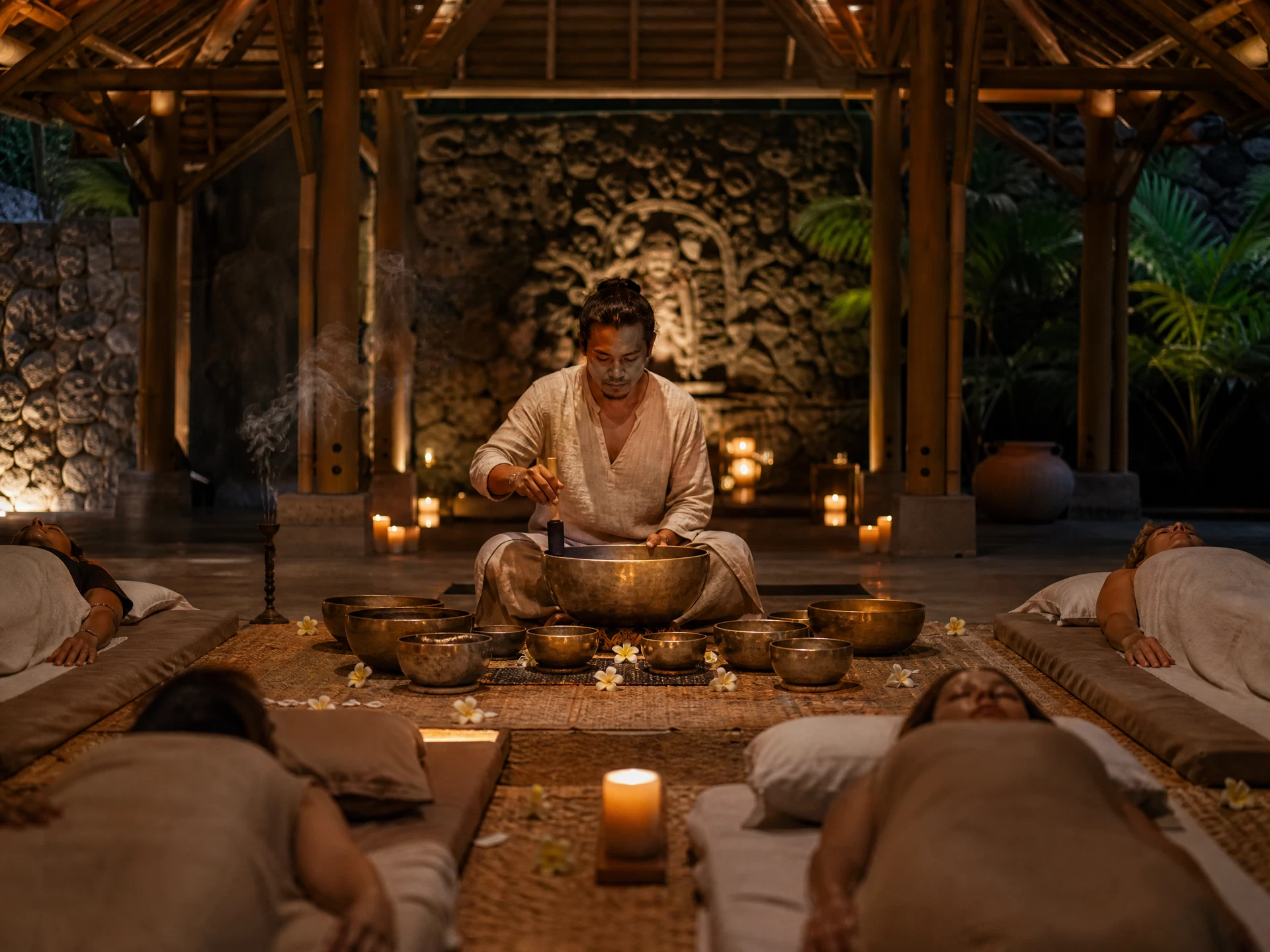
Good retreats teach a range rather than a dogma. Breath-anchored mindfulness builds the base skill of returning attention. Body scanning trains interoception — the felt sense of your own state — which research links to emotional regulation. Walking meditation turns rice-terrace paths into practice. Sound-supported meditation uses singing bowls to lower the threshold into stillness. And loving-kindness practice, easy to dismiss until tried, reliably softens the self-criticism that drives much modern exhaustion.
What Happens to a Mind Over Six Days
Day one, you fidget. Day two, you argue with the technique. Around day three, something loosens — thoughts keep arriving, but the space around them widens, and you stop taking every one personally. By day five, sitting feels less like effort and more like putting something heavy down. This progression is so consistent that teachers can almost timetable it. It cannot be rushed, and it almost never happens without the container of consecutive days.

Taking Stillness Home
The retreat's real product is not a peak experience; it is a portable skill. You leave knowing what settled attention feels like from the inside — which makes it findable again in ordinary life, ten minutes at a time. Guests who anchor a short daily sit to an existing habit keep the benefit for months.
Common Worries, Honestly Answered
"I'll be the only one who can't do it." You will be in the majority; nearly everyone arrives believing their mind is uniquely unmanageable. "Sitting still hurts." Chairs, cushions, walls and walking practice all count; nobody earns extra stillness through knee pain. "It might be religious." Techniques are taught secularly; what you bring to them spiritually is entirely your own business. "A week is too long to be quiet." The days include movement, meals, nature and conversation — this is a meditation-rich retreat, not a silent monastery, and the balance is designed for modern beginners.
Why Bali, Specifically, for Stillness
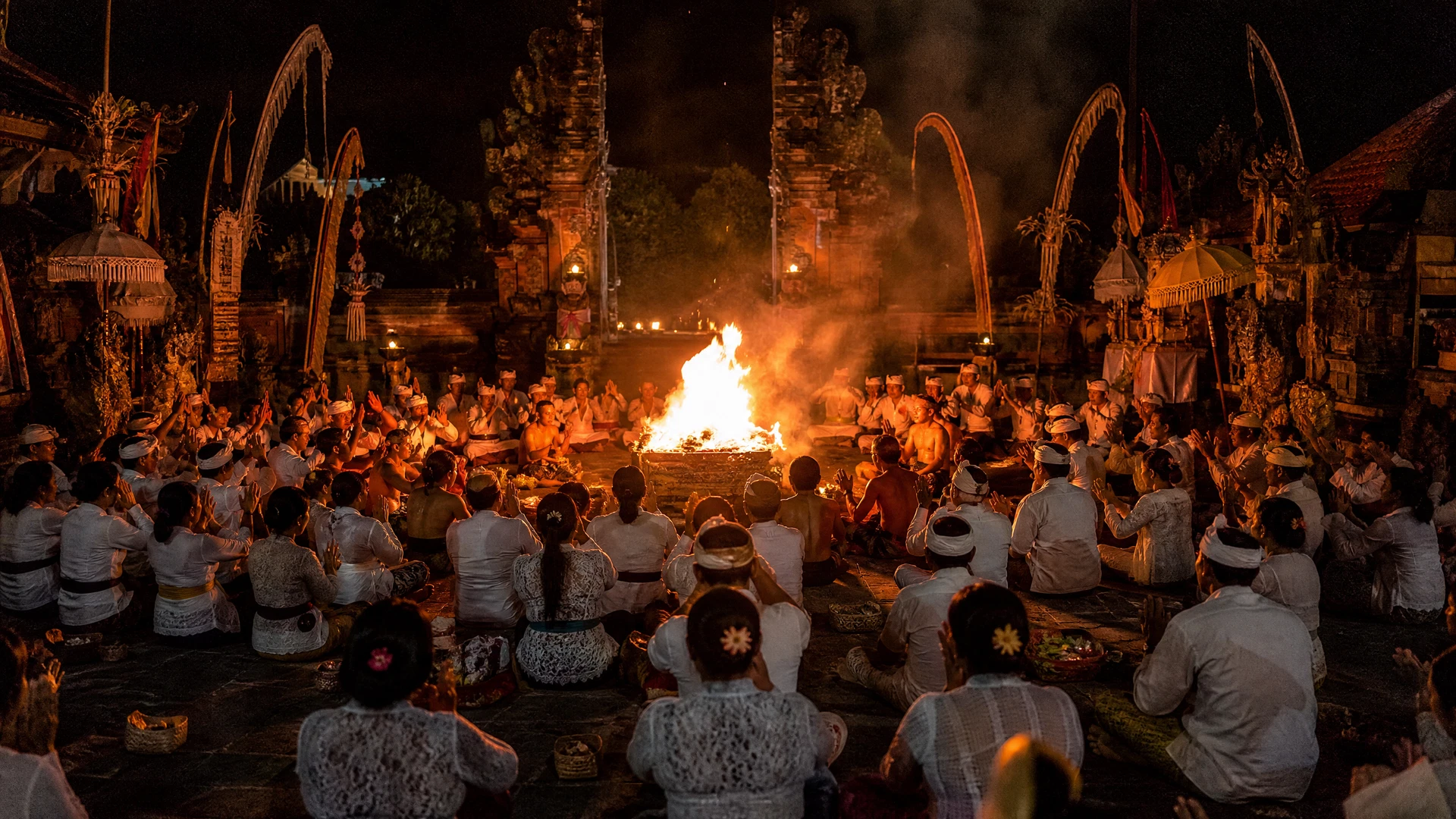
Meditation can be learned anywhere, but places are not neutral. Bali offers three quiet advantages. The culture normalises contemplation: on an island where millions of offerings are laid mindfully every morning and one day a year the whole society falls silent for Nyepi, sitting still is not eccentric — it is ordinary. The environment cooperates: highland air, birdsong and the absence of urban noise-floor give beginner attention far less to fight. And the distance helps: eight thousand miles from your kitchen, the mind's usual hooks — the laundry, the inbox, the doorbell — physically cannot reach you. None of this replaces practice. All of it lowers the threshold, which for a beginner is the entire game.
Begin Where Stillness Is Easy
If years of app streaks have not produced the calm they promised, consider the honest alternative: a meditation retreat in Bali, where conditions do half the work and a teacher does half the rest. Meditation and breathwork run through every day of the YogaFX 6-day programme — see how the week unfolds, then register your interest.