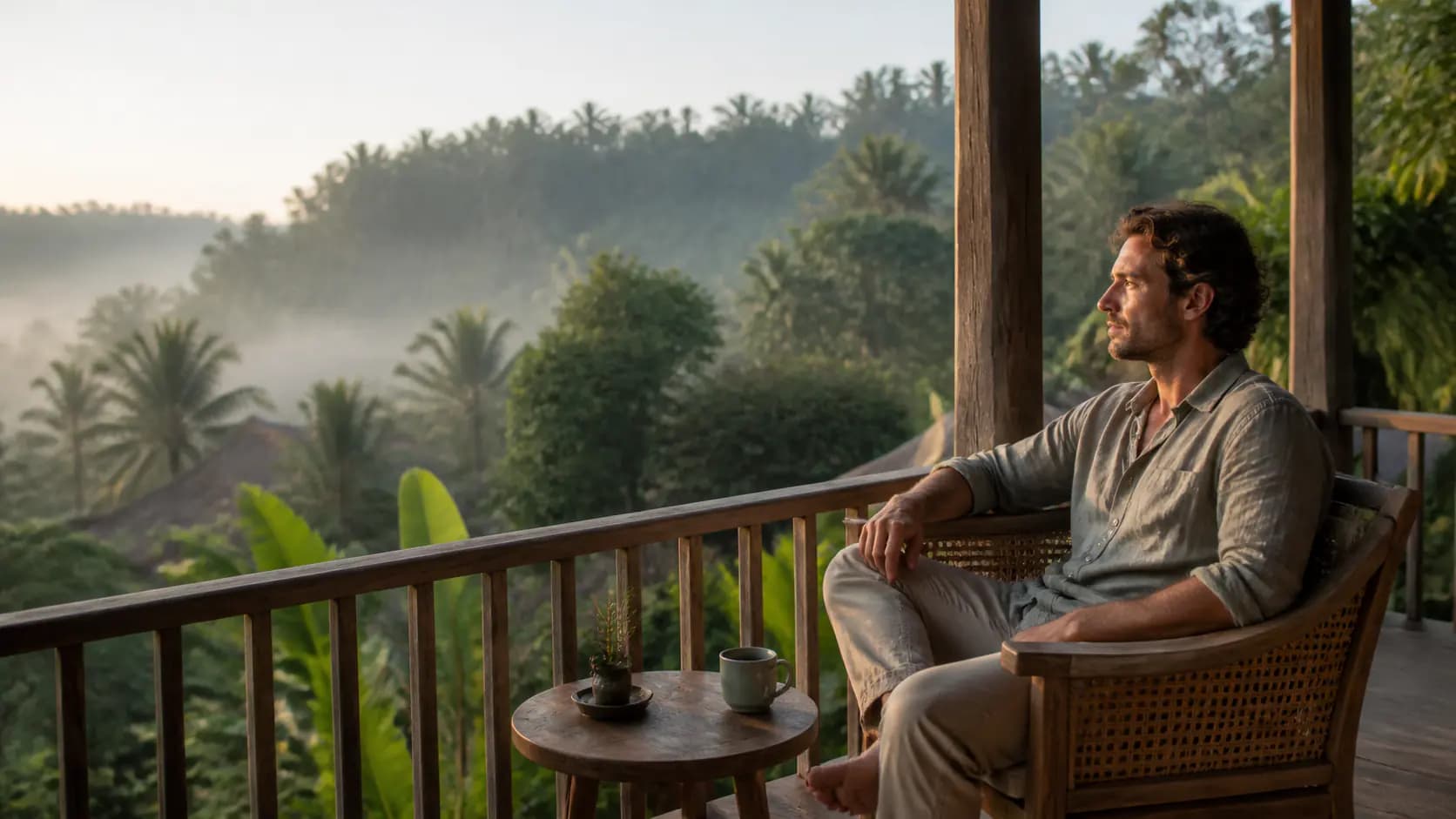

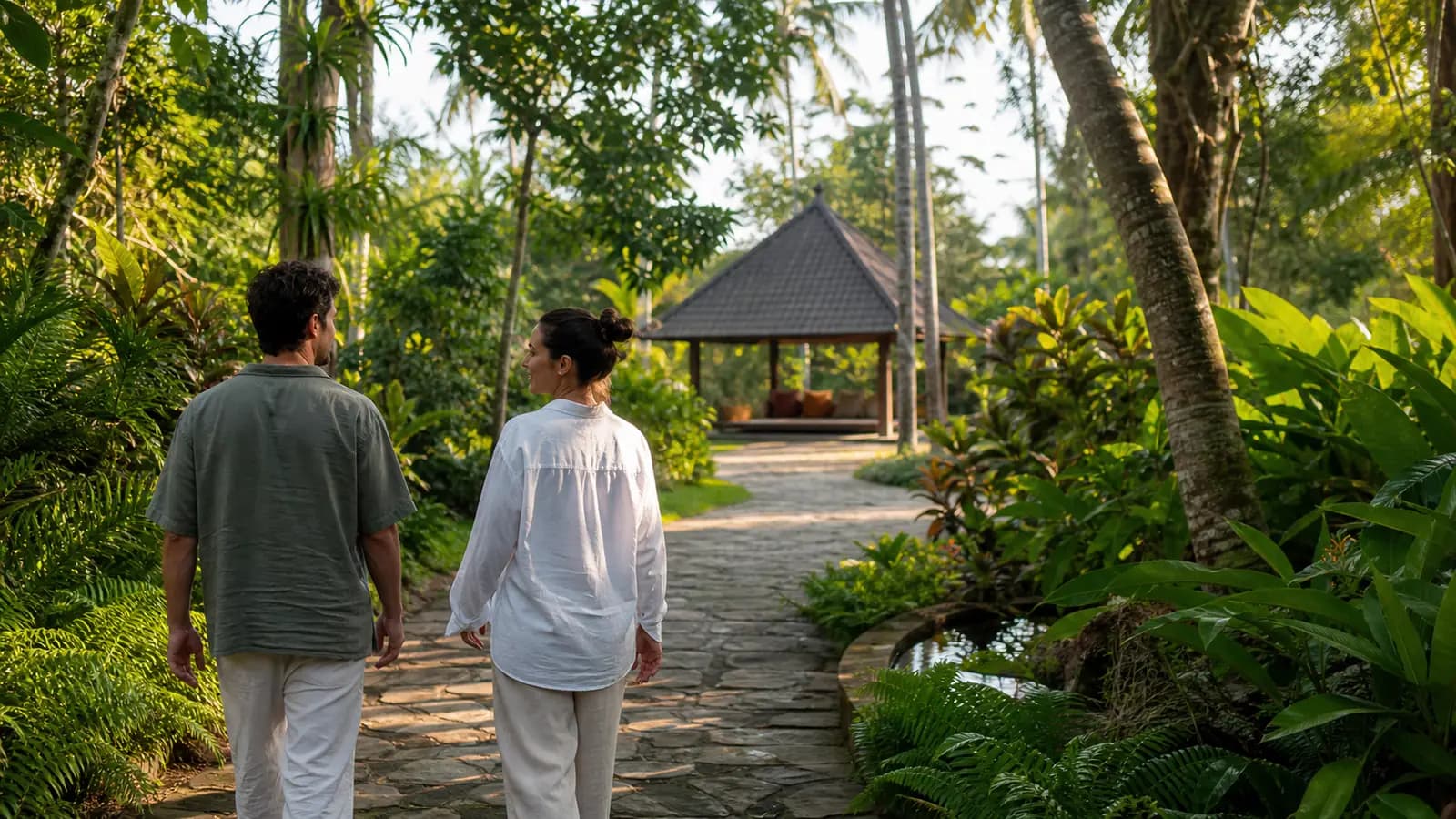
Retreat marketing often assumes every guest is arriving alone.
Many people instead travel with a spouse, business co-founder or close friend who is navigating a similar period of pressure.
That shared context can change how a structured week feels and what remains understandable after returning home.
Attending together is not automatically better than attending solo.
It does not guarantee agreement, resolve conflict or repair a relationship.
It can, however, give two people common experiences, practical language and time away from the ordinary environment in which their patterns usually play out.
This article explains how the YogaFX Retreat can support people attending together, what remains individual, and what to discuss before booking as a pair.
Why Going Through This Together Changes the Experience
Chronic stress rarely affects only one person.
A spouse may adapt to a partner's long working hours or reduced energy.
A business co-founder can feel the strain when decision-making, communication or workload becomes unbalanced.
Close friends may watch each other repeat exhausting habits without knowing how to name them.
A retreat creates a temporary change of context.
Both people step away from calendars, routines and immediate demands at the same time.
They hear the same explanations and participate in the same broad sequence, even though each person may respond differently.
Shared language can make later conversations easier.
Instead of one person returning with unfamiliar ideas and trying to summarise an entire week, both have direct reference points.
A workshop, morning practice or quiet meal can become a concrete example rather than an abstract concept.
Companionship can also reduce some of the uncertainty of arriving somewhere new.
There is a familiar person at the airport, during the first group meal and at the beginning of an unfamiliar session.
That familiarity may help guests settle, but both people should still have room to form connections beyond the pair.
Couples, Business Partners and Friends Bring Different Contexts
Couples
Couples often share the practical consequences of stress.
Sleep, household routines, attention and time together can all be affected when one or both people are overloaded.
Attending the same retreat may help them notice these patterns from a calmer distance.
The Retreat is not couples therapy.
Group activities are not designed to diagnose relationship problems, and guests are not asked to disclose private issues publicly.
Couples who need clinical relationship support should work with a suitably qualified professional.
Business partners
Co-founders and close colleagues may be carrying the same organisational pressure while responding to it differently.
One may accelerate and work longer; another may withdraw or struggle to make decisions.
A week away can provide a shared pause without turning the Retreat into a corporate strategy session.
Business partners benefit most when they agree not to use every quiet moment for work.
The purpose is to participate in the program, rest and reflect.
Operational conversations can wait unless both people intentionally choose a limited time for them.
Close friends
Friends may bring less shared logistics but more emotional familiarity.
They can encourage one another to attend, make travel feel easier and provide a trusted point of contact during a challenging session.
Friendship does not remove the need for boundaries.
One person may want company while the other needs quiet.
Discussing that difference before arrival can prevent either person from interpreting independent time as rejection.
How the Retreat Is Structured to Support This
Single rooms and shared rooms are both available.
Guests attending together can request shared accommodation, while those who sleep better separately can choose individual rooms.
Coming as a pair does not require sharing a room.
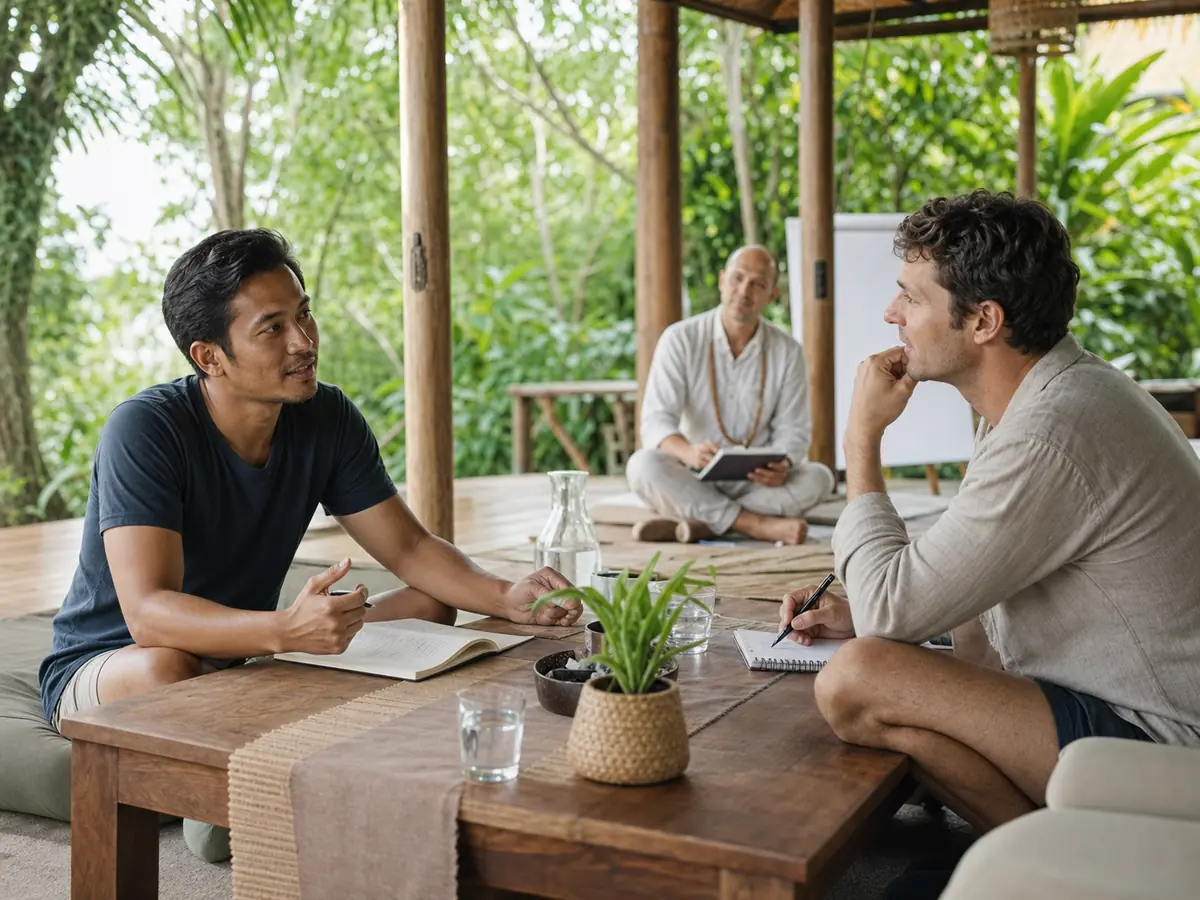
Group sessions across the 6 days include collective discussion and reflection rather than only private processing.
The person you came with participates in the same broader environment, but neither of you is responsible for managing the other's experience.
The schedule also includes individual space.
Rest, nature and quiet periods allow each guest to notice their own needs.
A healthy shared retreat is not six uninterrupted days together.
It is a shared framework with room for separate responses.
You can review the daily rhythm in the full 6-day itinerary.
It shows where movement, reflection, meals, excursions and recovery time sit across the week.
Why the Program Includes Shared Reflection
Mr. Ian designed the group structure to recognise that stress has a social context.
Workload, routines and coping habits often affect families, colleagues and friendships as well as individuals.
The program creates opportunities to listen and reflect together without claiming that one retreat can solve a relationship or business partnership.
Shared experiences may support clearer conversations, but the quality of what follows depends on both people and the environment they return to.
Group work also prevents a pair from becoming isolated inside the Retreat.
Couples, partners and friends join the same community as solo attendees.
This widens the week beyond the relationship they arrived with and gives both people other perspectives.
What to Discuss Before Booking Together
Agree on expectations before paying a deposit.
One person may imagine constant time together, while the other expects independent rest.
Clarify accommodation, social time, phone use and whether you will participate in every session side by side.
Talk honestly about motivation.
Both people should choose to attend.
Bringing a reluctant partner in the hope that the program will change them creates pressure the Retreat is not designed to carry.
Consider your preferred room setup.
Sharing can feel reassuring and reduce cost, but separate rooms may support better sleep and more personal space.
The right answer depends on your existing habits, not on what a retreat pair is supposed to do.
Finally, decide how you will handle work.
Business partners may need an emergency contact plan.
Couples with children or shared responsibilities may require a brief daily check-in.
Establishing a boundary in advance can make it easier to remain present.
During the Retreat: Together Without Becoming Responsible for Each Other
Support is different from supervision.
You can walk to a session together, listen when the other person wants to talk and respect a request for space.
You do not need to monitor whether they are doing the program correctly.
Avoid comparing responses.
One guest may enjoy movement while another prefers reflective sessions.
One may feel social and energised; another may need sleep.
Different experiences do not mean one person is progressing and the other is failing.
Use facilitators appropriately.
If a session raises a practical concern, speak with the team rather than expecting your companion to solve it.
If either person needs medical or psychological care, seek qualified support beyond the Retreat's wellness scope.
Returning Home With Shared Context
The return home is where shared experience can become practically useful.
Both people recognise the routines and ideas discussed during the week.
They can remind one another of an agreed boundary or practice without needing a long explanation.
Keep expectations modest.
Ordinary responsibilities will return, and not every retreat habit will fit daily life.
Choose one or two realistic changes, such as a protected evening, a shared walk or a clearer work cutoff, then review how they feel after several weeks.
Do not turn accountability into policing.
A useful check-in sounds like an invitation, not a performance review.
Each person remains responsible for their own health, choices and professional support.
Is Attending Together Right for You?
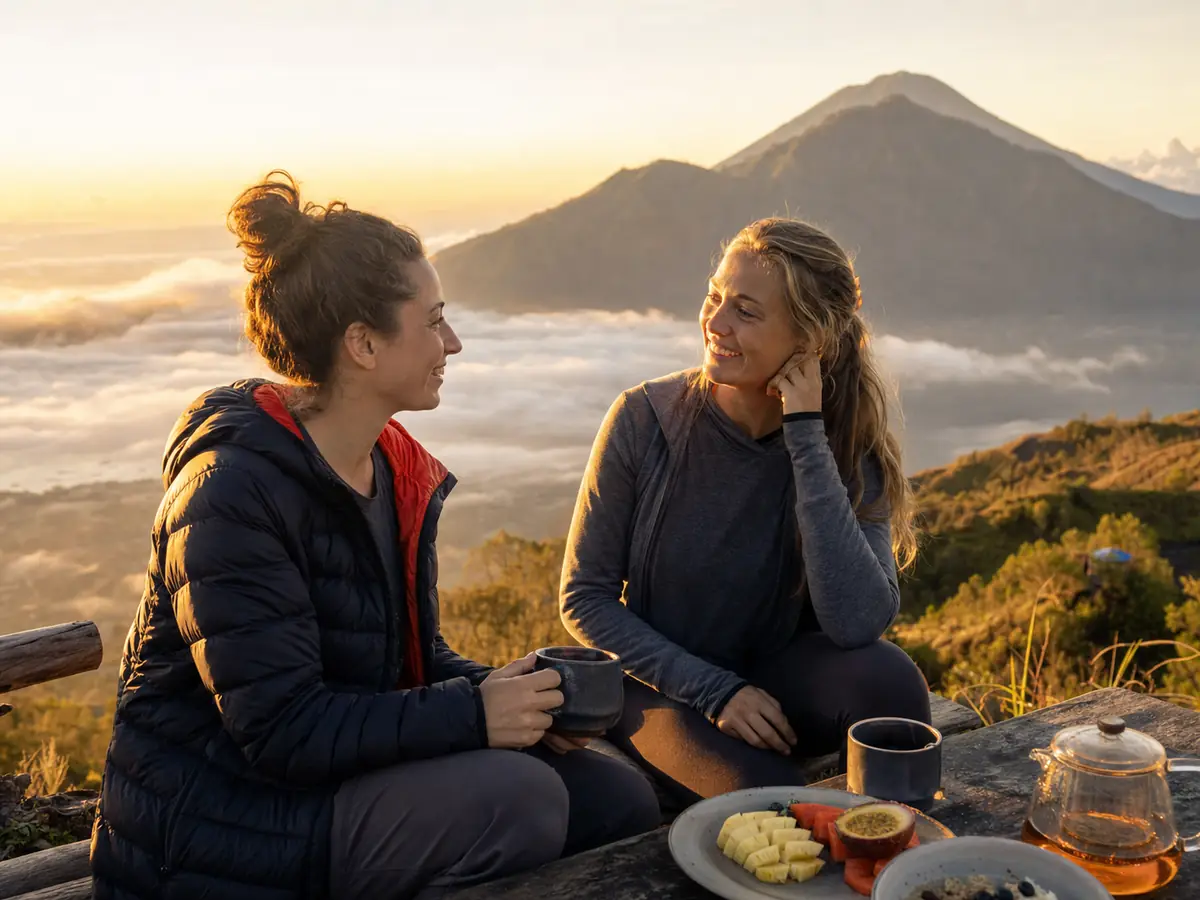
Attend together when both people want the experience and can respect individual space within it.
It may suit couples affected by the same demanding season, business partners who need a shared pause or close friends who value mutual encouragement.
Attend separately if one person feels pressured, if privacy is essential or if the relationship itself needs specialist support beyond a wellness program.
Solo guests are fully part of the Retreat and do not need to arrive with someone they know.
For a broader view of the program and who it suits, read the Yoga Retreat Bali complete guide.
Practical details about pricing, rooms, deposits and travel are available in the booking FAQ.
This article is for general information only and is not a substitute for professional medical advice.