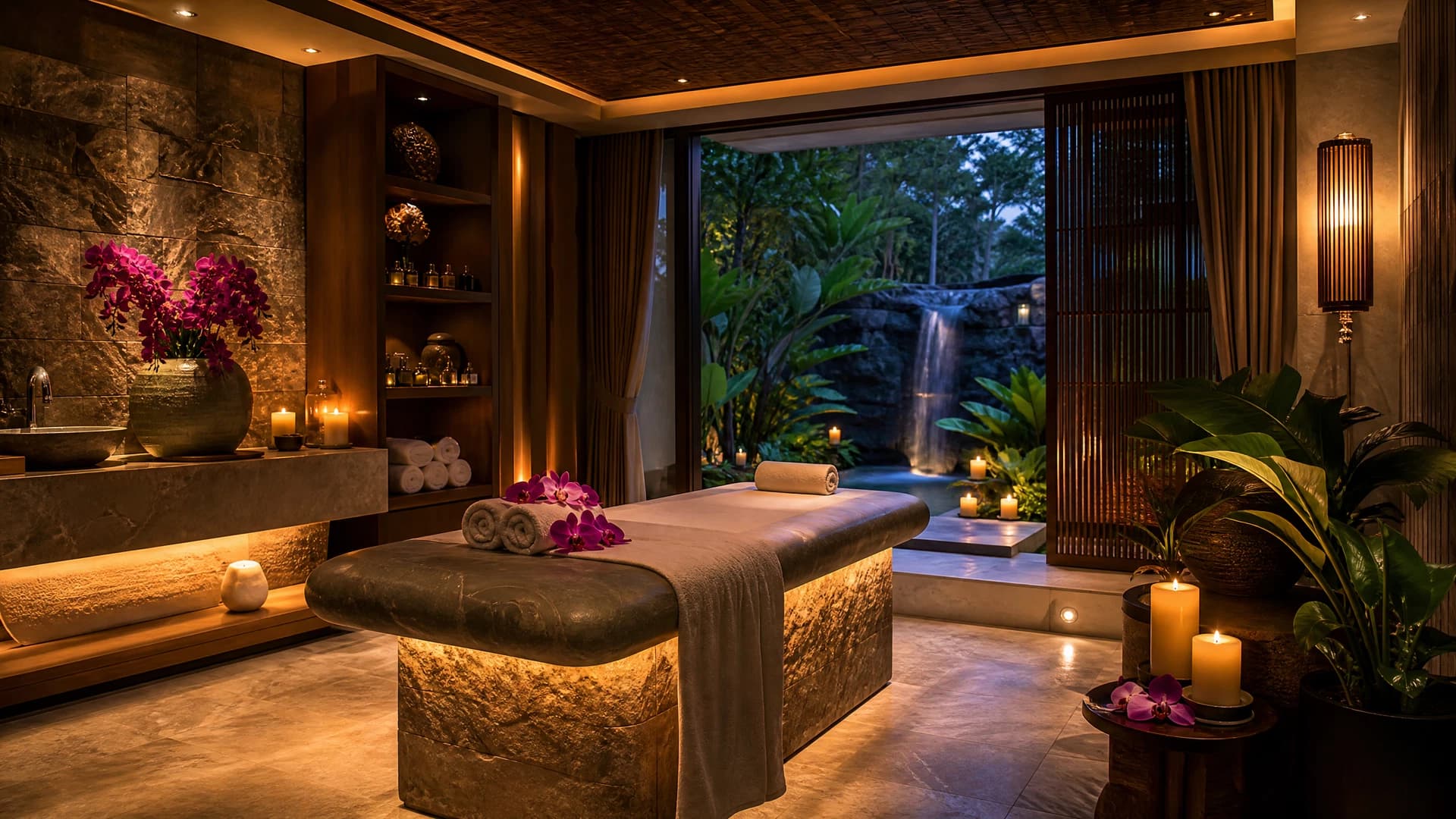
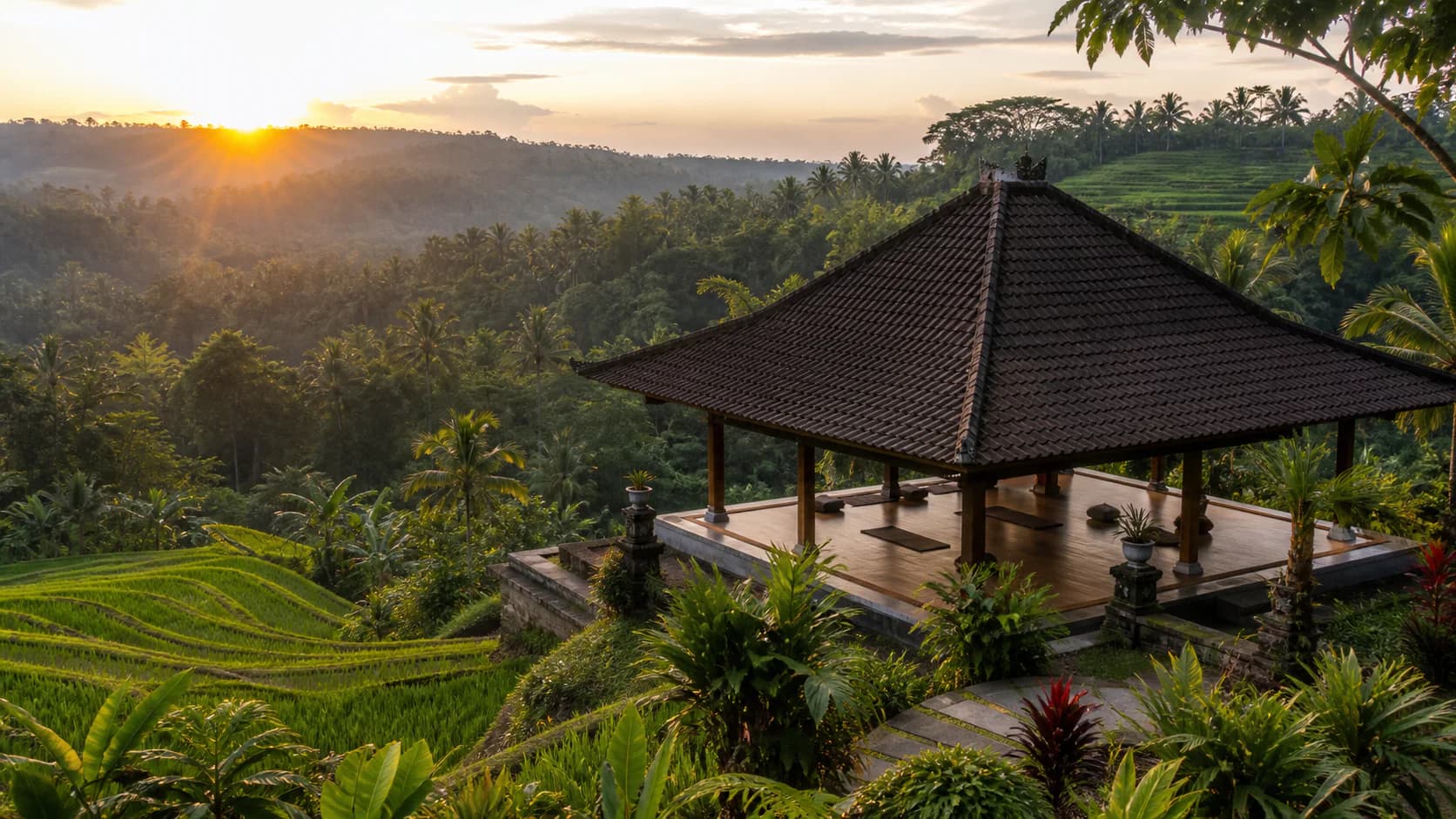
A yoga retreat in Bali can mean many different things. It might be a flexible programme at a beach resort with 50 other travellers, a focused week of daily practice, or a structured small-group experience built around a specific goal such as burnout recovery. None of those formats is automatically better than the others. They solve different problems, and choosing the wrong category for what you actually need is one of the most common booking mistakes.
This guide explains the main types of yoga retreats in Bali, what separates premium programmes from average ones, how location and duration shape the experience, and which questions to ask before paying a deposit. Use it to decide what category fits first. Comparing individual programmes becomes much easier after that.
Why Bali, Specifically?
Bali's position as a global wellness destination is supported by decades of practice, teaching and hospitality infrastructure. The island has experienced instructors, retreat kitchens, bodyworkers, guides and purpose-built practice spaces. It also has a culture in which offerings, ceremony and community ritual remain visible parts of everyday life rather than decorative additions to a visitor itinerary.
The physical setting matters too. Warm weather supports outdoor practice throughout the year. Volcanic highlands, rice terraces, jungle, waterfalls and natural hot springs make it possible to combine movement with time in nature. English is widely used in tourism, and Bali has connections to major cities across Asia and Australia. That combination is difficult to reproduce elsewhere, which is why the island attracts everything from budget drop-in programmes to highly structured international retreats.
Popularity also creates noise. Beautiful photographs and a Bali address do not tell you whether a programme is well taught, safely organised or suited to your goal. The island offers exceptional options, but it also offers generic holidays packaged with a morning yoga class. Learning the categories is the first useful filter.
Types of Yoga Retreats in Bali
Community-Style and Marketplace Retreats
Community-style retreats are often listed on large booking platforms and may accept guests on rolling dates. Groups can be larger, accommodation is commonly shared, and the schedule may allow guests to choose classes day by day. They are generally more affordable and can work well if your main aim is a social wellness holiday with flexibility.
The trade-off is consistency. Your teacher, group and daily timetable may change during the stay. Some activities can cost extra, and the programme may not build toward a defined outcome. Check whether the listing represents one dedicated retreat group or several unrelated guests using the same resort facilities.
Boutique or Exclusive Retreats
Boutique retreats normally keep the group below 25 guests, use dedicated accommodation and follow a curriculum created for one cohort. The same people arrive, progress and leave together. These programmes usually cost more because staffing, private facilities and personal attention are distributed across fewer guests.
This format suits people who value continuity and a clear purpose. It can also be more comfortable for solo travellers because the group forms quickly, while couples or close friends can share the experience without being lost inside a much larger crowd.
Retreats With a Specific Focus
Some retreats are organised around a defined practice or problem: meditation, surf and yoga, teacher development, digital detox, physical recovery or burnout. A focused programme is useful when you can describe what you need more precisely than "I want a break." Its schedule, teachers and inclusions should all support that stated focus.
Read the wording carefully. A retreat that uses clinical language should explain the qualifications behind it and the limits of what it offers. Retreats can support rest, healthy routines and reflection, but they are not substitutes for medical or psychological treatment.
Start With the Outcome You Actually Want
Before comparing villas and prices, write down what would make the trip worthwhile. If you mainly want sunshine, movement and new friends, a flexible community retreat may be ideal. If you want to deepen a specific yoga practice, look for a recognised teacher and enough hours devoted to that method. If exhaustion has started affecting sleep, concentration and coping habits, consider a structured programme that gives equal weight to effort, rest and integration.
Your preferred pace matters. Some guests feel restored by early starts, strong classes and full days. Others need fewer transitions and more quiet. Neither preference is a weakness. A good schedule should state how much free time exists, which sessions are optional, and whether modifications are available without making a guest feel separate from the group.
What Separates a Premium Retreat From an Average One?
The difference usually appears in five areas: group size, the credentials of the person actually teaching, accommodation quality, curriculum design and how completely the programme treats recovery as a system. Premium should describe the depth and consistency of delivery, not simply linen quality or the size of an infinity pool.
1. A Small Instructor-to-Guest Ratio
Smaller groups allow a teacher to see how individual guests move, respond to heat and manage fatigue. Ask for the maximum number of guests and the number of teachers present during core sessions. "Limited places" means little unless the organiser publishes an actual cap.
2. A Named and Verifiable Lead Teacher
Find out who designed the programme and who will be present each day. Look for recognised qualifications, teaching history and independent evidence of their work. A famous name on the brochure does not add value if assistants deliver the entire week.
3. Accommodation That Supports Rest
Privacy, noise and room location can influence sleep more than decorative luxury. Ask whether rooms are on the Retreat grounds, whether you can choose single or shared accommodation, and whether construction, nightlife or public events operate nearby. Photographs should show the actual room category included in the price.

4. A Curriculum, Not a Loose Activity Menu
A curriculum has progression. The first day prepares for the second; more demanding sessions are balanced with recovery; the final days help guests translate the experience into realistic habits. Ask why activities appear in a particular order. A team that designed the programme should be able to explain the sequence clearly.
5. Recovery Treated as a Whole System
Movement can support strength, balance and flexibility, but a retreat focused only on physical practice can miss sleep, nutrition, attention and stress regulation. A 2025 systematic review of hot yoga research reported promising physiological and functional findings while also noting important limitations in study quality and that greater benefits over other exercise remain unsubstantiated. That is a useful reminder to prefer careful claims over dramatic promises.
Mr. Ian, founder of YogaFX and Certified in Neuroscience & Brain Health, designs the Retreat curriculum so physical practice sits alongside rest, nutrition, somatic work and integration. The purpose is to create one coherent experience rather than a checklist of unrelated wellness activities.
Who Is a Yoga Retreat in Bali Actually For?
Beginners and Experienced Practitioners
Most well-run retreats do not require previous yoga experience. Beginners need clear instruction and appropriate variations. Experienced practitioners need teachers who can refine technique without turning every class into a performance. Ask whether both ends of that range are genuinely supported and how injuries are assessed before practice begins.
Solo Travellers, Couples and Friends
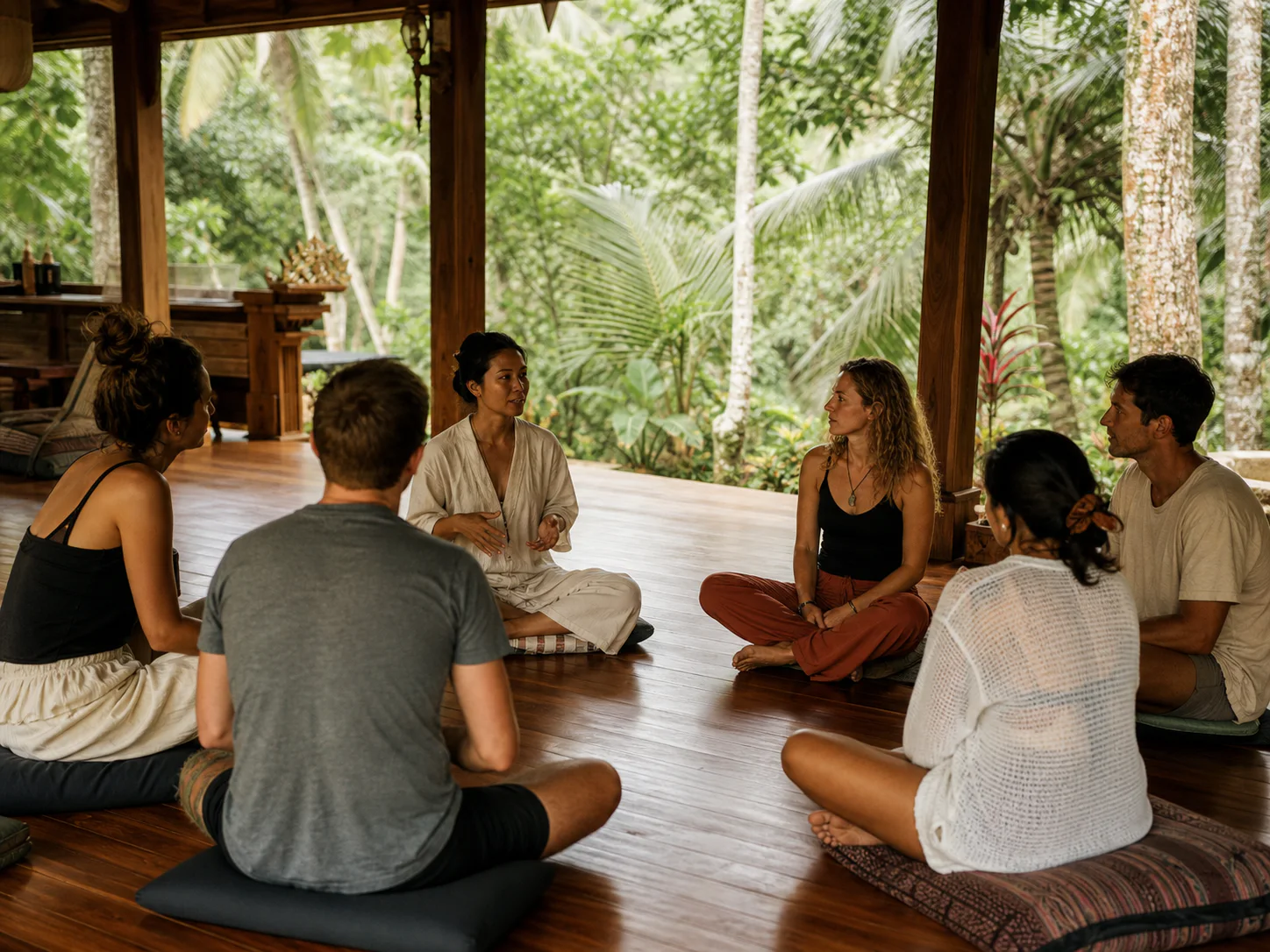
Many guests attend alone, and a fixed small group can make connection easier than an open hotel programme. Couples, business partners and close friends may prefer shared accommodation while still participating as individuals. Check whether the retreat culture expects constant group participation or provides enough personal space.
People Approaching Burnout
Chronic exhaustion, poor sleep, irritability, dependence on caffeine or alcohol, difficulty switching off and a sense of running on empty can all signal that an ordinary holiday may not be enough. A structured retreat cannot diagnose or cure burnout, but it can provide distance from the routines that maintain it. Read our guide to the signs of burnout people often ignore and speak with a qualified healthcare professional if symptoms are severe.
How Location Changes the Retreat
Ubud offers the island's densest concentration of studios, restaurants, healers and cultural venues. It suits travellers who want variety and do not mind traffic or an active town around them. Canggu combines yoga with surfing, cafés and nightlife. It works well for a social trip but may be less suited to complete disconnection.
North Bali is quieter, greener and more spread out. The highlands and northern coast offer waterfalls, rice terraces, forest and volcanic hot springs with fewer crowds. Travel from the airport takes longer, so transfers should be planned carefully, but the distance also creates a stronger boundary from the pace of southern Bali. Our North Bali versus South Bali guide compares the settings in more detail.
When Is the Best Time to Go?
Bali has a dry season, generally from April to October, and a wetter season from November to March. Dry-season weather is more predictable, which helps if the programme includes long outdoor excursions. It is also the busiest period, particularly around July and August, so roads, popular waterfalls and central Bali can feel noticeably more crowded.
The wetter months bring higher humidity and afternoon rain, but they also bring greener landscapes, fuller waterfalls and fewer visitors. Rain often arrives in concentrated periods rather than lasting all day. A properly designed retreat should have covered practice areas and a weather plan rather than depending on every session happening outdoors.
January and February can work especially well for a structured reset in the northern highlands. The region is green, temperatures are softer at elevation and the island is quieter after the year-end holidays. Weather varies from year to year, so choose based on the programme and setting rather than expecting a guarantee of sunshine.
How Long Should You Stay?
A 2 or 3-day retreat can interrupt routine and provide a useful introduction. It often suits travellers adding wellness to a longer Bali holiday. The limitation is that arrival, adjustment and departure occupy much of the available time.
A 6 or 7-day retreat gives the programme room to progress. Guests can settle, experience several cycles of practice and recovery, and use the final days for integration. Longer is not automatically better; it is better only when the added days contain a meaningful sequence rather than repeated activities. Review the YogaFX 6-day itinerary to see how one structured week develops.
How to Compare Pricing Properly
Yoga retreats in Bali range from budget shared-room stays to premium programmes with private rooms, therapies and full logistics. Do not compare headline prices alone. Build a total that includes accommodation, meals, drinks, classes, workshops, therapies, excursions, airport transfers, taxes and any single-room supplement.
Ask when the balance is due, what happens if dates change, and whether travel insurance is required. Clear terms protect both the guest and organiser. A programme that explains the full financial commitment before a deposit is easier to trust than one that reveals essential extras after arrival.
Your Booking Checklist
- Purpose: Does the programme match the reason you are travelling?
- Duration: Is there enough time for adjustment, progression and integration?
- Location: Does the surrounding environment support the pace you want?
- Teacher: Can you verify who designed and leads the programme?
- Group size: Is the maximum capacity stated clearly?
- Accommodation: Is your exact room type shown and included?
- Inclusions: Are meals, transfers, therapies and excursions itemised?
- Safety: Does the organiser collect health information and explain modifications?
- Evidence: Are credentials and independent reviews easy to verify?
- Terms: Are payment, cancellation and date-change conditions available before booking?
Before You Pay a Deposit
Schedule a direct conversation or send a clear list of questions. Confirm the exact dates, room type, maximum capacity, teacher, transfer arrangements, food policy and any physical requirements. Tell the organiser about allergies, injuries and relevant health conditions. Their response should be specific enough that you know what will happen, not simply reassuring.
Read the payment and cancellation terms before transferring money. Confirm the currency, deposit amount, balance deadline and what happens if the organiser changes the date. Use a traceable payment method and keep the written confirmation. Travel insurance should cover the activities and cancellation risks relevant to your trip.
Finally, verify the organisation outside its own website. Search the company and lead teacher by name, look for reviews over several years, and notice whether guests discuss teaching and organisation rather than only the property. Consistent third-party evidence is more useful than a large collection of anonymous quotes.
Red Flags to Avoid
Be cautious of anonymous teachers, unlimited group sizes, stock images that do not show the venue, medical promises, pressure to pay immediately, unclear room categories and schedules filled mostly with optional extras. Testimonials can be useful, but they should not replace verifiable credentials, transparent terms or direct answers.
Also look for internal consistency. If a retreat promises deep rest but schedules activities from dawn until late evening, ask how recovery is protected. If it calls itself all-inclusive, request the exclusion list. If it promises personal attention, ask how many guests share each teacher. Specific questions make vague marketing much easier to recognise.
Choosing With Confidence
The right yoga retreat in Bali is the one whose purpose, pace, teacher, setting and total cost fit what you genuinely need. Decide on the category before comparing properties. Then verify the people, read the schedule, check independent reviews and understand the terms.
If a structured small-group experience in quiet North Bali fits your goal, explore the complete detox Retreat guide, review everything included, and register your interest to discuss the YogaFX 6-Day Detox and Burnout Retreat.
This article is for general information only and is not a substitute for professional medical advice.