
A Balinese healer is commonly called a balian, a traditional practitioner whose work may combine spiritual guidance, ritual knowledge, bodywork or plant-based traditions.
The term covers different roles rather than one standard treatment.
A respectful visit begins with local context, clear consent and realistic expectations.
What Is a Balinese Healer?
A balian traditional healer works within a living Balinese cultural system, not a tourist-created wellness category.
Practitioners may acquire knowledge through study, family transmission, apprenticeship, spiritual calling or a combination of paths.
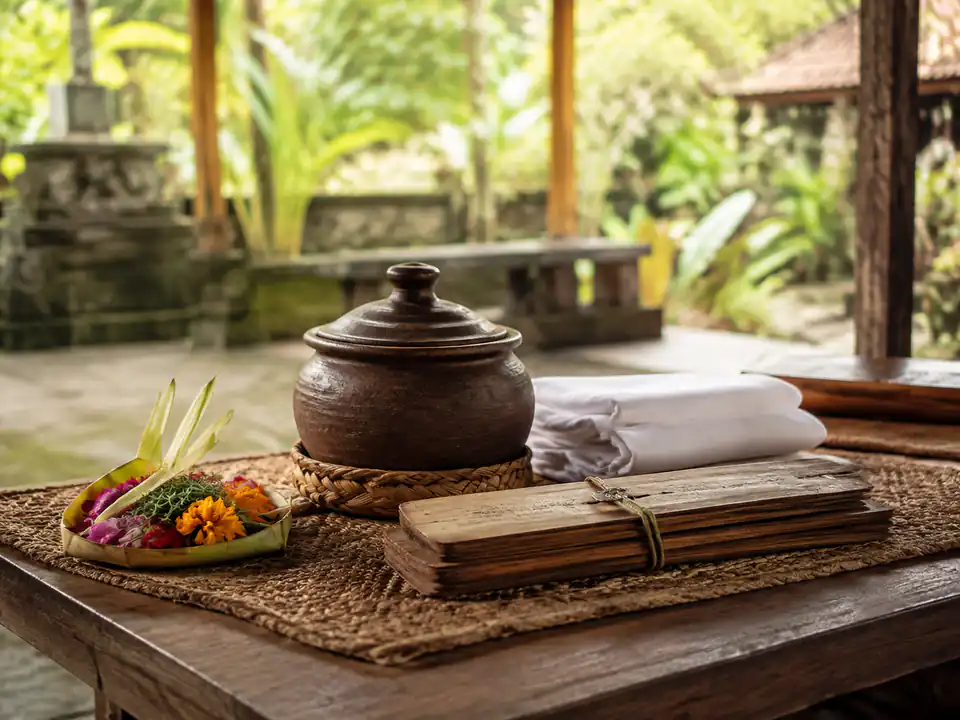
Some draw upon usada, bodies of Balinese healing knowledge preserved partly in palm-leaf manuscripts called lontar.
Others are known for ritual, intuitive or hands-on approaches.
A study based on interviews with 28 practitioners describes several categories and emphasises the balian's role as a mediator.
Read the 2021 study of balian categories and methods.
“Balian” should not automatically be translated as doctor, psychotherapist, priest or spa therapist.
Those roles have different training, responsibilities and limits.
What Do Balinese Healers Do?
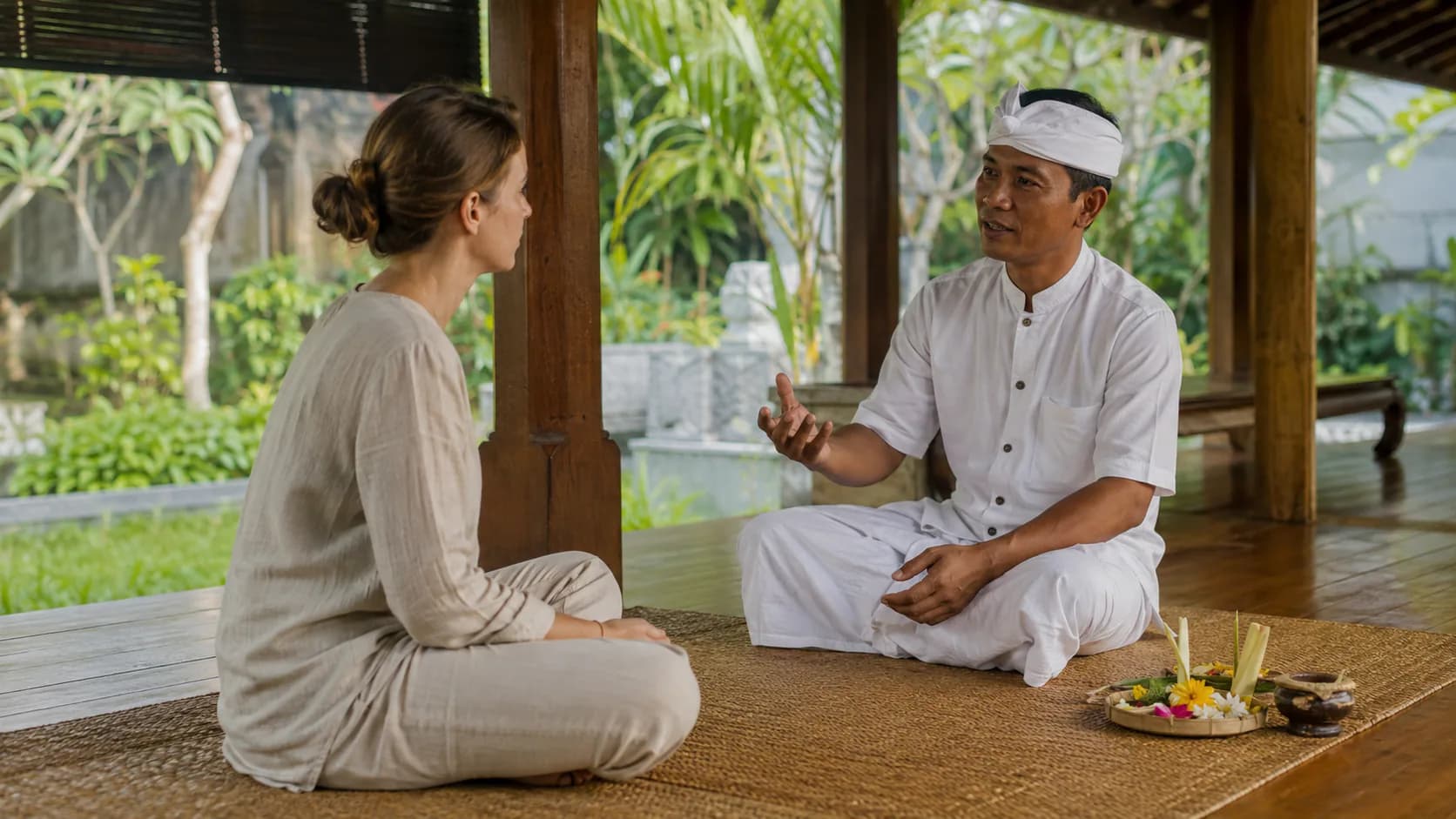
There is no single script for a traditional healer session in Bali.
A meeting may begin with conversation about the guest's concern and the context surrounding it.
Depending on the practitioner, it may involve prayer, mantra, offerings, symbolic interpretation, herbal knowledge or touch-based work.
Academic descriptions of indigenous Balinese medicine document varied uses of mantra, inscriptions and medical manuscripts.
See this study of Balinese healing texts and techniques.
What a Session Should Not Promise
A traditional consultation should not guarantee a cure, diagnose a clinical condition without appropriate credentials or pressure a guest to abandon healthcare.
Spiritual meaning and medical evidence are different questions.
They can be discussed respectfully without presenting one as proof of the other.
Is a Balian Session a Balinese Healing Ceremony?
Sometimes ritual elements may appear within a session, but the phrases are not exact synonyms.
A traditional Balinese healing ceremony depends on the practitioner, purpose, family or village context and religious guidance.
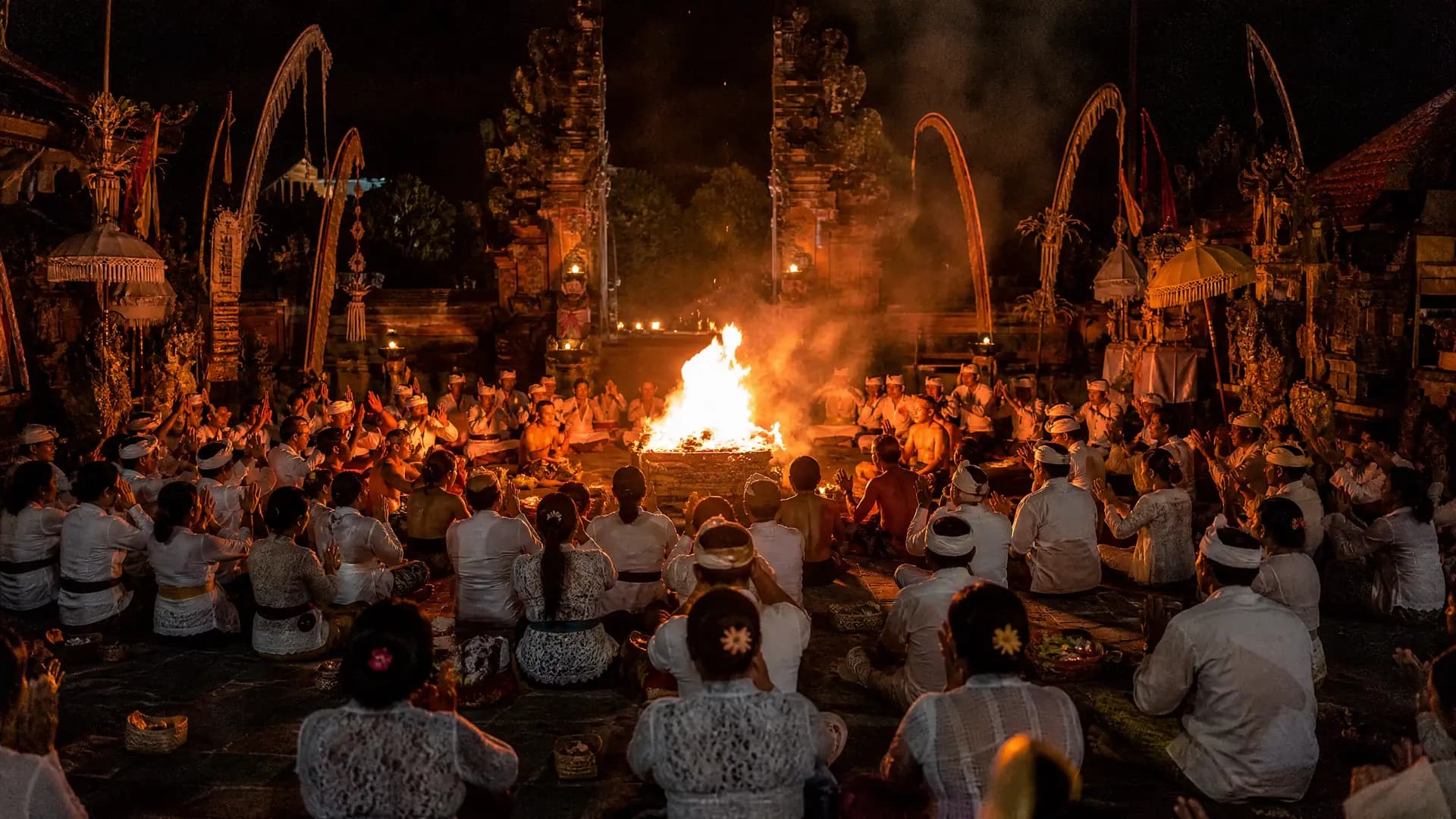
The Welcome Puja, fire ceremony and private traditional healer session in the YogaFX programme are listed separately.
YogaFX therefore does not relabel either group ceremony as a balian treatment.
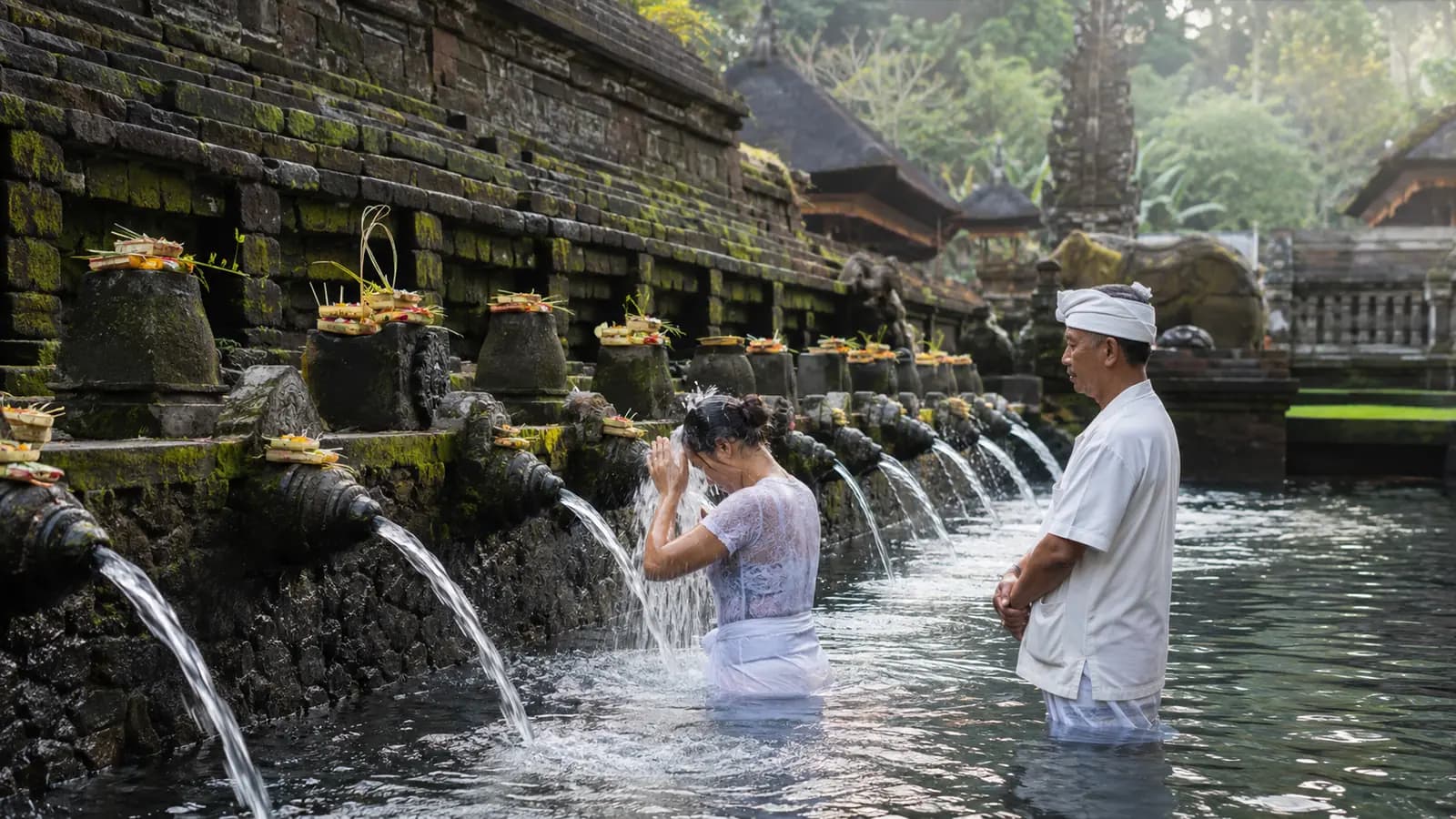
Melukat is also distinct: it is a Balinese Hindu water purification ritual, not a generic healer appointment.
Read the respectful guide to Melukat for that difference.
How to Approach a Traditional Healer Respectfully
Popular travel stories have made the Balinese healer a familiar image around the world.
Real practitioners are not characters or attractions, and one famous story cannot represent an island's diverse traditions.
Use these practical checks before a session:
- Ask who recommended the practitioner and why.
- Request a plain-language explanation of the session.
- Confirm the fee, donation or offering arrangement beforehand.
- Explain mobility, privacy, trauma and touch boundaries.
- Ask whether photography is appropriate before using a camera.
- Wear modest clothing and follow local guidance.
- Keep access to qualified healthcare when needed.
Consent and Personal Safety
You may decline any touch, question, instruction or activity.
Consent should remain voluntary throughout the session, even when a guide or retreat arranged the appointment.
Leave if someone uses fear, demands secrecy, guarantees healing or crosses an agreed physical boundary.
A trustworthy facilitator should support your decision without shaming or spiritual threats.
A Traditional Healer Session at the YogaFX Retreat
The published YogaFX inclusions contain a private one-to-one traditional healer session.
It sits within the six-day Detox & Burnout Reset at a private North Bali sanctuary.
The programme also includes yoga, recovery practices, nature experiences, workshops and communal cultural activities.
The healer session is presented as cultural and reflective support, not medical or psychological treatment.
The practitioner's name, method and practical format should be confirmed in the final guest schedule.
Guests can discuss health considerations, touch preferences and suitability through the application process.
Explore the six-day programme, complete itinerary and confirmed inclusions.
What Guests Notice About Balinese Culture
Google reviewers Marta NC and Kevin Edward both highlighted their contact with Balinese culture while describing their wider YogaFX experiences.
Their comments support the importance of cultural context, but they are not reviews of the upcoming healer session or evidence for a therapeutic claim.
Culture should be approached as a living tradition and relationship, not an exotic add-on or guaranteed route to healing.
How Much Is a Bali Healing Retreat?
A retreat price depends on accommodation, group size, duration, transfers, practitioner sessions and what the package includes.
A cheap headline price may exclude services that another programme includes.
YogaFX costs $3,799 USD for single occupancy or $2,799 USD per person for twin share.
Early-bird rates are $3,499 USD for single occupancy and $2,499 USD per person for twin share.
Ask for the written inclusions, exclusions, cancellation terms and payment schedule before paying.
Apply for the YogaFX Bali Reset
A responsible Balinese healer experience requires context, consent and respect for the limits of traditional practice.
The YogaFX application flow lets you discuss fit, relevant health considerations and what the retreat can realistically provide.