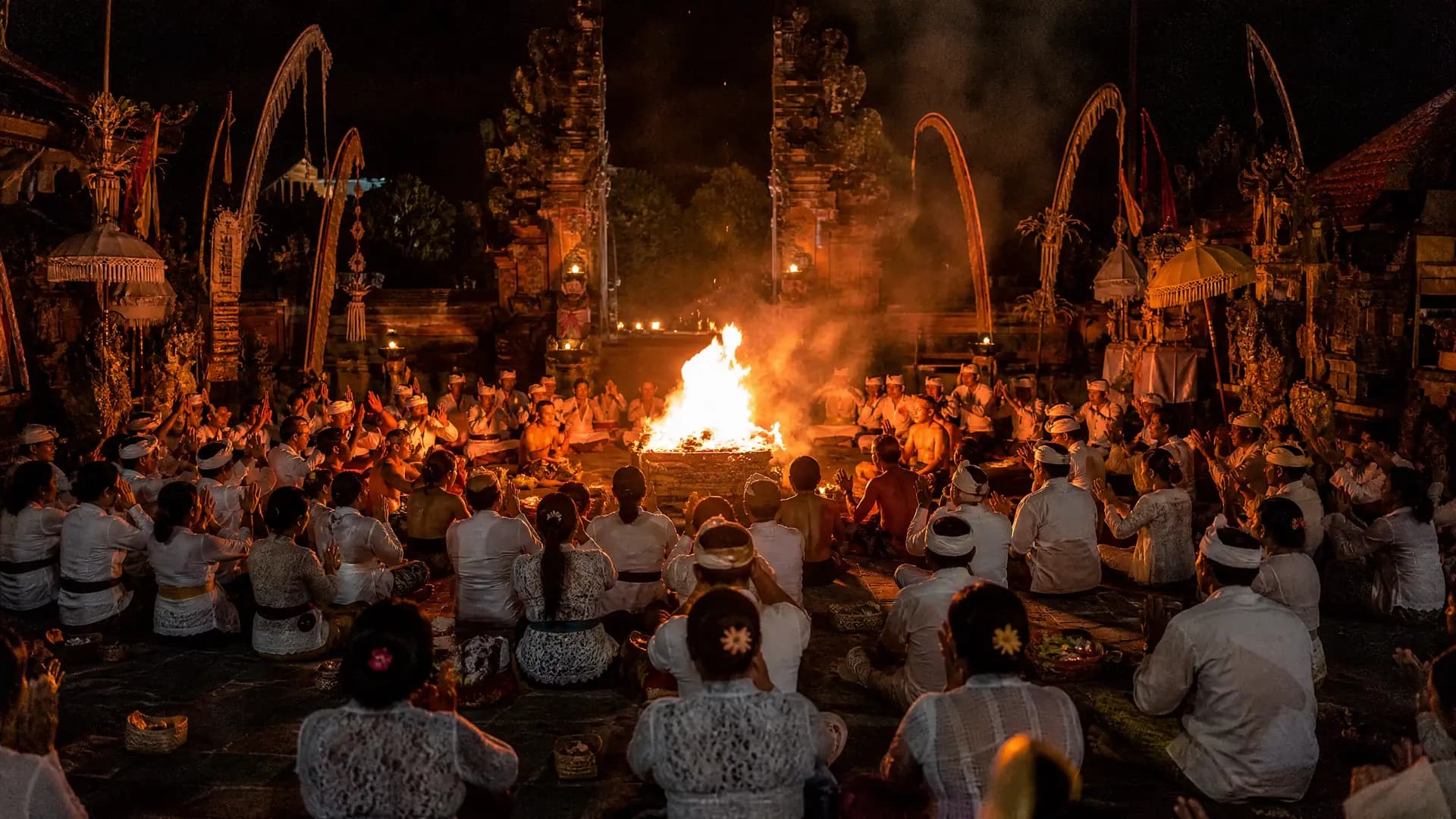

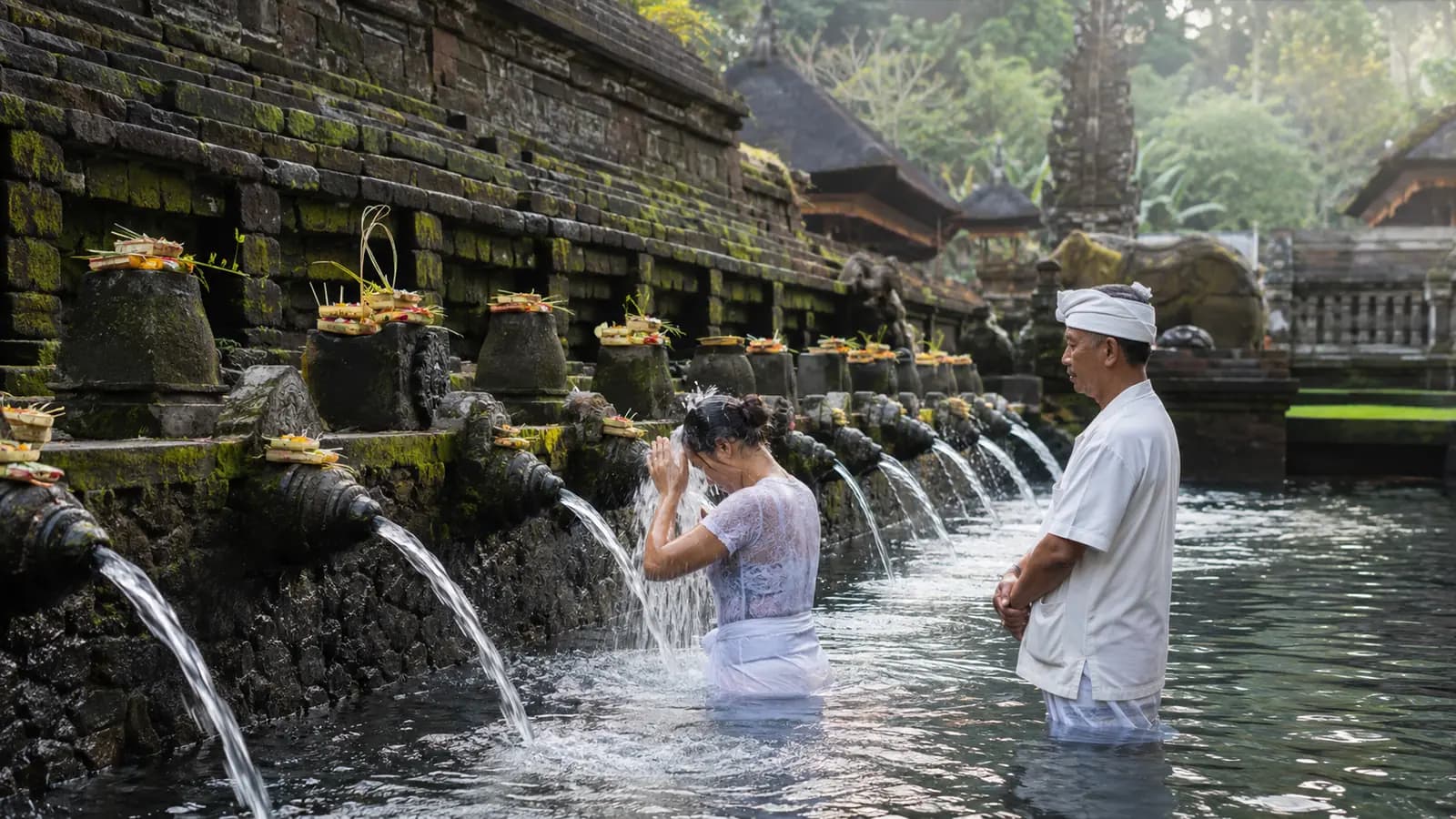
A Melukat ceremony is a traditional Balinese Hindu water purification ritual intended to cleanse the mind, body and spirit of spiritual impurity and burdens within its religious context.
It uses tirta, or sanctified water, and may take place at a temple, spring, river confluence, waterfall or the sea.
Visitors often encounter Melukat while researching a healing Retreat Bali experience.
That makes cultural accuracy important.
Melukat is not simply a photogenic cold-water activity or a generic wellness treatment.
It is a living religious tradition whose meaning, offerings and sequence can differ according to the temple, customary village, purpose and guidance of a priest.
What Is a Balinese Purification Ceremony?
The Bali Provincial Government's Ceraken cultural heritage portal describes Malukat as a Hindu tradition of spiritual purification using sacred water.
It explains that the ritual may be accompanied by offerings such as Canang Sari or Banten Pejati, with specific requirements determined by the type and purpose of the ceremony.
There is no single Melukat script used everywhere in Bali.
Indonesia's official tourism portal notes that procedures differ by customary village, temple and direction from the presiding pemangku or sulinggih.
A guide can explain a common sequence, but the instructions given at the site always take priority.
The Melukat Ceremony Bali Ritual Process
1. Offerings and Intention
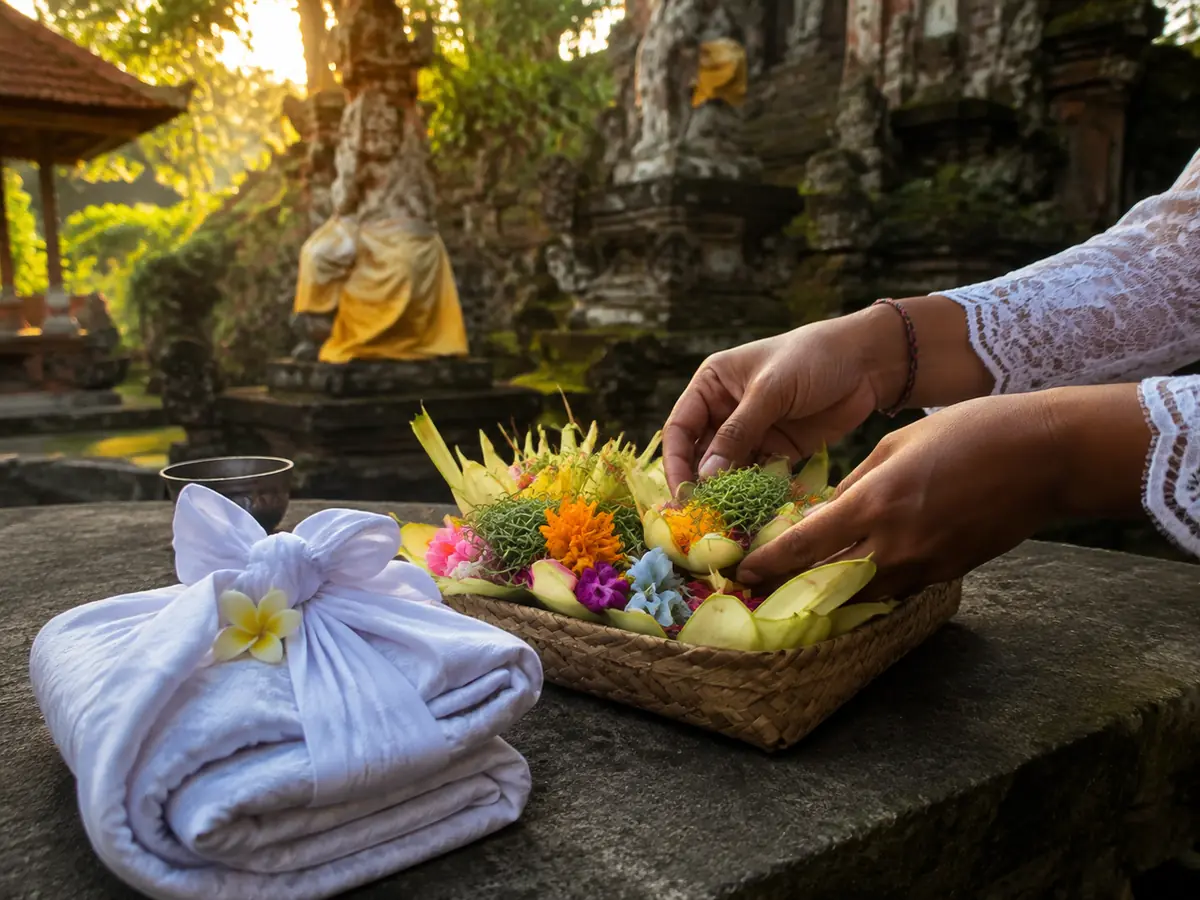
A ceremony may begin with a small flower offering such as Canang Sari and prayer at a shrine.
The participant follows the priest or temple attendant in preparing respectfully and setting an intention.
More elaborate forms may require different offerings, so visitors should not assume that a single basket is sufficient for every ceremony.
2. Traditional Clothing
Participants generally wear a traditional sarong or kamen with a sash.
A separate wet sarong may be required in the purification pool.
Clothing should remain modest when wet.
Some locations supply or rent the required garments, while others expect visitors to bring them.
3. Entering the Sacred Water
At a holy spring, the participant enters the pool and approaches the permitted water spouts in the instructed order.
At a waterfall or other sacred source, the movement and prayer may be different.
Some spouts can be reserved for specific rites and should not be used by general visitors.
4. The Common Rule of Three
At some sites, participants are directed to wash the face three times, take water into the mouth or sip three times when explicitly permitted, and allow water to flow over the head.
This is a common description, not a universal rule.
Do not drink untreated water unless the local authority says it is intended and safe for that purpose.
5. Priest's Final Blessing
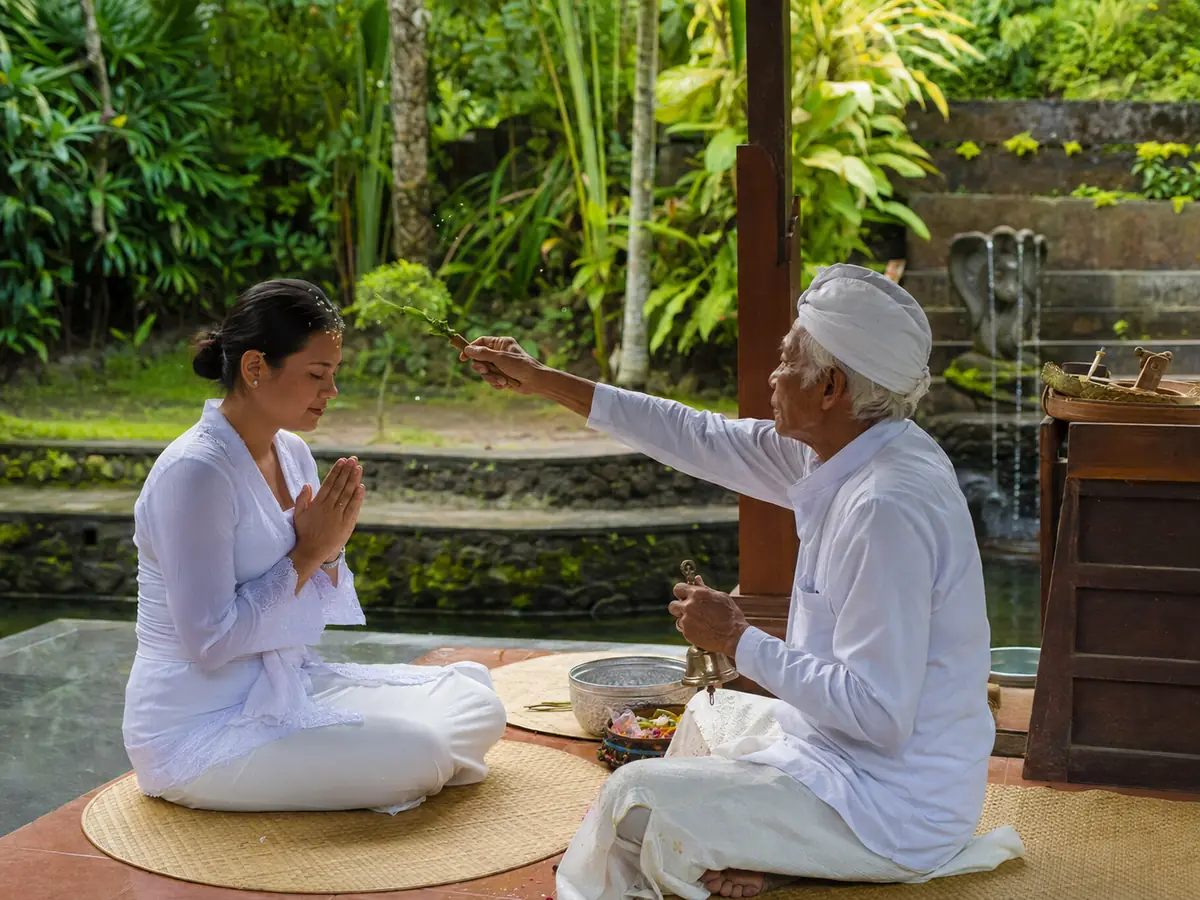
A pemangku may conclude the ritual by sprinkling holy water and placing grains of rice on the forehead.
The visitor remains seated respectfully, follows gestures demonstrated by the priest and avoids interrupting prayer for photographs.
Popular Sacred Locations for Melukat Bali
Tirta Empul Temple
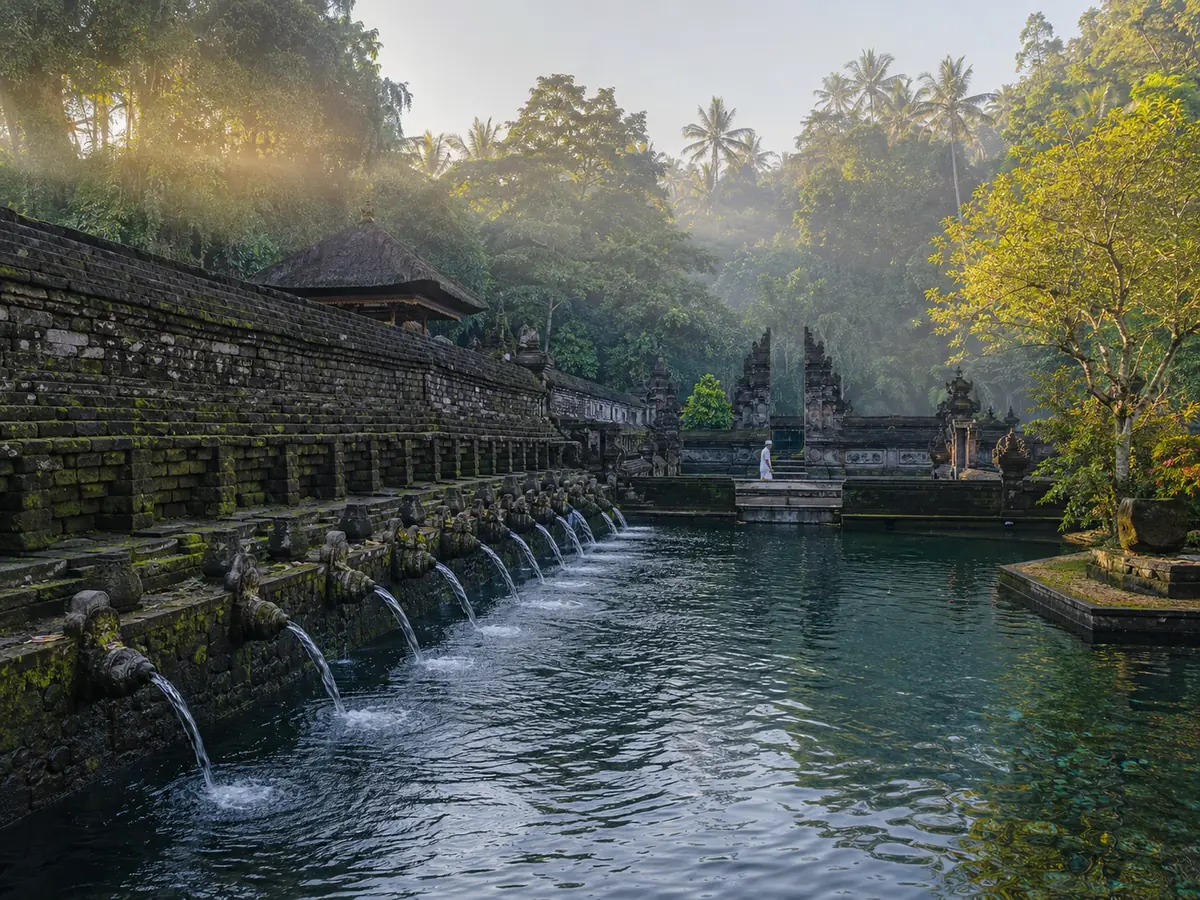
Pura Tirta Empul in Tampaksiring is one of Bali's best-known holy spring temples.
Its purification pools contain multiple spouts, but they do not all have the same ritual purpose.
First-time visitors benefit from asking an authorised attendant which sequence is appropriate instead of simply following the person in front.
The official Indonesia Travel guide states that visitors from different backgrounds may participate sincerely and respectfully.
The site can become busy, so an early visit may make it easier to listen, move carefully and avoid treating the pool as a sightseeing queue.
Taman Beji Griya Waterfall
Taman Beji Griya is located in Punggul Village, Badung.
The site combines a sacred spring, water spouts, a gorge, waterfall areas and priest-guided purification options.
It is more organised around visitor experiences than a simple temple admission, so packages and fees can vary substantially.
Ask what the quoted price includes: general entry, ceremony guidance, offerings, clothing, priest donation, photography and transport may be treated separately.
Confirm the current arrangement directly rather than relying on an old social-media post.
Pura Gunung Kawi Sebatu
Gunung Kawi Sebatu offers a quieter sacred water setting in Tegallalang.
Indonesia's official tourism database lists it as a water-based attraction verified by the tourism authority, with on-site payment.
It can suit visitors looking for a less crowded temple environment, although ritual availability should still be checked locally.
Melukat Bali Price: What Should You Budget?
There is no single Melukat Bali price.
Costs depend on the sacred location, admission category, clothing, offerings, guide, priest arrangements, transport and whether the experience is a public temple visit or a privately coordinated ceremony.
Indonesia Travel currently lists Tirta Empul admission at IDR 50,000 for adults and IDR 25,000 for children.
It states that there is no separate Melukat fee there, while a sarong and sash rental may cost around IDR 10,000 to 15,000.
A voluntary offering donation can also apply.
Prices can change, so check again before visiting.
The Indonesian tourism database lists Gunung Kawi Sebatu admission in the IDR 20,000 to 30,000 range.
More guided waterfall experiences can cost considerably more because they may bundle multiple ritual points, garments, offerings or assistance.
A private Retreat excursion may also include transport and facilitation rather than only the gate ticket.
Essential Melukat Etiquette
- Dress correctly: Wear the required sarong and sash and keep clothing modest in and out of the water.
- Follow local instruction: Ask which water spouts, shrines and areas visitors may use.
- Respect prayer: Do not walk in front of worshippers, stand above a priest unnecessarily or interrupt a blessing.
- Ask before photographing: Some moments and sacred areas should not be photographed.
- Keep the water clean: Do not use soap, leave rubbish or treat a sacred pool as a recreational swimming area.
- Observe temple access rules: Bali temples commonly restrict entry during menstruation and in other states described locally as cuntaka. Check the current rule directly and follow it without asking staff to make an exception.
The Bali tourism authorities advise visitors to respect religious processions and sacred places.
If instructions differ from something read online, the priest, temple attendant and posted local rules take priority.
Melukat Within a Healing Retreat Bali Experience
A culturally responsible Retreat does not use Melukat as proof of a medical or psychological cure.
The ceremony has spiritual meaning in Balinese Hindu tradition, while a guest's personal interpretation may involve reflection, intention or symbolic release.
Those meanings can coexist without turning religious practice into a clinical claim.
YogaFX offers specialised 6-day Exclusive Detox & Burnout Reset Retreats in Bali.
It also offers internationally recognised yoga teacher-training programmes.
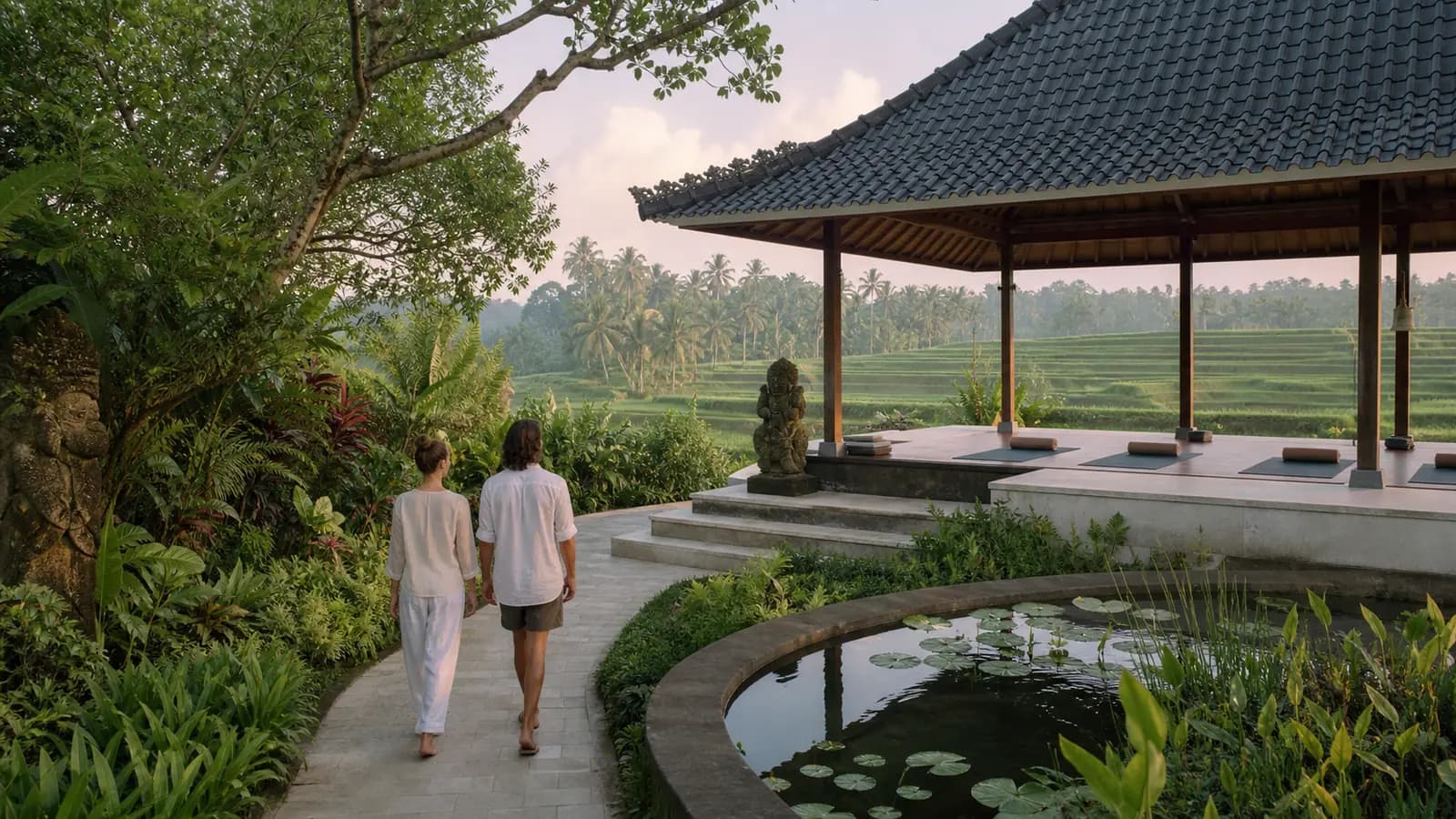
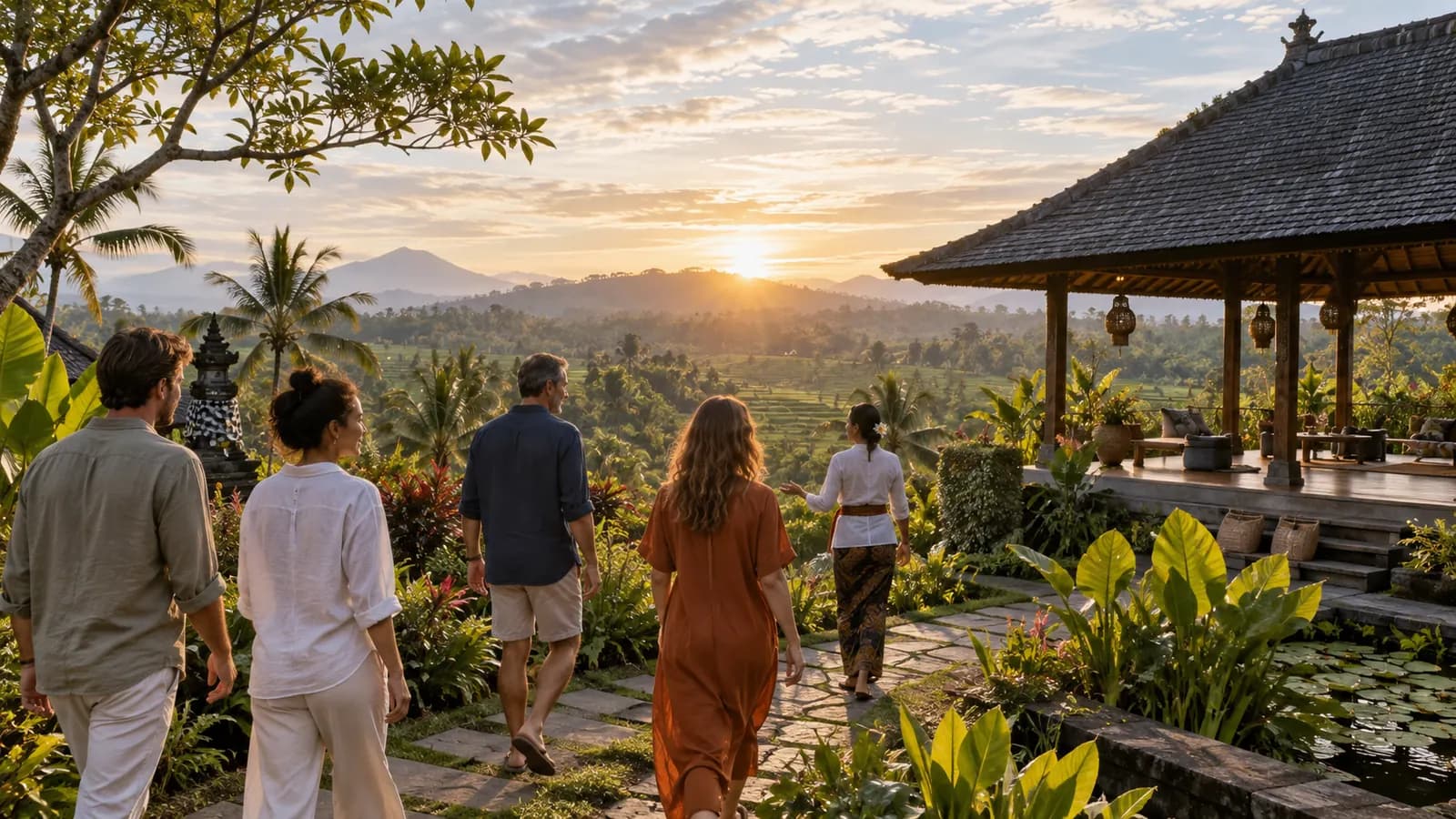
The Retreat is held at a private North Bali sanctuary and is distinct from the teacher-training programme.
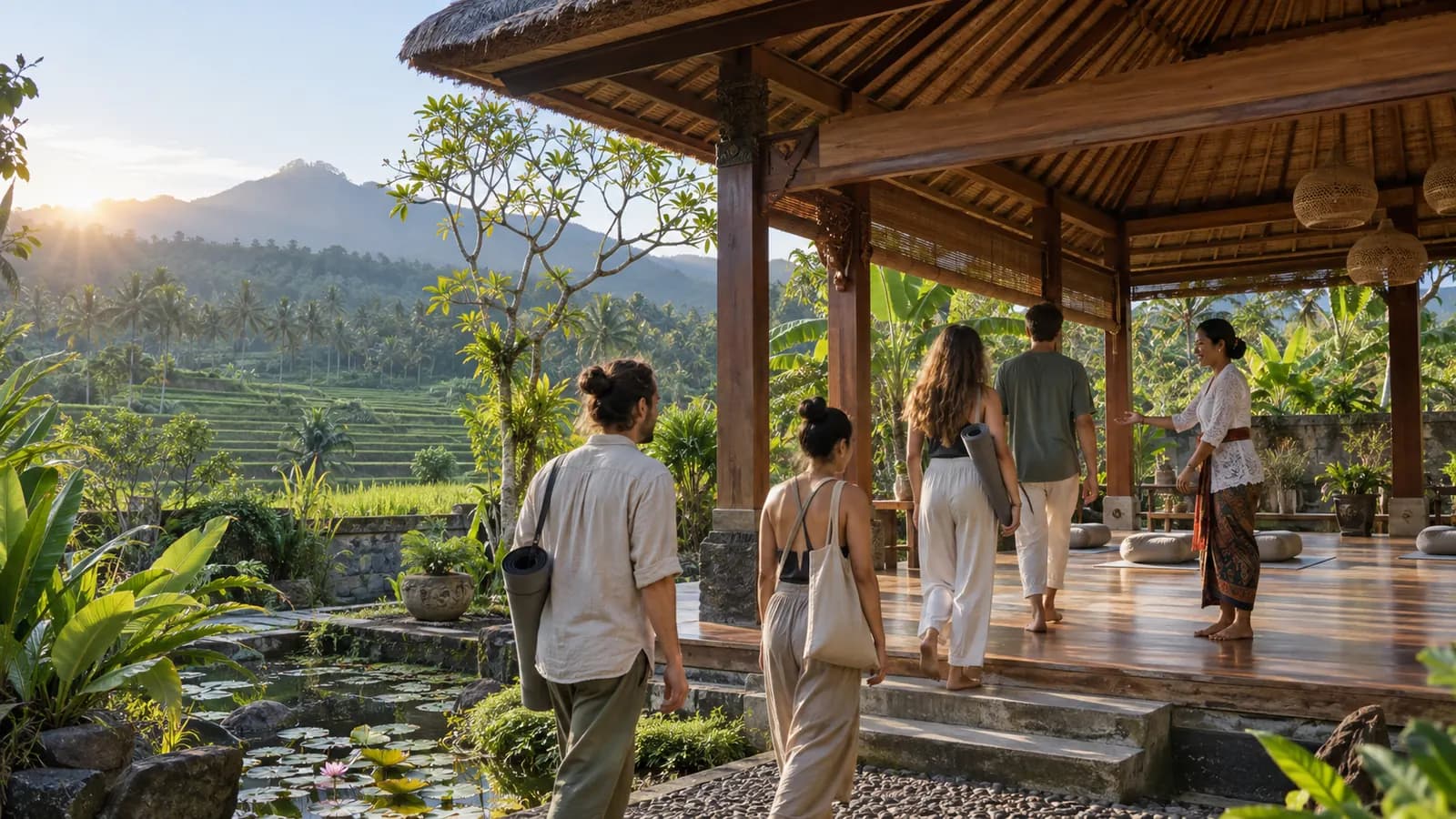
The six-day format combines somatic yoga, nervous system practices, movement, nourishing meals, heat and hydrotherapy, sound healing, nature and selected Balinese healing or cultural experiences.
The small group is limited to 20 guests, and the programme is led personally by Mr. Ian.
A Balinese ceremony can provide a meaningful cultural and reflective point within that wider progression.
The exact ritual and location remain subject to local access, religious calendars and coordination with Balinese partners.
This respects the fact that sacred practice cannot always be scheduled like an ordinary spa appointment.
How to Choose a Respectful Healing Retreat
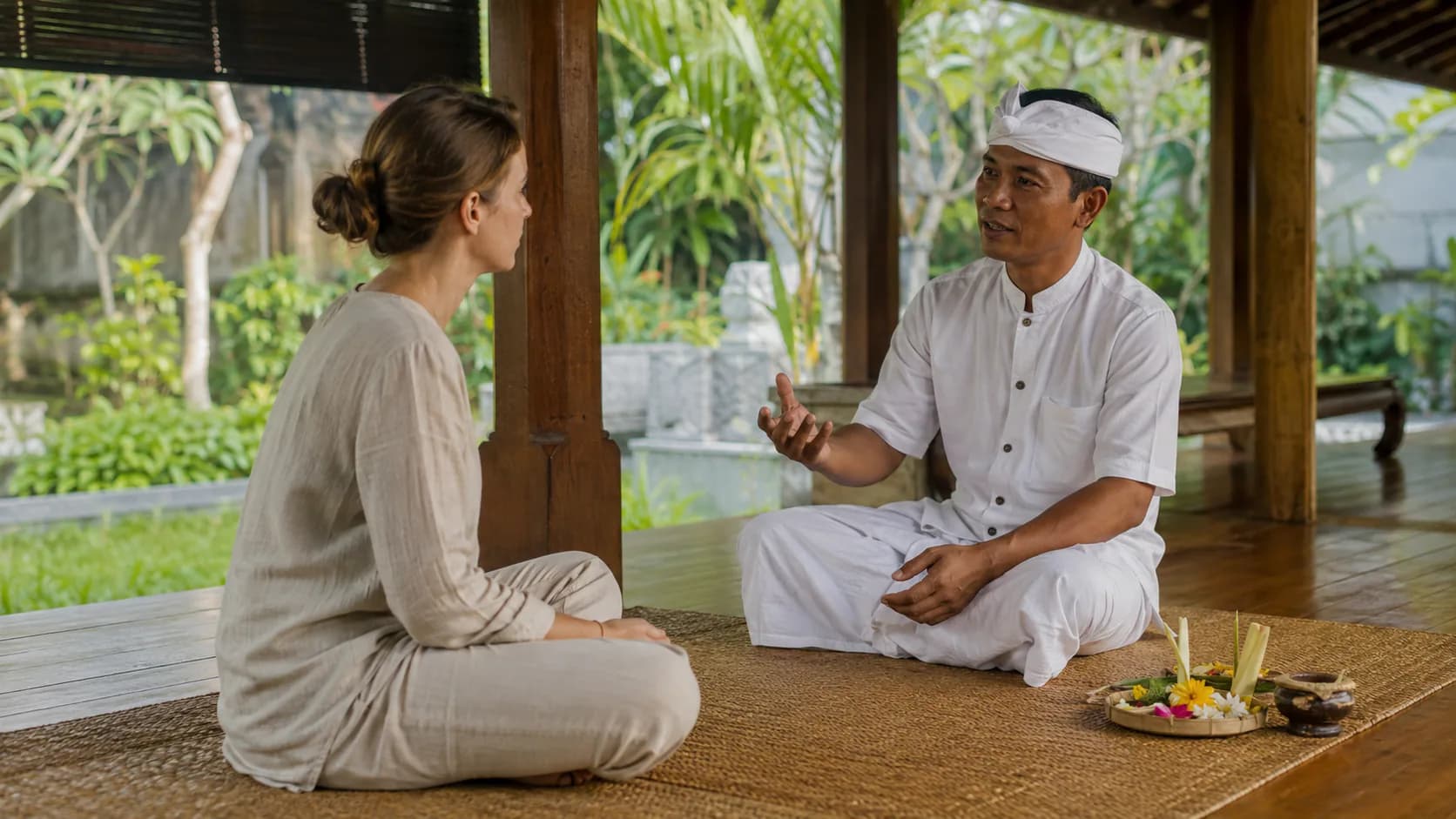
Ask who coordinates the ceremony, whether a local priest or community is involved, what the fee covers and how guests are briefed.
Avoid programmes that guarantee removal of trauma, illness or “negative energy” as a medical fact.
A credible provider can describe spiritual tradition without claiming clinical treatment.
Also review the complete daily schedule.
One ceremony does not define an entire healing Retreat Bali programme.
Accommodation, facilitator credentials, rest, movement, food, safety, group size and post-Retreat integration determine whether the broader experience fits your needs.
Explore the YogaFX 6-day programme, review the day-by-day journey and confirm what is included.
When the programme and its cultural approach feel appropriate, register your interest to discuss suitability and current ceremony arrangements with the team.
A respectful Melukat ceremony asks visitors to arrive as guests, listen carefully and let local religious guidance shape the experience.
That attitude matters more than reproducing a checklist or capturing the perfect photograph.