
People often compare yoga and meditation retreats in Bali as if they were one category.
Many programs are happy to blur the line because offering both sounds comprehensive.
It is worth separating them, because their daily rhythms, demands and intended focus can be quite different.
A yoga retreat usually uses physical practice as the main structure of the day.
A meditation retreat gives more time to seated awareness, stillness and, in some cases, silence.
A hybrid retreat can combine both well, but the ratio and sequencing matter more than the labels on the booking page.
The right format depends on what you need from the time away.
Someone returning to movement may prefer a yoga-forward week.
Someone wanting sustained quiet may value a meditation-first environment.
A person seeking a broader reset may prefer a genuinely integrated program rather than either practice in isolation.
The Core Difference Between Yoga and Meditation Retreats
A yoga retreat is built around physical practice as its daily anchor.
This usually includes asana, breathing practices, mobility and movement-based sessions, often more than once each day.
Meditation may appear before or after practice, but the body remains the main route into the experience.
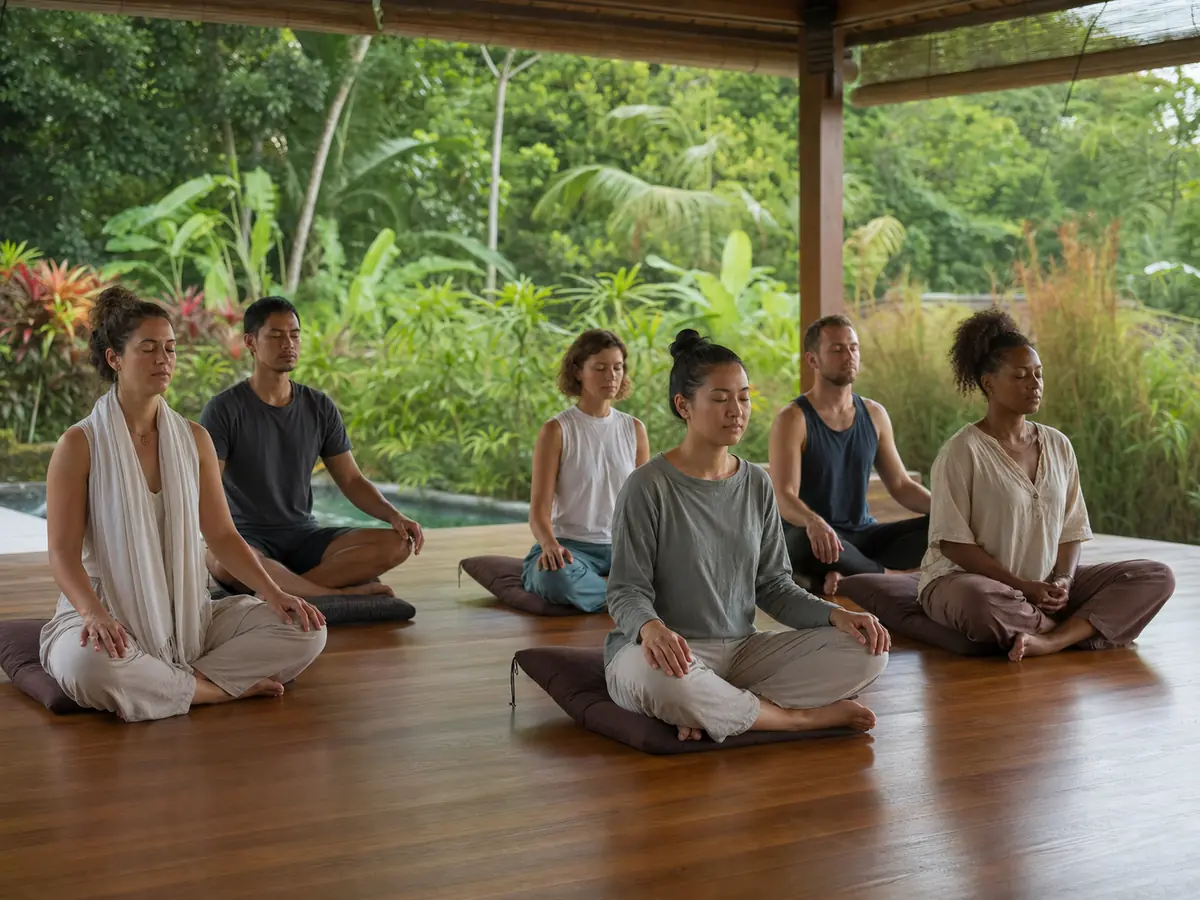
A meditation retreat is built around stillness practice.
Guests may sit for repeated periods throughout the day, receive instruction in attention or awareness and spend less time in physical activity.
Some programs use walking meditation or light movement to support longer periods of sitting.
The distinction is not a judgement about which practice is deeper.
It describes how the retreat uses time.
Yoga asks guests to participate through movement, sensation and breath.
Meditation gives them fewer physical tasks and more time to observe thoughts, emotions and attention.
Most retreats marketed as yoga and meditation combine both, but the ratio reveals the real format.
A program that is 80% yoga with 15 minutes of meditation added to each class is a yoga retreat with a meditation feature.
A meditation retreat offering one gentle stretch session is still meditation-forward.
What a Typical Day Can Look Like
At a yoga-forward retreat, the day may begin with breathing and an active morning class, followed by breakfast, workshops or excursions, then a gentler evening practice.
The schedule often alternates effort and recovery.
Guests should expect to change clothes, use mats and move through a range of postures.
At a meditation-forward retreat, the day may contain several seated sessions separated by meals, walking, talks and rest.
Silence may be encouraged during certain periods.
Physical comfort becomes an important practical consideration because extended sitting can be demanding even when it looks passive.
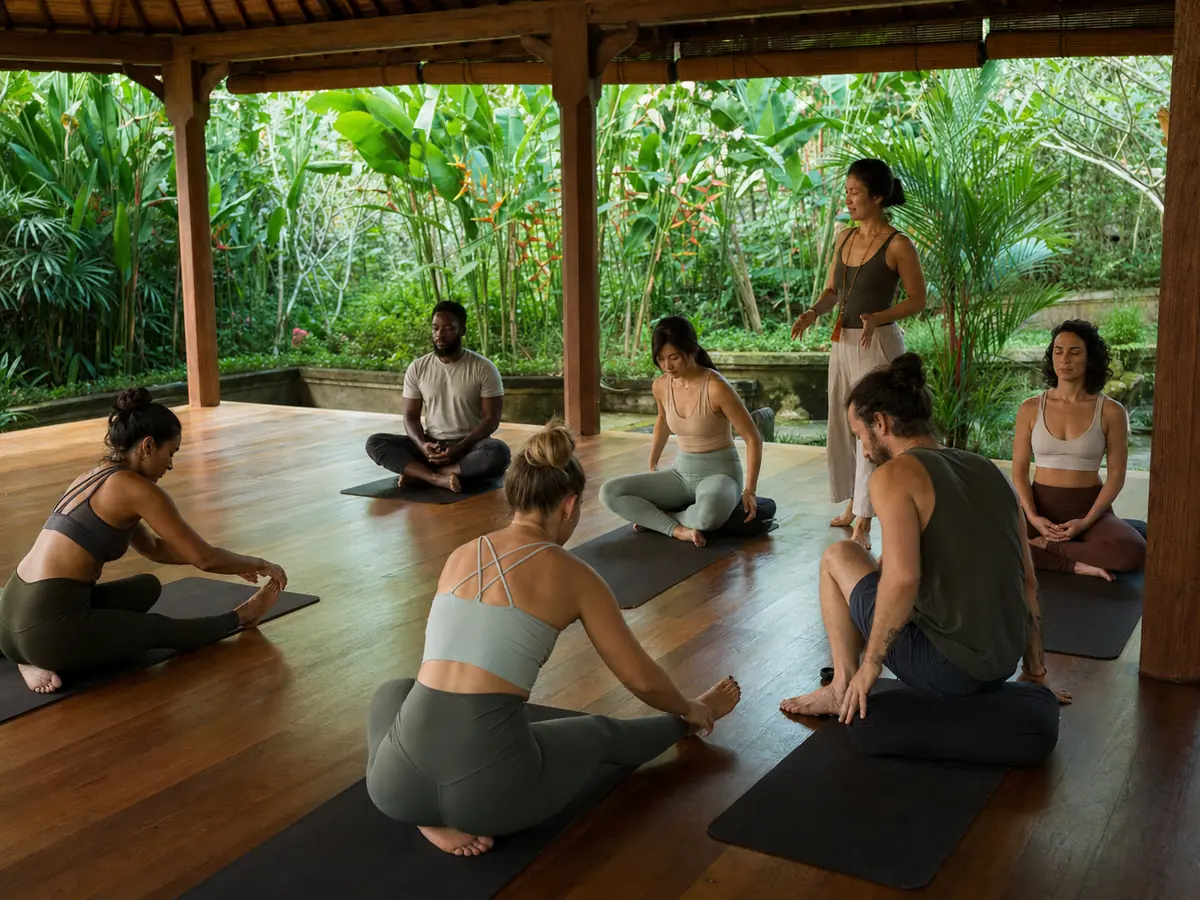
A hybrid day may use movement first, then transition into seated reflection after the body has warmed and attention has settled.
The practices should feel deliberately connected.
If yoga and meditation appear as unrelated menu items, the program may be broad without being integrated.
Which One Fits What You Are Actually Looking For?
If you want to return to movement
A yoga-forward retreat generally gives more direct support for mobility, body awareness and rebuilding a movement routine.
The repeated practice can help guests notice where they feel stiff, tired or disconnected from their bodies.
Good instruction should offer modifications rather than expecting every guest to perform at the same level.
Check the style and intensity before booking.
A retreat built around demanding heated classes feels very different from one focused on restorative yoga.
Ask how many sessions are active, how long they last and whether complete beginners are genuinely accommodated.
If you want sustained mental quiet
A meditation-forward retreat offers more uninterrupted time for stillness and attention practice.
It may suit someone who wants to understand racing thoughts, build a regular meditation habit or spend less time doing.
The reduced activity can be valuable, but it can also feel challenging when someone is used to constant stimulation.
Ask whether the retreat includes silence and for how long.
Some guests value quiet meals and limited conversation.
Others want guidance, community and shared reflection.
Neither preference is wrong, but they lead to very different experiences.
If you want a broader reset
An integrated program may suit goals that involve both physical tension and mental overload.
Movement and stillness are not competing priorities in this format.
They are two practical tools used within the same schedule, often alongside nutrition, nature, rest and structured reflection.
This is closer to how the YogaFX retreat is designed.
It does not ask guests to choose between an active yoga holiday and an intensive silent retreat.
Instead, the schedule moves between effort and quiet according to the purpose of each day.
You can see that progression in the full 6-day itinerary.
Physical Demand, Silence and Social Contact
The visible activity level is only one part of a retreat's demand.
Several yoga classes each day can be physically tiring, especially in heat or humidity.
Long meditation sessions can also be demanding because sitting still brings its own discomfort and leaves fewer distractions from thoughts or emotions.
Ask what a normal session requires rather than assuming yoga is hard and meditation is easy.
A gentle movement retreat may be more accessible than a strict seated program.
Likewise, a meditation retreat with walking periods and supportive chairs may be easier on the body than its photographs suggest.
Social contact differs too.
Yoga retreats commonly include shared meals, excursions and informal conversation.
Meditation retreats may limit talking to protect continuity of practice.
A hybrid can preserve community while creating selected quiet periods, but the provider should explain this balance in advance.
Your response to silence is worth considering honestly.
Some people feel relieved when conversation and phones stop.
Others feel isolated or unsettled without ordinary social cues.
A shorter guided period of quiet may be a better introduction than several days of silence if you have never tried it before.
When a Hybrid Retreat Works, and When It Does Not
A hybrid works when yoga and meditation have distinct roles inside one coherent schedule.
Movement might prepare the body for stillness, while reflection may help guests notice what emerged during practice.
Rest, meals and nature can then support the change of pace rather than competing for attention.
A hybrid becomes diluted when the provider adds many activities but gives none enough time or guidance.
One brief meditation, one yoga class and a crowded list of excursions may create variety without depth.
More items on the itinerary do not automatically create a more complete experience.
Look for transitions as well as sessions.
Does the schedule move immediately from quiet meditation to transport, conversation and a busy excursion?
Is there time after a physical class to recover before the next workshop?
Thoughtful spacing can reveal more about program quality than the number of modalities advertised.
The lead teacher should also be able to explain the combined approach in plain language.
If every practice is described as transformational but the relationship between them remains unclear, the hybrid label may be marketing rather than methodology.
Questions to Ask Before You Book
Start by asking for a timetable with session lengths.
Words such as yoga, meditation and mindfulness can describe anything from a five-minute introduction to several hours of daily practice.
A clear schedule lets you calculate the real balance.
Ask about the teaching approach.
Who leads the yoga?
Who teaches meditation?
What credentials and experience do they have?
A provider should be able to explain how beginners are supported, how physical limitations are handled and whether guests can step out of a session when needed.
Clarify expectations around silence, phones and participation.
Some retreats require every session and maintain silence for much of the day.
Others offer a flexible schedule.
Structure can be useful, but you should know how much choice remains before you arrive.
Finally, ask what the retreat does not provide.
A wellness retreat is not psychotherapy, medical treatment or a substitute for individual clinical care.
Responsible providers should describe their scope clearly rather than suggesting that one week can resolve every source of stress.
Why YogaFX Combines Movement and Stillness
Mr. Ian designed the Retreat around deliberate changes in pace.
Physical movement and stillness ask different things of attention and the body, so the program uses both across a multi-day sequence rather than treating meditation as an afterthought.
Movement-based sessions create a direct way to notice and work with accumulated physical tension.
Stillness and reflection then provide space to observe what becomes apparent when activity slows.
This is a program design choice, not a promise that either practice treats a medical or mental health condition.
The broader reasoning is discussed in Nervous System Reset 101, which reviews what research does and does not support.
That distinction matters because nervous system language is often used loosely in retreat marketing.
Yoga Retreat, Meditation Retreat or Hybrid?
Choose based on the daily experience you want, not the broadest list of activities.
A yoga retreat is likely the better fit when movement, physical practice and active participation are priorities.
A meditation retreat is better suited to sustained stillness and focused attention practice.
A genuine hybrid can make sense when your goal is wider and you value both movement and quiet.
Look for sequencing, qualified guidance and enough time for each practice to have a clear role.
Our Yoga Retreat Bali complete guide can help you compare this choice with location, group size, inclusions and teaching style.
The best yoga meditation retreat Bali option is the one whose real timetable matches what you need.
Read beyond the activity list, verify the balance and choose the environment in which you can participate honestly rather than the one with the most expansive label.
This article is for general information only and is not a substitute for professional medical advice.