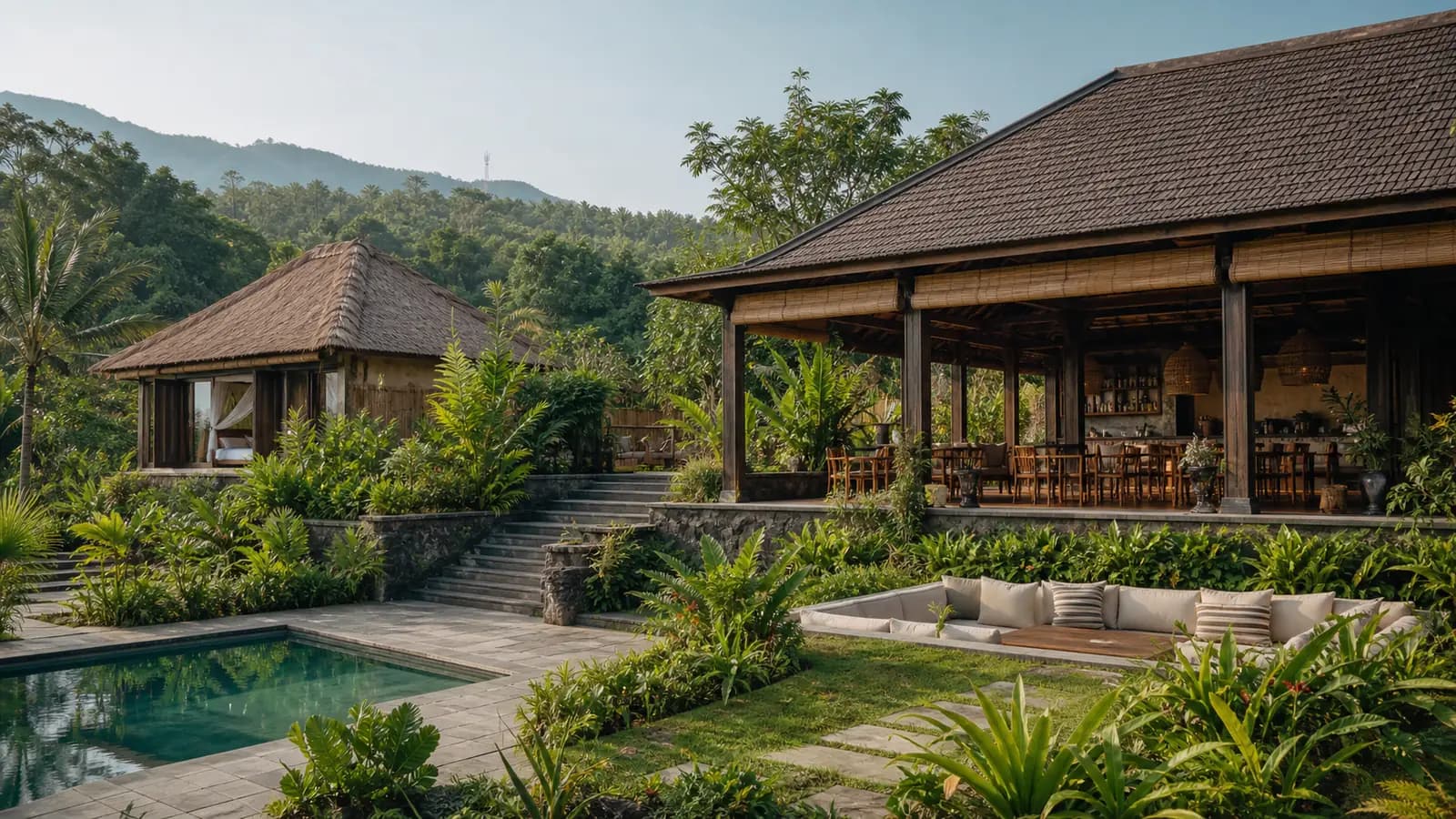

A hot yoga retreat in Bali combines guided practice in a heated environment with accommodation, recovery time and a wider multi-day programme. At YogaFX Retreats, hot yoga is one selected element of a six-day North Bali experience, not an uninterrupted week of intense heated classes or a test of endurance.
This guide explains the experience using confirmed programme information. Exact room temperature, session duration, frequency and sequence for a particular intake should be confirmed directly with the team before booking.
What Is a Hot Yoga Retreat?
Hot yoga is guided yoga practised in a heated room. The warmth changes how the session feels: heart rate, sweating, hydration needs and perceived effort can differ from an equivalent room-temperature class.
A single studio class begins and ends within one appointment. A retreat adds accommodation, meals, scheduled rest, repeated contact with the programme team and other activities before and after the heated practice.
That broader setting matters. Guests need time to arrive, understand instructions, cool down, eat, sleep and notice how they respond across several days.
A responsible hot yoga retreat does not promise that sweating removes toxins or that greater heat produces better results. Heat is an environmental demand that requires preparation, pacing and permission to stop.
How Hot Yoga Fits into YogaFX Retreats
YogaFX began as a Bikram-method hot yoga school, and the retreat programme draws on that teaching background. Confirmed facilities include a purpose-built hot yoga studio for selected heat-based sessions.
Hot yoga sits within the Reboot Your Body and wider physical-recovery elements of the programme. It is balanced with Somatic Decompression Yoga, Tai Chi, Integration Yoga Mobility, nourishing meals, quiet transitions and other recovery experiences.
The retreat also includes sauna, hydrotherapy circuits, cold-water immersion and Microbiotic Thermal Fermentation. These are distinct experiences rather than one continuous heat challenge.
| Area | Single hot yoga class | YogaFX retreat setting |
|---|---|---|
| Time frame | One scheduled practice | Selected sessions inside a six-day arc |
| Before and after | Managed independently | Meals, rest and other guided activities form the wider schedule |
| Main purpose | Complete a class | Participate in a broader wellness and burnout-reset programme |
| Practice mix | Usually one yoga format | Hot yoga alongside slower somatic, mobility and recovery practices |
Review the YogaFX Retreats programme for the complete framework rather than choosing the retreat from the words hot yoga alone.
What to Expect During a Hot Yoga Session
A session should begin with clear orientation. Tell the instructor if it is your first heated practice, if you have an injury or if anything has changed since your application.
Follow the teacher's instructions while keeping attention on breathing, coordination and warning signs from your own body. A posture does not need to look like someone else's version to be worthwhile.
YogaFX's background includes the fixed 26&2 format, traditionally organised around 26 postures and two breathing exercises. However, the public retreat information does not promise that every heated session is a complete 26&2 class. The actual sequence follows the confirmed intake schedule and the teacher's instructions.
Taking a lower-intensity version, resting or leaving the heated room is not failure. If you feel faint, weak, dizzy, nauseated, confused or unusually unwell, stop rather than attempting to finish.
After the session, allow time to cool down, hydrate according to professional and programme guidance, change out of wet clothing and observe how you feel before moving into the next activity.

Can Beginners Join a Hot Yoga Retreat in Bali?
No previous hot yoga or advanced yoga experience is required for the YogaFX retreat. Beginners should still approach heat as a meaningful physical variable, not assume that beginner-friendly means effortless or suitable for everyone.
Tell the programme team that you are new before arriving. Ask how instruction works, how to communicate during class and what to do if you need to reduce intensity.
New students should avoid treating flexibility, sweat volume or staying in the room longest as measures of success. Stable breathing, clear attention and an honest response to discomfort are more useful guides.
The dedicated guide to yoga retreats in Bali for beginners explains the full programme, modifications and application considerations beyond heated practice.
What to Consider Before Practising in a Heated Room
The US National Center for Complementary and Integrative Health states that hot yoga has particular risks related to overheating and dehydration. It advises pregnant people to avoid hot yoga and recommends that older adults and people with health conditions discuss individual needs with healthcare providers and instructors.
Health conditions, previous heat illness, fainting, injuries and some medications may change what is appropriate. Do not stop or alter prescribed medicine to join a session. Ask a qualified healthcare professional who knows your history and tell the retreat team before acceptance.
The US Centers for Disease Control and Prevention advises stopping activity and moving to a cool place if you feel faint or weak during exercise in heat.
Safety questions to resolve before arrival
- Does a health condition, pregnancy, injury or medication affect heat tolerance?
- What symptoms mean you should stop immediately?
- How do you leave the room safely and notify the instructor?
- Which modifications can be discussed, and which situations require non-participation?
This retreat is a non-clinical wellness programme. Its application process and yoga instruction do not replace medical screening, diagnosis or treatment.
How to Prepare for Your Hot Yoga Retreat
Pack three or four breathable practice outfits so wet clothing has time to dry. Include dry clothes for after class and a lightweight layer for quiet or air-conditioned spaces.
Bring a reusable water bottle. A non-slip mat towel can improve grip during a humid or heated session, but confirm whether yoga mats, yoga towels and drinking-water stations are supplied for your intake.
Arrive with enough time to hear orientation rather than entering after practice begins. Follow the retreat team's food and hydration guidance instead of copying an extreme routine from social media.
Prescription medication should remain in original packaging and travel with any documentation required for Bali. Never change a dose because of a retreat article or instructor suggestion.

Use the full guide to what to pack for your Bali retreat for footwear, sun protection, swimwear, medication and off-the-mat essentials.
Beyond Hot Yoga: The Wider YogaFX Retreats Experience
The six-day programme takes place at a private North Bali sanctuary with a maximum of 20 guests. Hot yoga is only one reason someone may choose it.
Confirmed categories include sanctuary accommodation, chef-prepared Cellular Cleanse Nutrition, somatic and nervous-system-focused movement, heat and hydrotherapy, Balinese cultural experiences, sound healing, nature immersion and Cognitive Mastery workshops.
Airport transfers and VIP concierge support are included. The estate is alcohol-free, and reduced phone use is encouraged as part of the wider reset.
Rest is not spare time left over after activities. Sleep, meals, quiet transitions and recovery help prevent a structured retreat from becoming another performance schedule.
See what your retreat includes and confirm any item that is essential to your decision directly with the team.
Top Hot Yoga and Wellness Centres in Bali
YogaFX Retreats
YogaFX Retreats is a structured North Bali option for travellers who want selected heated practice inside a wider wellness and burnout-reset programme.
Its distinguishing features are the private sanctuary, maximum 20-guest intake, dedicated hot yoga studio, multiple movement styles, recovery facilities and one connected six-day itinerary.
It is not positioned as an unlimited hot yoga camp or an open timetable of drop-in classes. That distinction makes it especially important to ask for the current intake schedule if hot yoga frequency is central to your booking decision.
Questions to Ask Before Booking
Good booking questions turn a broad promise into a practical expectation. Ask the YogaFX team:
- How many hot yoga sessions are planned for this intake?
- What is the expected duration and heated-room temperature?
- Does the session use a complete 26&2 sequence or another format?
- How are first-time hot yoga students oriented?
- What mats, towels and hydration facilities are supplied?
- How should a guest communicate the need to pause or leave?
- Can medical limitations be accommodated safely?
- Is an alternative activity available, or should the guest plan for rest?
- Which accommodation, meals, transfers and activities are included?
Answers about frequency, temperature and alternatives should come from the team responsible for the actual intake, not from assumptions based on another retreat or studio class.
Plan Your Stay with YogaFX Retreats
A good fit is someone interested in guided heated practice but equally willing to participate in rest, somatic movement, workshops, nutrition and the broader six-day rhythm.
If your priority is an intensive schedule of several hot yoga classes every day, confirm the timetable before applying. The published YogaFX programme describes selected heat-based sessions rather than an unlimited class package.
Review the programme and inclusions first. Then use the application to disclose experience, health considerations and practical questions before a deposit is requested.
A hot yoga retreat in Bali should offer more than heat: clear instruction, realistic preparation, permission to stop and enough recovery around the practice to make the wider stay coherent.