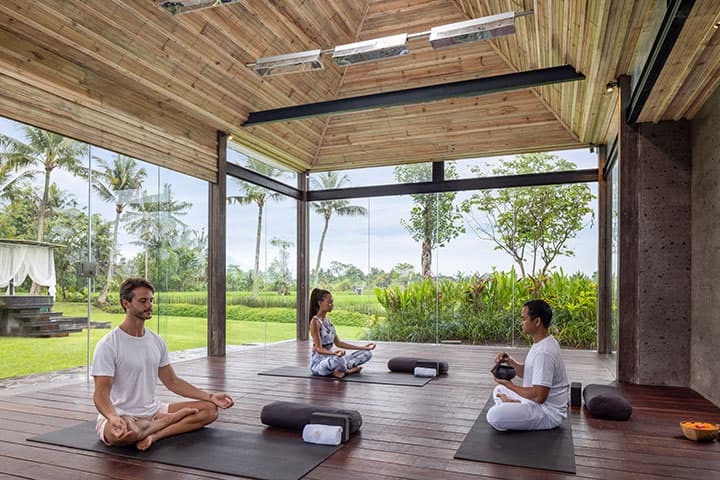

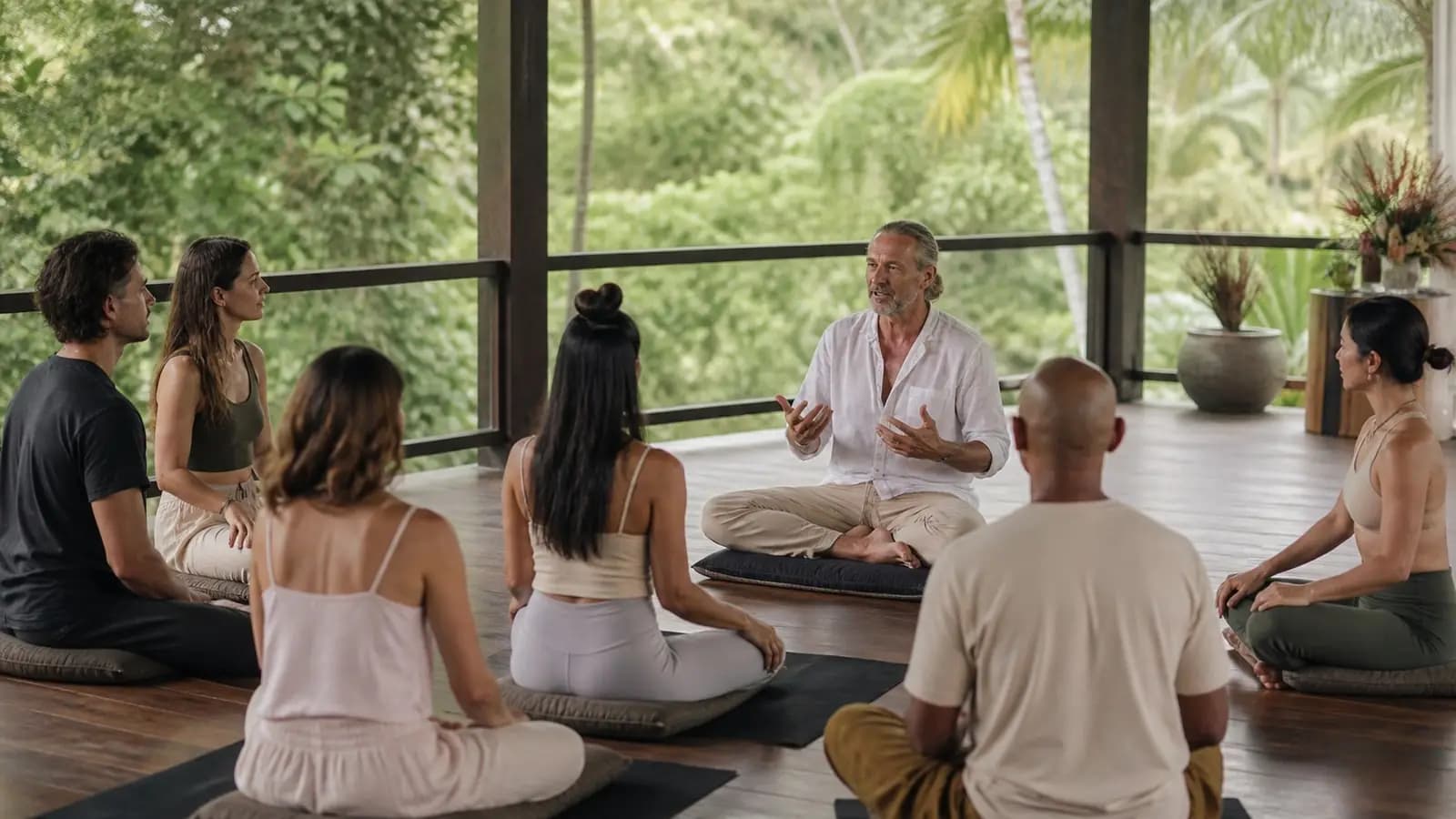
A Bali nervous system retreat is a structured programme combining somatic practice, thermal experiences and nature immersion to support recovery from persistent stress patterns. YogaFX's six-day North Bali programme applies five integrated pillars under a trainer certified in Applied Neuroscience and Brain Health, with no more than 20 guests per intake.
Bali's wellness landscape includes programmes described as nervous system regulation, burnout recovery and stress resets. The separate Bali reset retreat guide explains how mental, physical, behavioural and nervous-system reset practices fit within the complete six-day structure.
YogaFX places these practices inside a guided, non-clinical retreat at a private North Bali sanctuary, away from the busier Ubud, Canggu and Seminyak corridors.
TL;DR: Nervous System Reset Retreat
- Six days in a private North Bali sanctuary with a maximum of 20 guests
- Somatic movement, thermal practices, nature and applied-neuroscience-informed education
- The word reset is a wellness metaphor, not a neurological procedure
- Not therapy, psychiatric care, rehabilitation or treatment for a diagnosed condition
- Application-led booking with twin-share and single-occupancy options
What Happens to Your Nervous System When You Are Burned Out?
The autonomic nervous system continually adjusts breathing, cardiovascular activity, digestion and alertness in response to changing demands.
The sympathetic branch helps mobilise energy during challenge, while parasympathetic pathways contribute to rest, digestion and recovery.
Neither branch is good or bad, and they do not operate as simple opposing switches.
Under persistent pressure, some people describe feeling unable to settle, constantly alert, emotionally flat or exhausted despite rest.
These experiences are not proof of one diagnosis and can also have medical, psychological, sleep-related or medication-related causes.
Porges' 2022 review of polyvagal theory describes regulation and co-regulation through an autonomic framework.
It is a useful lens in some wellness settings, but it does not establish that a retreat can literally reset the central nervous system or guarantee recovery.
YogaFX's Nervous System Reset and Burnout Retreat
This nervous system reset retreat occupies a deliberate middle ground between casual wellness tourism and clinical treatment.
It is non-clinical, yet more structured than a collection of optional spa appointments. Read the spa, sauna and hydrotherapy guide for the confirmed facilities, health considerations and questions to ask before joining a thermal session.
The methodology connects five pillars across a progressive six-day programme:
- Reset Mentally: create distance from routine demands and automatic work patterns.
- Detox Physically: support consistent nourishment, an alcohol-free environment and carefully paced thermal experiences.
- Reboot Your Body: rebuild contact with movement, breath, rest and physical sensation.
- Nervous System Reset: combine somatic work, quiet recovery, heat and hydrotherapy.
- Dismantle Self-Sabotage: examine coping loops and prepare realistic changes for home.
Mr. Ian Terry leads the programme personally.
He is an E-RYT 500 Master Yoga Trainer with Applied Neuroscience and Brain Health certification and more than 12,000 teaching hours.
The intake is capped at 20 guests so the programme retains a consistent small-group structure.
Inside a Nervous System Reset Day: Somatic and Thermal Therapy
A nervous system reset day is not built around one miracle technique.
It combines different levels of activity with transitions, food and recovery so stimulation does not remain high from morning to night.
| Element | Confirmed practices | Purpose within the day |
|---|---|---|
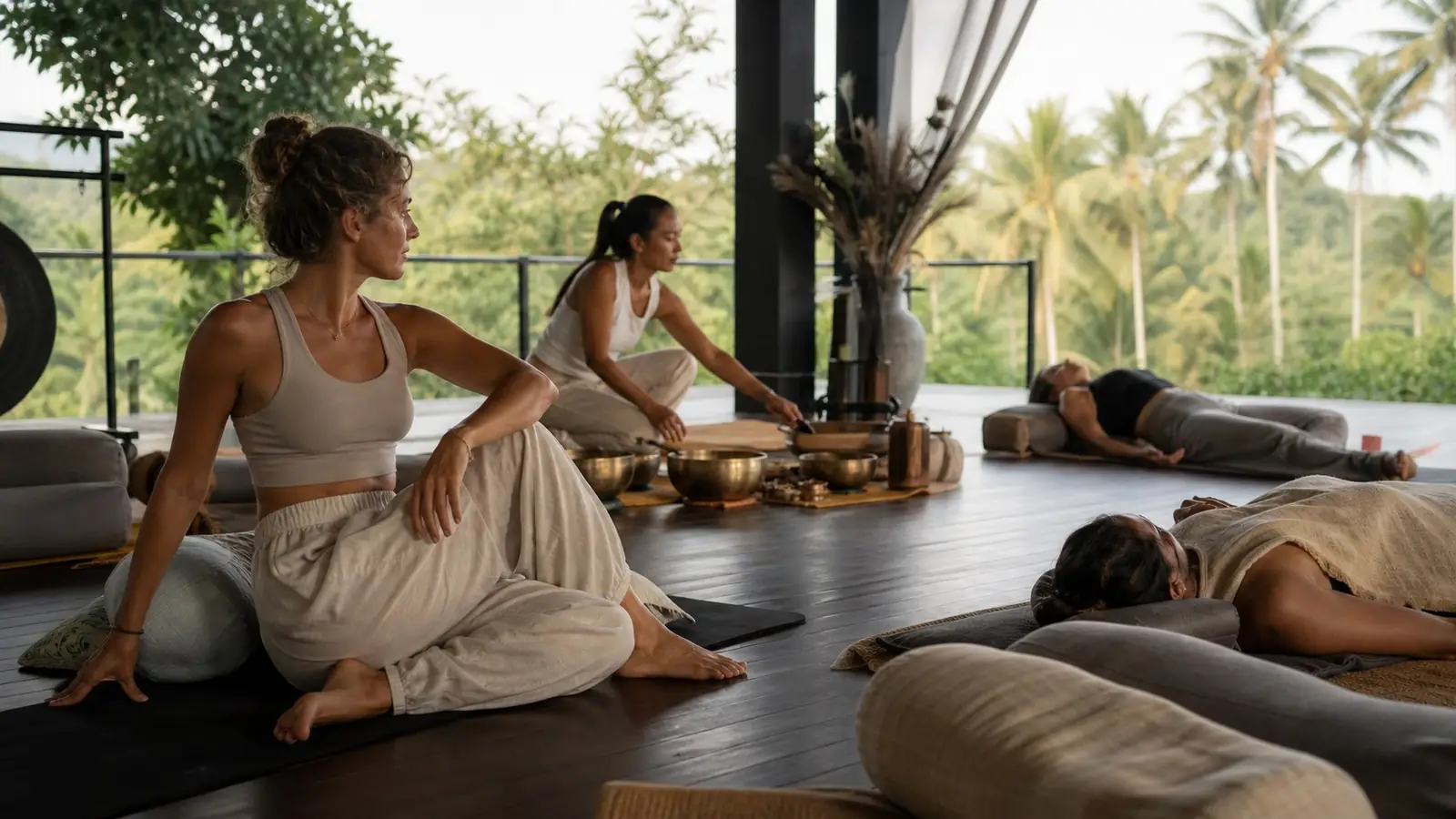
| Somatic work | Tai Chi, Somatic Decompression Yoga and dedicated reset sessions | Notice sensation and vary effort |
| Nature immersion | Forest bathing, sacred waterfall trek and hot springs | Reduce routine cues and support sensory attention |
| Heat and hydrotherapy | Hot yoga, sauna, hydrotherapy circuits and cold-water plunge | Provide optional, carefully paced physical contrast |
| Nourishment and culture | Chef-prepared meals, cold-pressed juices, Welcome Puja and Fire Ceremony | Create rhythm, connection and cultural context |
Heat, cold and breath practices are not appropriate for everyone.
Guests should disclose relevant conditions and can decline or modify an activity rather than feeling pressured to complete it.
Why North Bali, Not Ubud or Canggu?
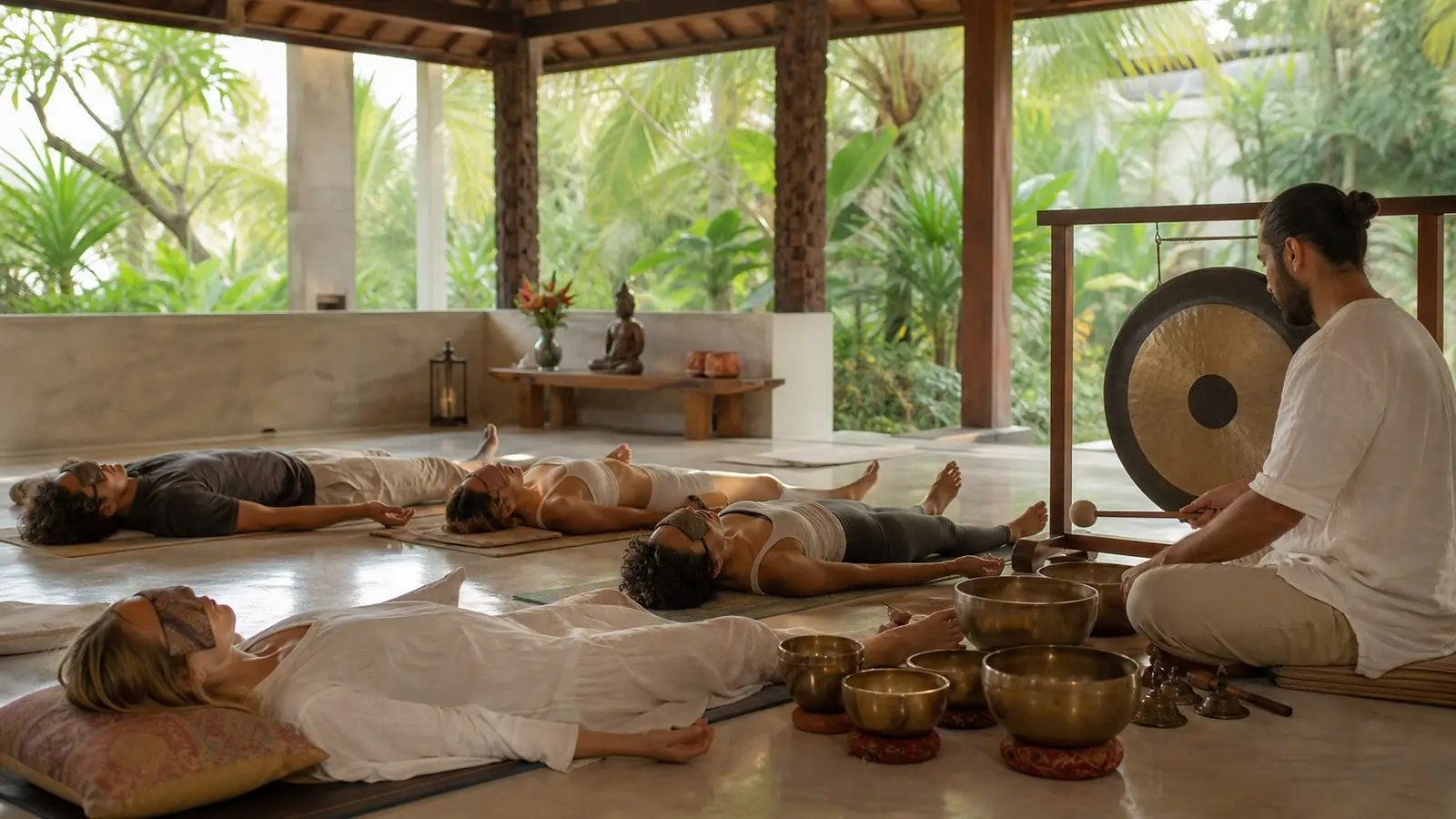
North Bali creates practical and psychological distance from the traffic, nightlife and dense visitor schedules associated with the south.
The private sanctuary supports an organised daily rhythm without requiring guests to navigate restaurants, studios and activities between sessions.
Location alone does not regulate a nervous system.
Its value comes from how privacy, nature, group size, transport and programming reduce avoidable decisions while preserving choice.
The estate is alcohol-free, and a digital detox is strongly encouraged.
Guests still need an agreed way to handle genuine emergencies rather than being isolated from support.

Nervous System Reset vs Somatic Healing at YogaFX
The two phrases overlap, but they describe different levels of the programme.
| Term | What it covers | Role at YogaFX |
|---|---|---|
| Nervous system reset | The wider environment, schedule, stimulation, recovery and integration | An umbrella pillar across the six days |
| Somatic healing | Body awareness, sensation, breath and appropriately paced movement | A group of practices within the wider reset |
YogaFX does not present Somatic Decompression Yoga as clinical Somatic Experiencing therapy.
Read the somatic healing retreat guide for the modality and its limits.
The nervous system regulation retreat guide focuses more closely on repeatable daily tools.
How Long Does a Nervous System Reset Actually Take?
There is no universal or medically defined nervous system reset timeline.
Six days can create an interruption to routine, repeated opportunities to practise and time to form an integration plan.
It cannot erase years of pressure or guarantee that symptoms will disappear.
The YogaFX itinerary progresses from welcome and grounding through cognitive work, hydrotherapy, reflection, breakthrough work, integration and a sunrise finale.
Review the complete six-day retreat arc before applying.
After returning home, recovery may require workload changes, consistent sleep, continued movement, social support and licensed care where appropriate.
Nervous System Retreat UK, USA, Mexico or Bali?
Geo searches such as nervous system retreat UK, nervous system retreat USA and nervous system retreat Mexico reflect a practical choice, not different nervous systems.
A nearby retreat can mean easier travel and better access to follow-up support.
A Bali destination creates greater distance from everyday cues, but requires longer flights and recovery time around travel.
Compare providers using the same criteria wherever they operate:
- Is the programme clinical or non-clinical, and is that distinction explicit?
- Are facilitator names, training and scope easy to verify?
- Are contraindications, screening and emergency procedures explained?
- Does the schedule include genuine rest and optionality?
- Are accommodation, food, transfers and total pricing transparent?
YogaFX is the Bali option described here and should be compared on confirmed programme details, not assumed superior solely because it requires international travel.
Who Is This Retreat For?
The retreat is designed for professionals, executives, founders and high achievers who feel caught in prolonged pressure or unhelpful coping loops.
Individuals can attend alone, while couples, business partners or close friends can apply to reset together.
No advanced yoga experience is required.
It is not an addiction detox, neurological treatment, psychiatric programme or substitute for licensed trauma therapy.
Someone in crisis, withdrawing from alcohol or drugs, or experiencing severe or unexplained symptoms needs appropriately qualified clinical support.
Read the burnout recovery retreat guide for the intended audience and realistic recovery expectations.
Registration and Investment
The next YogaFX intake is scheduled for January 31 to February 4, 2027 at a private North Bali sanctuary.
| Accommodation | Early bird | Regular | Saving |
|---|---|---|---|
| Single occupancy | $3,499 USD | $3,799 USD | $300 USD |
| Twin share, per person | $2,499 USD | $2,799 USD | $300 USD |
After an application is accepted, a $500 USD deposit secures the place.
The remaining balance is due 60 days before Day 1, and four monthly instalments are available during enrolment.
Review the five-pillar programme, confirmed inclusions and booking terms.
Apply only after reviewing the programme scope and health considerations. The team will discuss fit and accommodation before an accepted application proceeds to the $500 deposit.
A responsible nervous system healing retreat supports practice, context and informed choice without promising a literal neurological reset.