
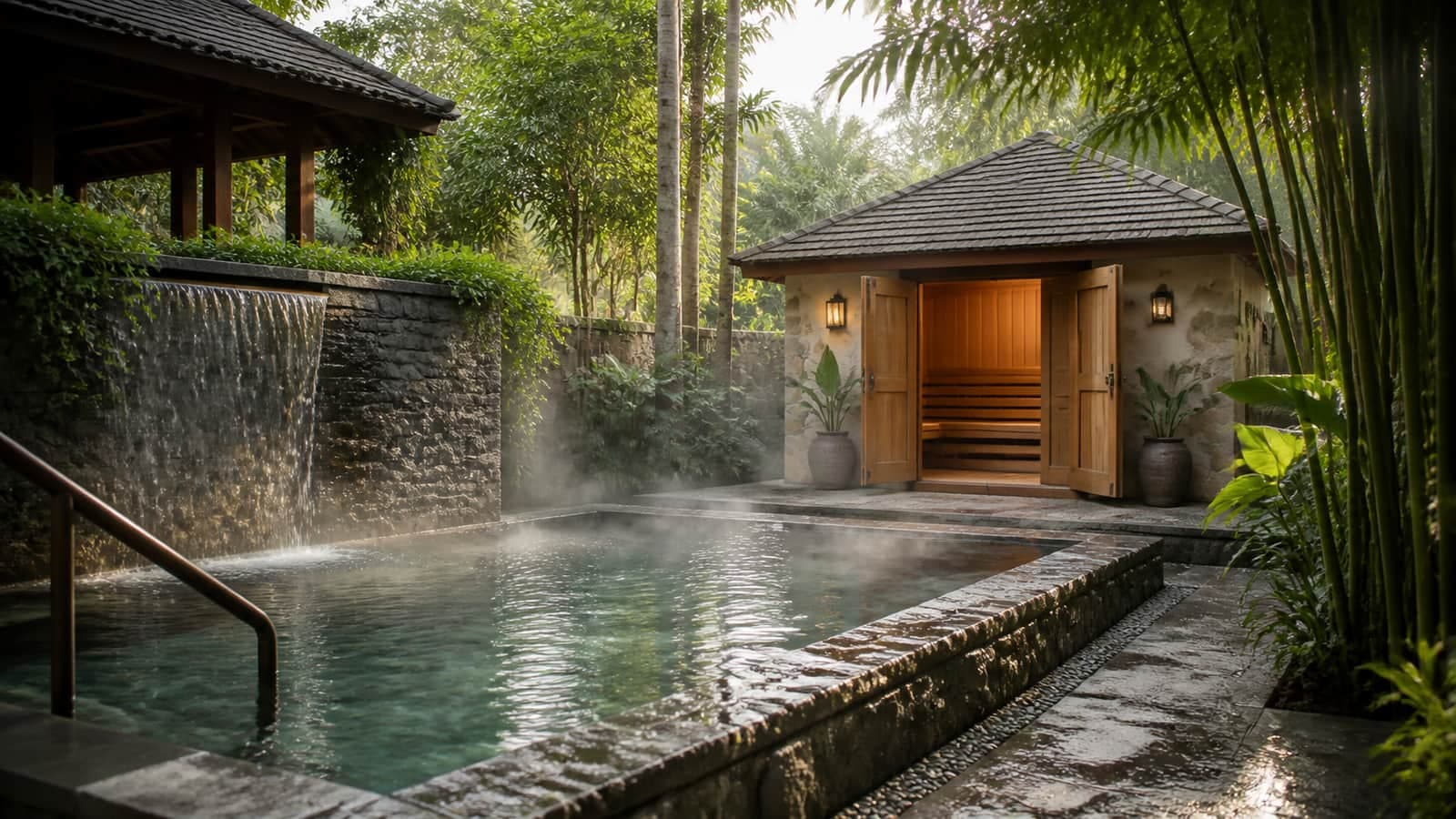
A spa and yoga retreat in Bali combines guided movement with planned rest, wellness facilities and selected treatments. At YogaFX Retreats, hot yoga, sauna, hydrotherapy and cold-water immersion sit within a wider six-day North Bali programme. Access and treatments follow the confirmed package, schedule and individual suitability.
This guide distinguishes facilities that exist at the sanctuary from sessions included in the programme. It also identifies details that need written confirmation before booking.
What Is a Spa and Yoga Retreat?
A spa and yoga retreat is a residential programme rather than a single yoga class followed by an unrelated spa appointment. Accommodation, meals, movement, rest and wellness experiences share one schedule, allowing the organiser to consider recovery time as well as activity.
When comparing spa yoga retreats, distinguish access to a facility from treatments included in the package. A sauna or pool on the property does not automatically mean unlimited use, private access or an included individual treatment.
That definition still leaves important differences between properties. Some sell accommodation and facility access, with treatments charged separately. Others include selected sessions at fixed times. A facility being present does not mean guests can use it privately or without limits, and an included treatment does not necessarily mean unlimited appointments.
At YogaFX, the programme includes guided yoga and named heat and hydrotherapy experiences. It is not presented as a clinical spa, medical detox or guarantee of a health outcome.
How Yoga and Spa Fit into YogaFX Retreats
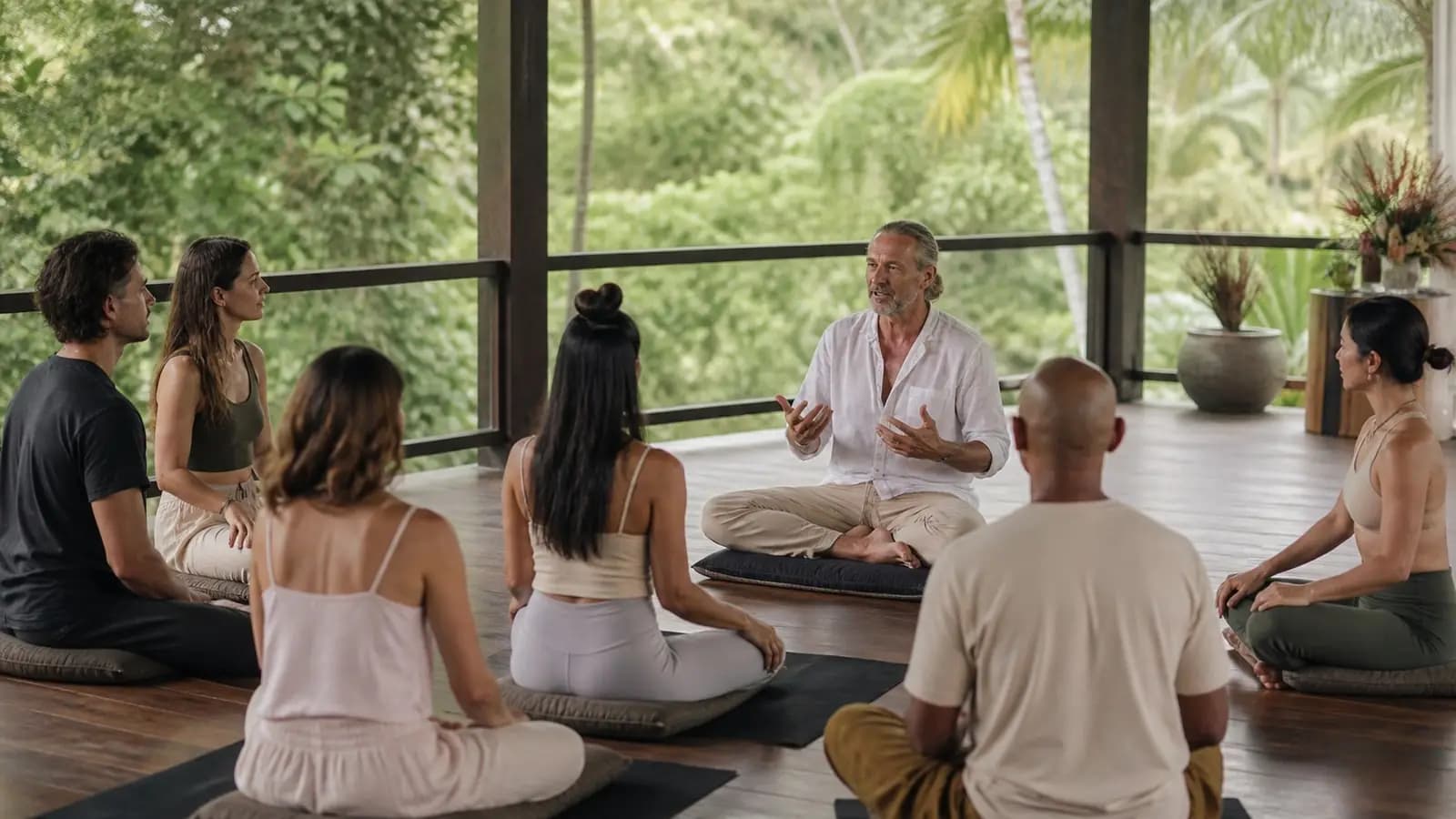
Yoga provides guided movement, breathing and attention. The programme names hot yoga, Somatic Decompression Yoga and Integration Yoga Mobility, each serving a different place in the six-day arc. The spa and hydrotherapy side creates periods of warmth, water exposure, stillness and recovery around that wider schedule.
The relationship is complementary rather than competitive. A guest does not need to turn yoga into a performance before earning rest, and a spa session is not proof that the previous practice produced a particular result.
Participation should be voluntary. Some guests may need a gentler yoga variation, may leave a heated environment early or may decide that cold-water immersion is unsuitable. The retreat's 20-person maximum supports communication, but it does not make every activity appropriate for every participant.
Review the YogaFX Retreats programme for the complete methodology rather than judging the stay only by its spa facilities.
Which Spa and Wellness Facilities Are Available?
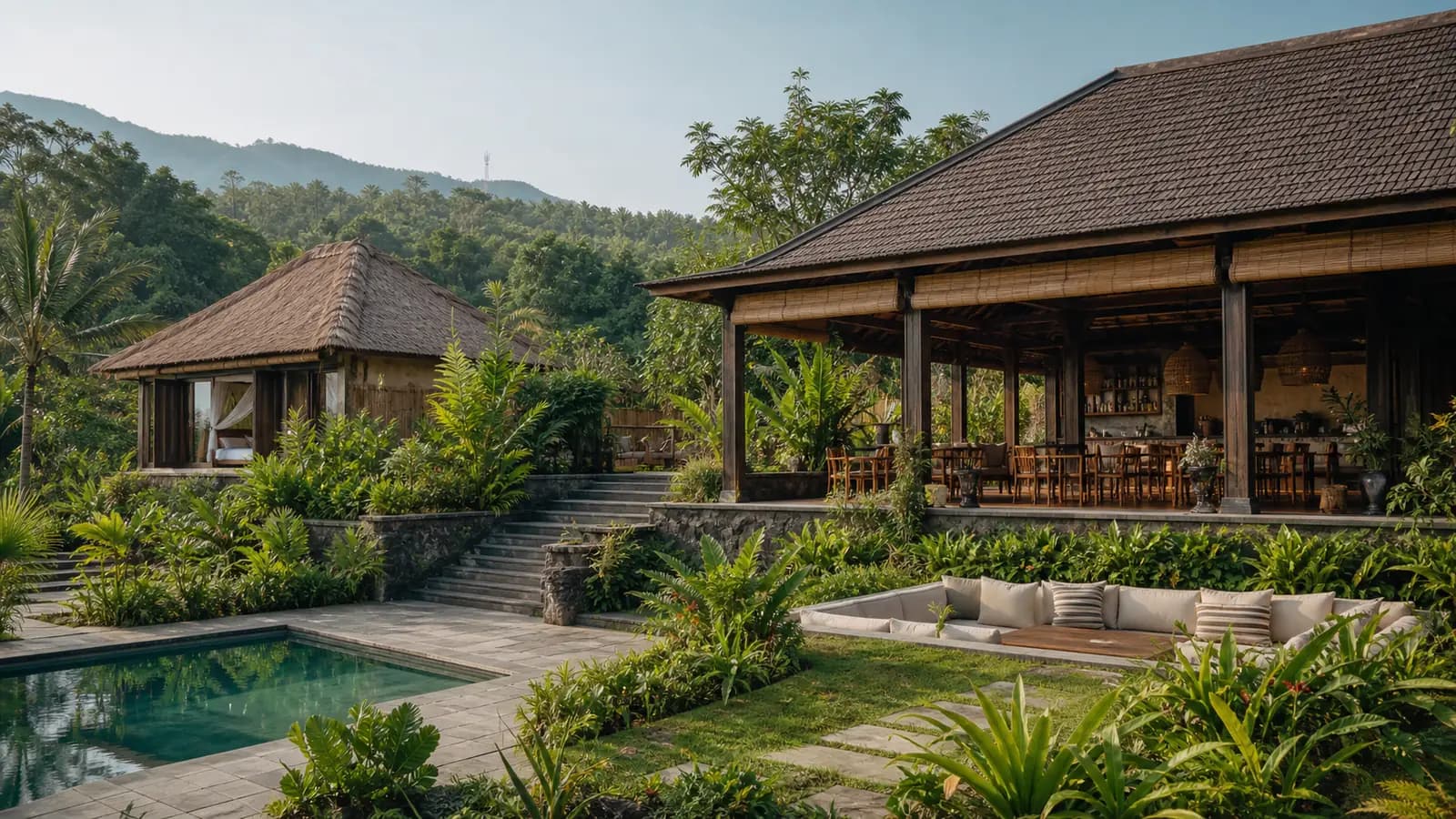
The published YogaFX inclusions identify a steam room, infrared sauna, traditional sauna, cold-water plunge, contrast pool and hydrotherapy circuits. The sanctuary also has a purpose-built hot-yoga studio and an open-air yoga shala.
| Facility | Confirmed role | Ask before booking |
|---|---|---|
| Hot-yoga studio | Selected heated movement sessions | Session frequency, temperature and modifications |
| Infrared and traditional sauna | Scheduled heat-based wellness experience | Supervision, duration and access outside sessions |
| Steam room | Named wellness facility | When it is available and how access is managed |
| Cold-water plunge | Guided cold exposure within the programme | Entry guidance, monitoring and opt-out process |
| Contrast pool and hydrotherapy | Water-based recovery where scheduled | Actual sequence, staffing and current availability |
These are shared retreat facilities, not amenities reserved for one guest or bedroom. Access may follow the programme timetable, staff guidance, maintenance and safety requirements. Check the included facilities and treatments and ask for current operational details.
What Treatments Are Included in Your Stay?
Microbiotic Thermal Fermentation is the named individual wellness treatment within the Heat, Hydrotherapy and Detoxification inclusion. It is a warm fermentation-based experience in which the guest rests rather than performs a movement sequence. The word microbiotic does not mean microbiome testing, clinical diagnosis or proof that a toxin has been removed.
A one-to-one traditional healer session is also listed within the Balinese Healing and Culture programme. It should be understood as a cultural wellness experience, not medical or psychological treatment.
The public package does not confirm a menu of massages, facials, body scrubs or unlimited spa appointments. It also does not state that any optional treatment can be added at no cost. Before booking, ask the team to identify:
- Every individual treatment included in the current intake
- The number and approximate duration of included sessions
- Whether times are allocated or require advance booking
- Whether an optional service exists and carries an additional charge
- What happens if an included treatment is unsuitable
This distinction protects the meaning of “all-inclusive”. The package covers the published programme, not every service a visitor might associate with a luxury spa.
What a Typical Programme Day Can Look Like
A YogaFX day may move from morning breathwork or yoga into breakfast, a workshop or guided programme session, lunch, rest and a later restorative activity. The official itinerary uses a progressive six-day arc rather than repeating the same spa-and-yoga timetable daily.
Heat and hydrotherapy appear within that arc, but the public itinerary does not confirm one universal minute-by-minute sequence of sauna, cold water and rest. It would be unsafe and inaccurate to invent one. Guests should follow the facilitator's current instructions rather than copying a contrast routine from another retreat or social-media video.
Meals, hydration and recovery time matter to the schedule. A day should not be interpreted as a race to complete every facility. View the retreat itinerary for the confirmed daily themes and ask for operational timing closer to arrival.
Discussing Comfort and Suitability Before a Session
Use the application to disclose relevant health conditions, pregnancy, medication, mobility needs, fainting history, heat sensitivity, cold sensitivity and previous responses to similar activities. This lets the team discuss programme fit, but it is not medical clearance.
The US Centers for Disease Control and Prevention notes that some medicines can affect sweating, thirst, fluid balance, blood pressure and temperature regulation. Its heat and medication guidance advises individual review rather than abrupt medication changes. CDC guidance also identifies pregnancy as a circumstance that can increase vulnerability to heat.
Cold water can cause an immediate involuntary response. Enter only with programme guidance, never compete over duration and leave when instructed or when you feel unwell. Ask how the team supervises entry, exit and warming afterwards.
Stop and communicate promptly if you experience faintness, chest pain, confusion, severe headache, unusual breathlessness, concerning palpitations, panic or difficulty recovering. Seek appropriate medical care when symptoms require it.
An alternative activity cannot be guaranteed from public information. Discuss the concern before acceptance and ask what adjustment may be feasible. You retain the right to decline or stop a wellness activity.
What to Bring and What Is Provided
Bring swimwear that stays secure during movement and water entry, comfortable practice clothes, a dry change of clothing, poolside footwear with reliable grip and a reusable water bottle. Pack personal medication and any skin or hair products you specifically require.
Ask whether the venue provides towels, robes, yoga mats, toiletries, lockers, hair dryers and private changing facilities. These details are not all confirmed in the published inclusion list, so they should not be assumed.
If you have accessibility or privacy requirements, ask how far the facilities are from your room, whether steps or wet surfaces are involved and where you can change. The accommodation guide helps you explore your retreat accommodation before raising room-specific questions.
Questions to Ask Before Booking
- Which spa and hydrotherapy facilities will operate during my intake?
- Which treatments are included, and how many sessions are scheduled?
- Does any optional treatment carry an additional fee?
- Must treatment times be booked before arrival?
- Who guides or supervises heated and cold-water sessions?
- Can I pause, decline or discuss an adjustment?
- What towels, robes, toiletries and changing facilities are provided?
- What health information does the team need during application?
Request answers in writing when they materially affect your decision. A facility photograph cannot confirm access, session frequency, privacy or suitability.
Explore a Spa and Yoga Stay with YogaFX Retreats
The YogaFX experience combines guided movement with named heat, water and traditional wellness practices inside a structured North Bali stay. Its value lies in the wider schedule and clear support, not in claiming that every facility guarantees recovery.
If this spa and yoga retreat in Bali matches your goals, enquire about YogaFX Retreats and confirm current treatments, access and personal requirements before reserving.