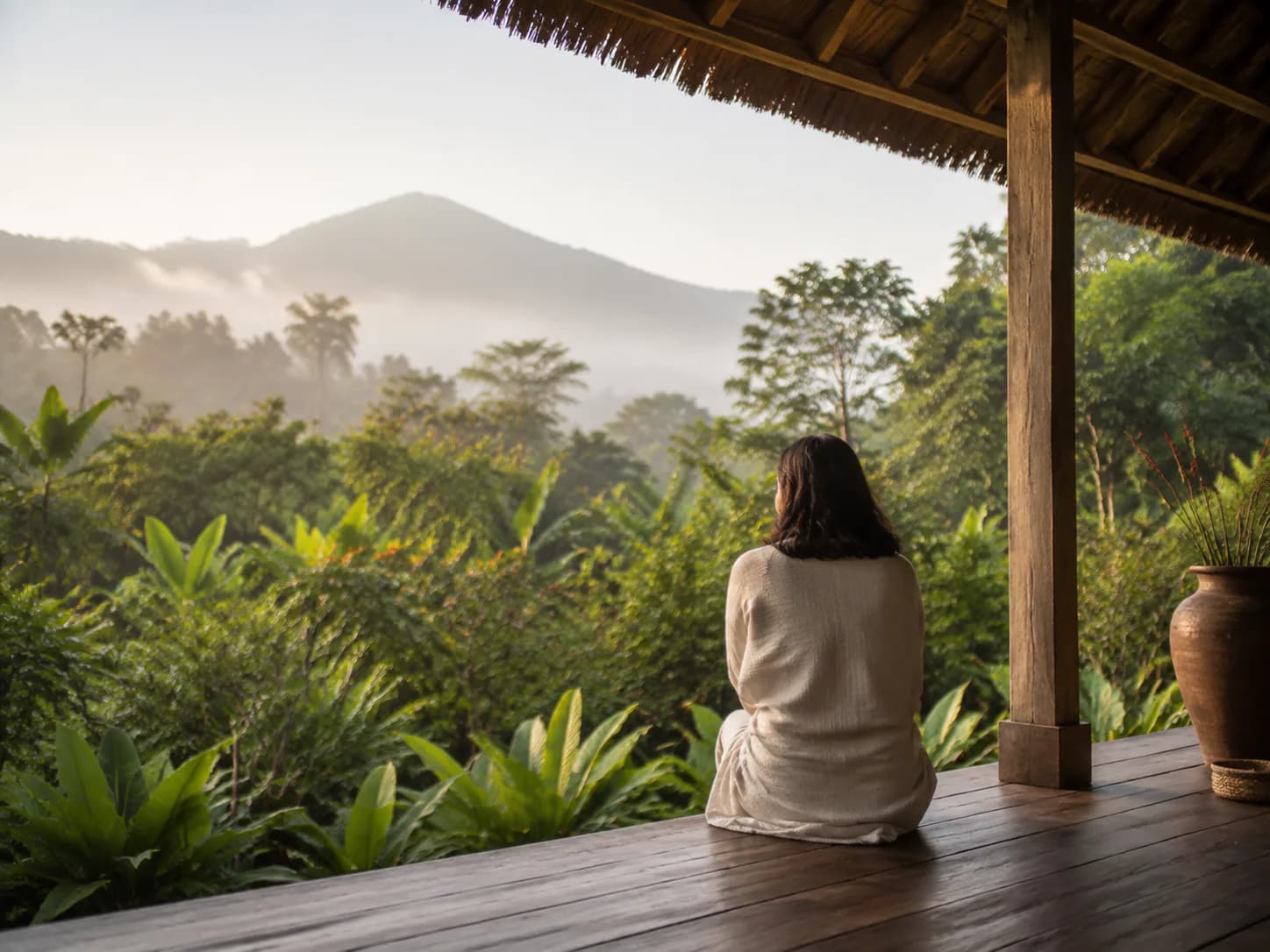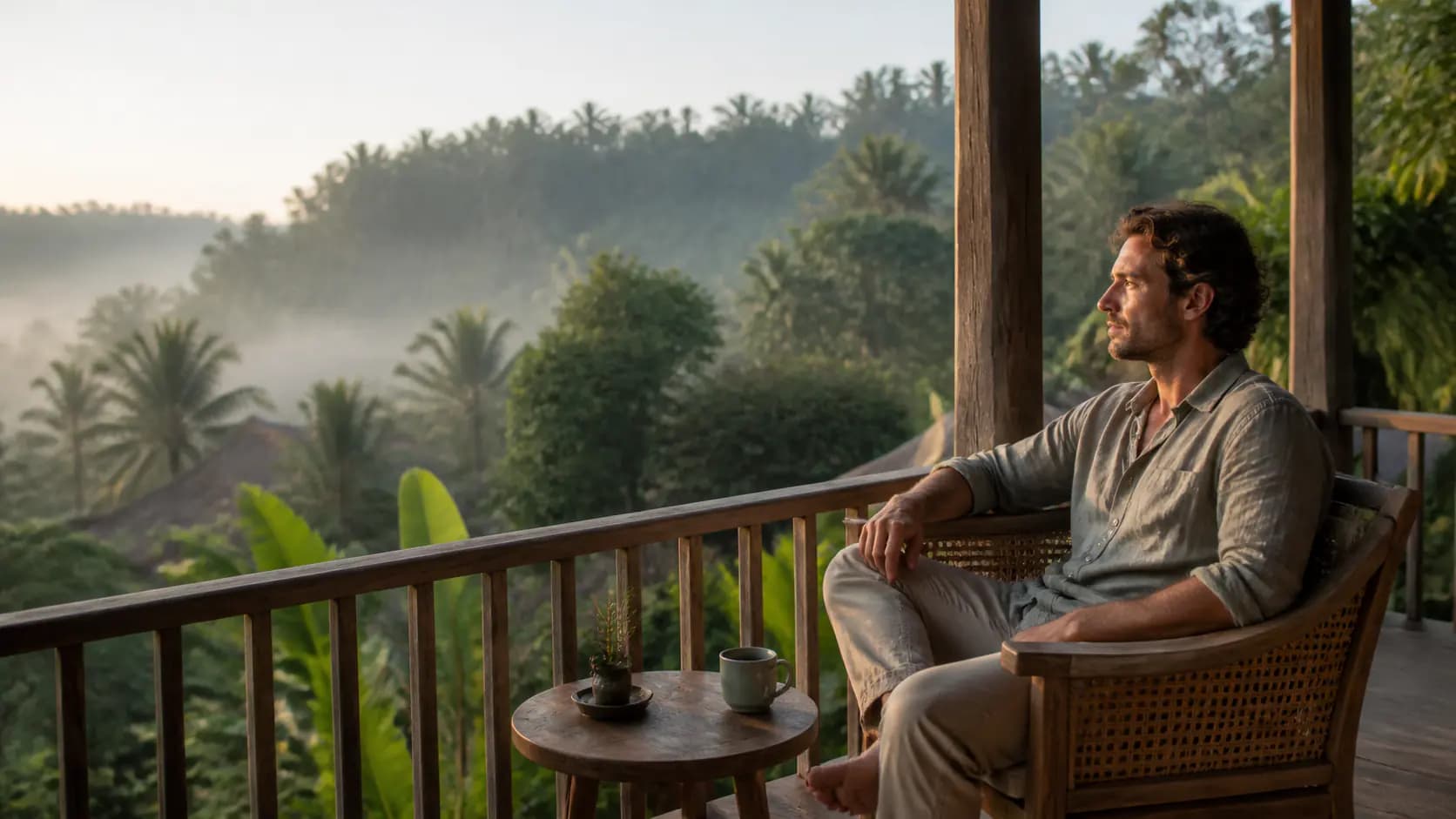


A burnout retreat is a structured break from chronic workplace pressure, designed to restore basic recovery conditions through protected rest, body-based practice, nourishing routines and practical integration.
A neuroscience-backed approach uses stress research to guide the programme.
It does not claim to scan, diagnose or permanently reset the brain.
Why an Ordinary Retreat May Not Be Enough for Burnout
A beautiful room and open calendar can provide relief.
However, burnout is not simply a shortage of holidays.
The World Health Organization defines burnout through occupational exhaustion, increased mental distance or cynicism, and reduced professional efficacy.
It results from chronic workplace stress that has not been successfully managed.
A burnout prevention retreat can help guests recognise warning signs before functioning declines further.
An anti burnout retreat may teach recovery practices, but the name should not imply guaranteed prevention.
If workload, control, support and role conflict remain unchanged, relief may fade after returning.

Signs You May Need a Burnout Retreat
Common burnout examples include waking exhausted, dreading routine work and needing increasing effort for ordinary decisions.
Other signs include cynicism, irritability, poor concentration, disturbed sleep and feeling emotionally detached from work.
People sometimes describe different types of burnout, including overload, under-challenge and neglect.
These are useful descriptive profiles, not formal diagnoses.
Chronic stress burnout recovery may need more than self-care when symptoms affect health, safety or daily functioning.
Depression, anxiety, sleep disorders and medical conditions can overlap with burnout symptoms.
Read the fuller guide to signs of burnout you might be ignoring.
Seek qualified care when symptoms are severe, persistent or include hopelessness, substance dependence or thoughts of self-harm.
What Happens Neurologically During Burnout?
Stress mobilises multiple systems, including autonomic signalling and the hypothalamic-pituitary-adrenal axis.
These systems help coordinate attention, cardiovascular activity and energy during challenge.
Long-term stress research has examined cortisol, heart-rate variability, inflammation, sleep and brain networks.
However, burnout does not have one validated biomarker or a single measurable brain pattern.
A review of endocrine and immune findings in burnout reported inconsistent HPA-axis results.
Most included studies did not find a significant cortisol-awakening difference between burnout groups and controls.
Autonomic findings are also mixed.
This makes claims such as “cortisol detox” or “complete neural reset” scientifically unreliable.
A burnout recovery retreat can instead support known recovery conditions: lower demands, sleep opportunity, movement, social connection and psychological detachment from work.
A burnout healing retreat should use healing as an experiential aim, not a medical guarantee.
Likewise, a burnout reset retreat offers a structured interruption rather than a neurological reboot.
Our nervous system reset retreat guide explains this distinction in greater depth.
Why Bali and the YogaFX 6-Day Retreat?
North Bali provides distance from routine work cues and the higher stimulation of major tourist centres.
A private sanctuary makes sleep, meals, movement, nature and quiet transitions easier to organise within one setting.
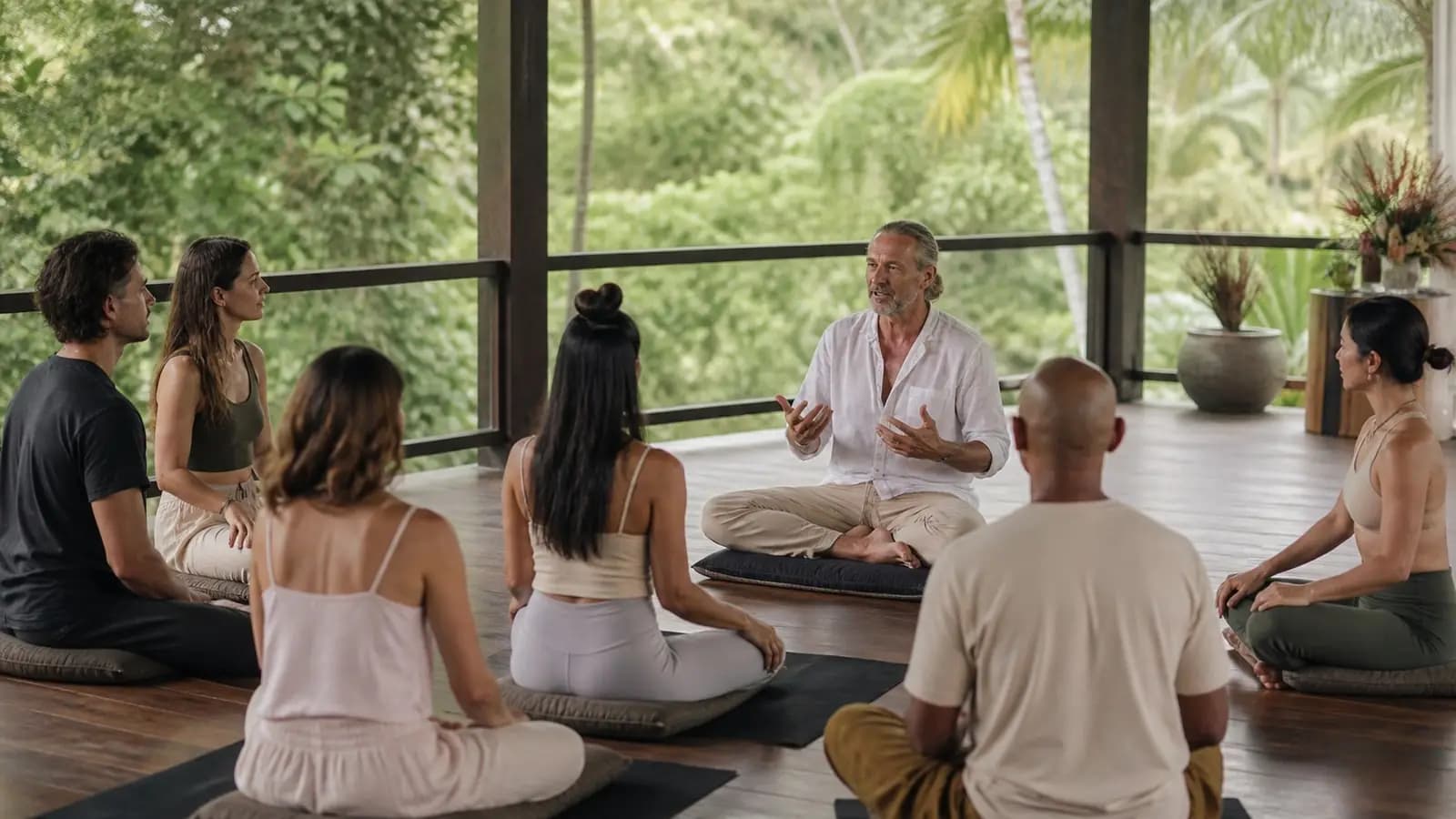
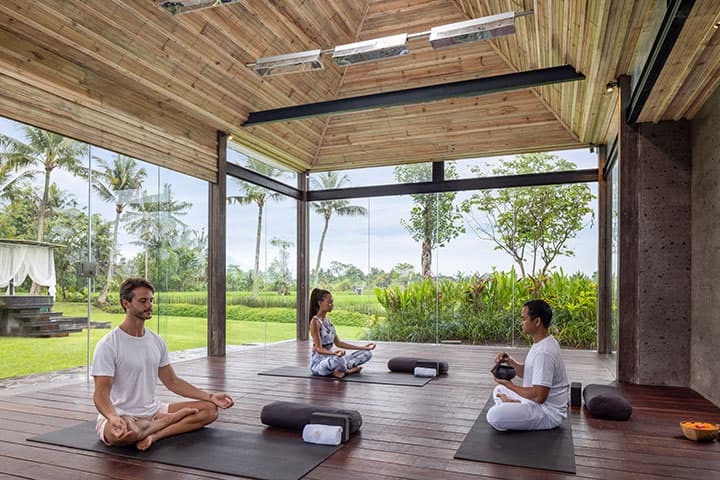
The YogaFX programme combines Somatic Decompression Yoga, Nervous System Reset Sessions, digital boundaries, heat and hydrotherapy, nature excursions and cognitive integration workshops.
Attendance is strictly limited to 20 guests.
The retreat is led personally by Mr. Ian Terry and welcomes beginners as well as experienced practitioners.
Executive and Professional Burnout
An executive burnout retreat should understand decision fatigue, responsibility, confidentiality and difficulty disconnecting from work.
A professional burnout retreat should also address practical boundaries and return-to-work conditions.
A CEO burnout retreat may need an emergency communication plan that preserves genuine operational access without restoring constant availability.
A corporate burnout retreat should never make employees solely responsible for workload, staffing or organisational failures.
A luxury burnout retreat earns its premium through privacy, pacing, skilled facilitation and complete logistics—not decorative excess.
Different Needs Require Different Support
Physicians may face moral injury, shift work and patient-safety pressure.
Pastors may carry caregiving demands, visibility and limited personal boundaries.
Autistic burnout is not interchangeable with occupational burnout.
Autistic guests may need reduced sensory load, clearer expectations and neurodiversity-informed clinical support.
YogaFX is a non-clinical group wellness retreat.
The application process should establish whether its environment matches each guest's needs.
What a Burnout Retreat Is Really Like
Searches for “burnout retreat Reddit” reveal understandable scepticism.
People question whether a retreat is merely an expensive vacation, another course or a way for employers to avoid systemic change.
Those concerns are valid.
One recent professional discussion repeatedly argued that a retreat cannot repair pay, staffing, workload or workplace culture.
Others said temporary distance could still support reflection when paired with real change.
Read the burnout retreat discussion on Reddit.
A credible retreat answers scepticism with specifics.
It names facilitators, protects unscheduled rest, explains clinical limits and avoids promising permanent transformation.
It should never become six days of compulsory group disclosure or productivity coaching.
YogaFX combines guided social sessions with personal recovery time.
Participation expectations, health considerations and privacy should be discussed before booking.

How Long Does Burnout Recovery Take?
Burnout recovery time cannot be predicted from a quiz or retreat length.
Some people improve over weeks, while others experience symptoms for many months or longer.
Severity, duration, health, finances, workplace conditions and access to support all influence recovery.
In one specialist-care population, one-third still reported burnout symptoms after 18 months.
That study cannot predict an individual's outcome, but it challenges instant-recovery promises.
Burnout is not necessarily permanent.
Recovery usually depends on repeated changes, not one dramatic breakthrough.
A six-day retreat can provide rest, perspective and a protected place to build a plan.
It cannot guarantee what happens after returning to the same environment.
What High-Achieving Guests Say About the Practice
“It taught me how to control energy, breath, and focus in extreme conditions.”
— Kadek Ani, Google Review
Kadek brought a fitness and athletic-training background to YogaFX. Her review describes a personal learning experience, not treatment for burnout or a guaranteed result.
Apply for the YogaFX Neuroscience-Informed Burnout Retreat
A neuroscience-backed burnout retreat should translate research into careful programme design without turning uncertainty into marketing certainty.
YogaFX offers its six-day Detox & Burnout Reset at a private North Bali sanctuary from January 31 to February 4, 2027.
Review the complete programme, compare the six-day itinerary and use the application flow to discuss fit and health considerations.