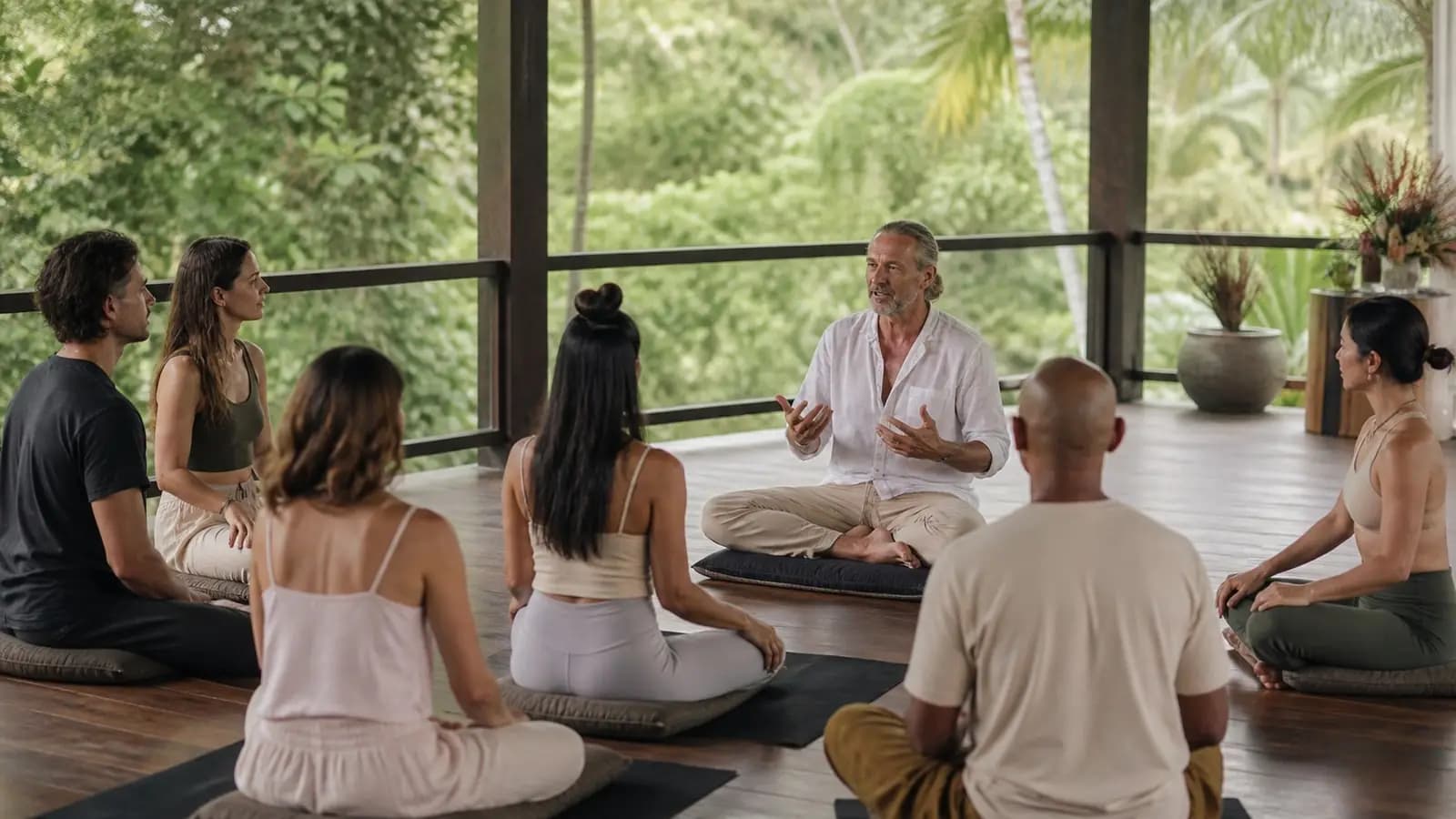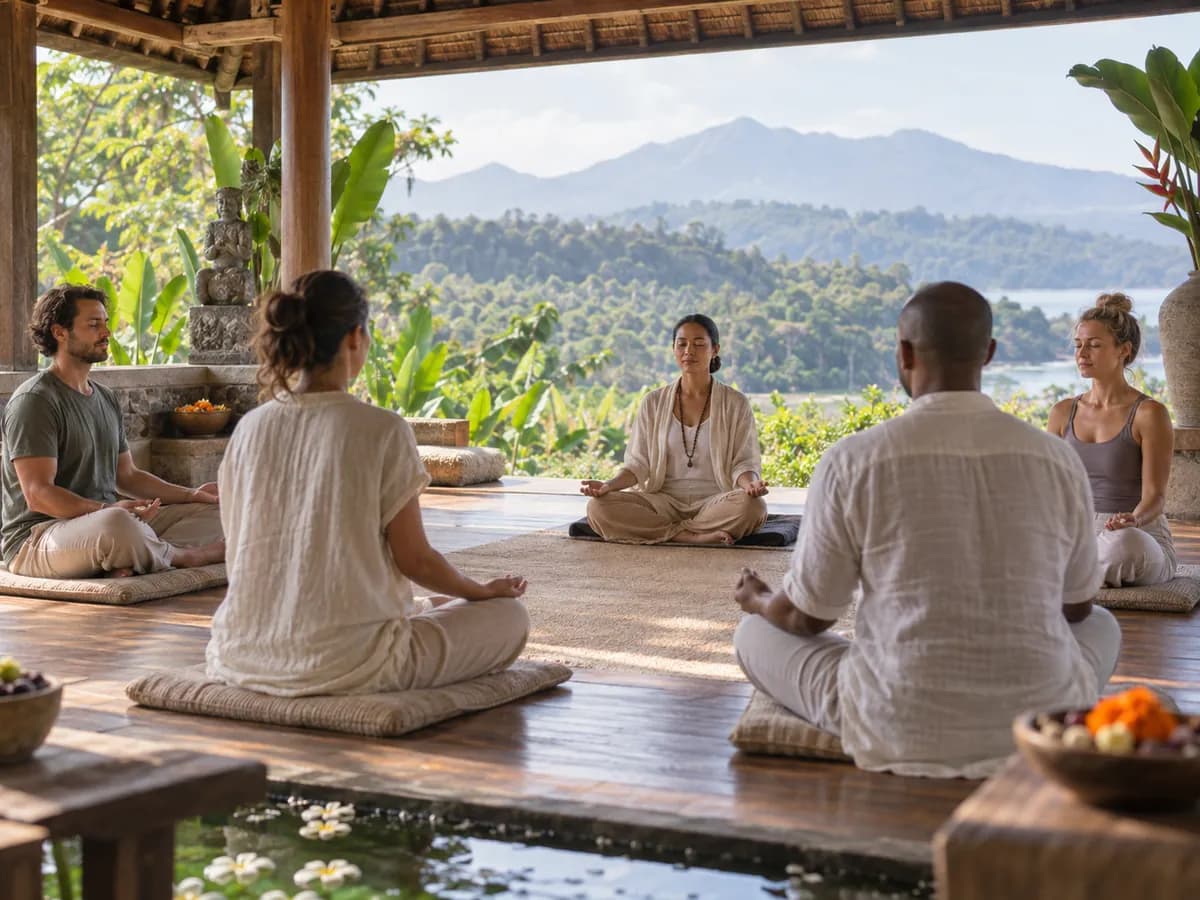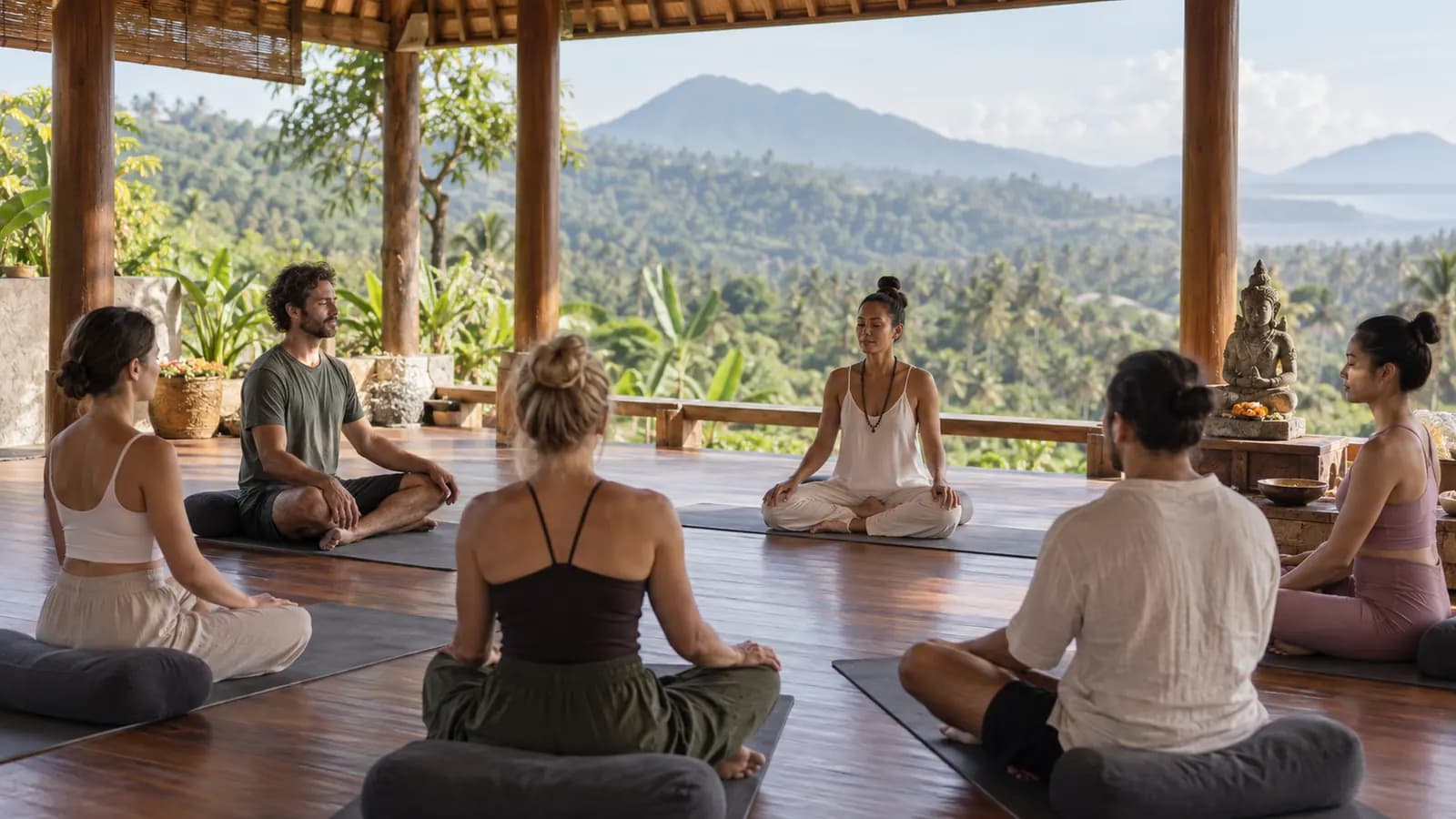

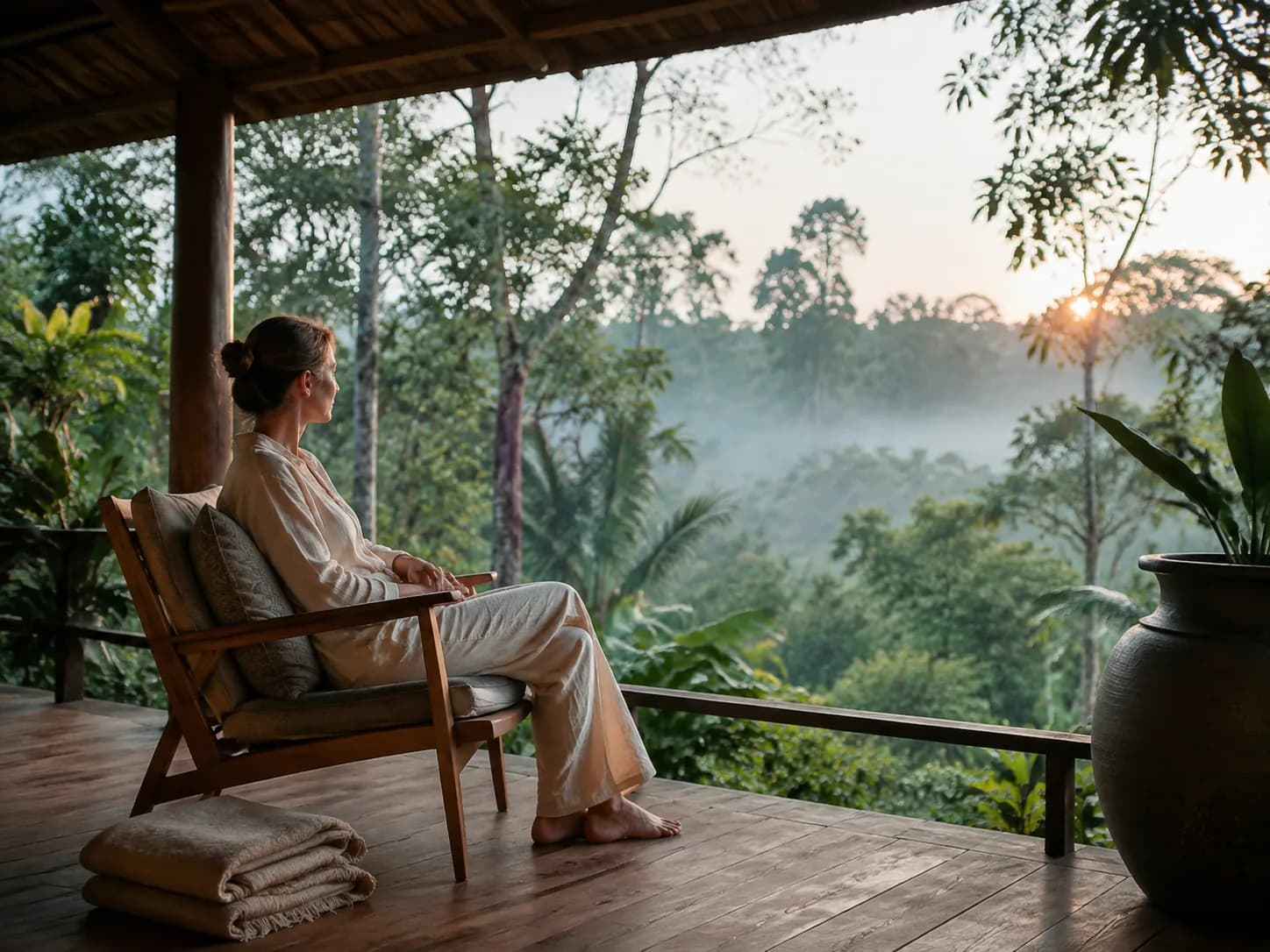
A nervous system regulation retreat is a multi-day immersion designed to help people step away from persistent survival-mode patterns—such as fight, flight or shutdown—and practise conditions associated with rest and recovery.
The schedule typically reduces stimulation and combines body awareness, gentle movement, breathing, nature and protected rest.
The word “regulation” does not mean staying calm all the time, eliminating normal stress responses or rebooting the nervous system like a device.
A responsible programme creates repeated opportunities to notice activation, respond with greater choice and develop recovery habits that can continue at home.
What Is Nervous System Regulation?
Nervous system regulation is the body's ability to respond to stress or activation and return toward a balanced, workable state as circumstances change.
This is a dynamic process.
A healthy system mobilises energy when action is needed and supports settling when the demand has passed.
Sympathetic Nervous System
The sympathetic branch of the autonomic nervous system helps mobilise the body during challenge.
Heart rate may rise, attention narrows and energy becomes available for action.
This “fight-or-flight” shorthand describes a useful protective response, not a malfunction by itself.
Parasympathetic Nervous System
The parasympathetic branch supports functions associated with rest, digestion and recovery.
The two branches are not opposing on-off switches; they interact continuously with breathing, cardiovascular activity, movement and context.
What Dysregulation Means
Dysregulation is a broad descriptive term, not one diagnosis.
People may use it when they feel persistently on edge, shut down, numb, reactive or unable to settle after pressure.
Similar symptoms can also have medical, sleep-related, psychological or medication-related causes.
Persistent or severe changes deserve assessment by a qualified professional.
Signs That Regulation May Feel Difficult
Common experiences include feeling wired but tired, heavy afternoon fatigue, difficulty falling or staying asleep, digestive discomfort, brain fog, low patience and emotional shifts.
These signs are non-specific.
They can accompany stress, but they do not prove that the autonomic nervous system is “damaged”.
Seek clinical guidance when symptoms are new, worsening, disabling or accompanied by chest pain, fainting, breathing difficulty, significant weight change, severe depression, substance dependence or thoughts of self-harm.
A wellness retreat should not delay appropriate care.
What to Expect at a Nervous System Regulation Retreat
Low-Stimulation Environments
A thoughtful timetable avoids recreating workplace urgency.
Instead of back-to-back activities, it includes quiet transitions, regular meals, nature time, sleep and genuine choice.
Predictability can reduce decision load, while unstructured space gives participants time to recognise when they need rest.
Somatic Practices
Daily sessions may combine breath awareness, gentle movement, sound healing and carefully screened cold exposure.
These practices can help people notice physical tension and experiment with shifts in effort.
Claims that they literally discharge all stored stress or permanently reset biology go beyond what a short retreat can establish.
Bottom-Up Approaches
Somatic nervous system regulation begins with sensory and physical experience: pressure through the feet, movement, breath, sound, temperature or contact with a supportive surface.
These bottom-up practices can complement reflection and talk therapy; they are not automatically substitutes for psychotherapy.
Take-Home Tools
A useful stay emphasises a realistic 10-to-15-minute routine rather than dependence on the retreat setting.
One guest might combine two minutes of orienting, five minutes of comfortable slow breathing and a short walk.
Another may find gentle mobility and quiet time more sustainable.
Breathwork for Nervous System Regulation
Breathwork for nervous system regulation often uses comfortable nasal breathing with a slightly longer exhale.
A simple example is inhaling for four seconds and exhaling for six seconds for several easy rounds.
The breath should remain smooth. Stop if you feel dizzy, breathless, panicked or strained.
A review of slow breathing research found documented effects across respiratory, cardiovascular and autonomic measures, while also noting the need for further research into clinical applications.
Read the open-access review of slow breathing physiology.

Yoga for Nervous System Regulation
Yoga for nervous system regulation combines movement, posture, attention and breathing.
It may support self-regulation partly by improving awareness of internal signals, a process called interoception.
Current research offers plausible models and promising findings, but not proof that every yoga pose directly stimulates the vagus nerve or lowers cortisol for every person.
An open-access research model describes yoga as potentially integrating top-down attention with bottom-up sensory input.
The authors present this as a framework for further study, not a guarantee of treatment effect.
See the review of yoga and self-regulatory mechanisms.
Restorative Yoga
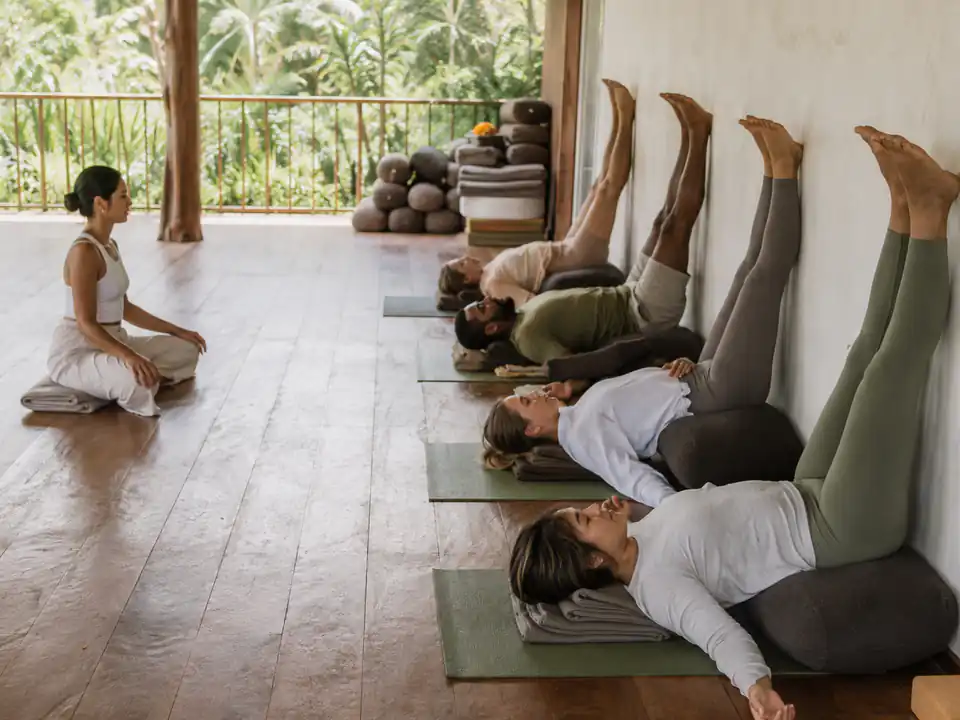
Bolsters, blankets and blocks support longer, low-effort positions.
Restorative yoga can be useful when active exercise feels overstimulating, although complete stillness is not comfortable for everyone.
Yin Yoga
Yin uses longer passive floor-based holds.
The aim should not be maximal tissue stretch.
Participants with joint instability, injury, pregnancy or other health considerations should request suitable modifications.
Somatic Yoga
Somatic yoga prioritises slow, small and inwardly observed movement over external performance.
A participant may explore how little effort is needed, compare sides or pause to notice the after-effect of a movement.
Simple Nervous System Regulation Exercises
The following nervous system regulation exercises are general wellness ideas, not treatment prescriptions:
- Extended exhale: Inhale comfortably for four seconds and exhale for six. Use a shorter count if needed and stop if uncomfortable.
- Child's Pose: Use a bolster or choose another supported position if folding forward restricts breathing or bothers the knees.
- Legs-Up-the-Wall: Rest with the hips away from the wall and knees soft. Contrary to popular wording, the purpose is comfortable support—not “reversing blood flow”.
- Cat-Cow: Link a small, comfortable spinal movement with unforced breathing.
- Walking: Take an easy-to-brisk 20-to-30-minute walk according to your health and energy.
- Connection: Spend time with a calm, trusted person or pet when that feels supportive.
A Note on Cold Exposure
Some people splash cool water on the face for 10 to 15 seconds as a brief sensory shift.
Cold exposure is not suitable for everyone and should not be described as an instant nervous-system cure.
People with cardiovascular, respiratory, neurological or cold-sensitivity conditions—and anyone who is pregnant or medically uncertain—should seek individual guidance.
Never practise breath-holding in water.
Somatic Exercises for Nervous System Regulation
Somatic exercises for nervous system regulation may include orienting to the room, noticing points of contact, slowly turning the head, pressing the feet gently into the floor or moving between mild effort and rest.
The intention is curiosity and choice, not forcing a release.
Good somatic practices for nervous system regulation are invitational.
Participants can keep their eyes open, change position, reduce intensity or stop.
If body-focused attention increases panic, dissociation or traumatic distress, work with a qualified trauma-informed clinician rather than pushing through.
Mindfulness for Nervous System Regulation
Mindfulness for nervous system regulation can be as simple as noticing sound, contact with the chair or the movement of one breath without trying to change it.
External anchors may feel safer than closing the eyes or scanning the body.
Mindfulness is a skill of attention, not a demand to feel peaceful.
A short routine might include two minutes noticing the room, five minutes of gentle movement and three minutes of comfortable breathing.
Consistency matters more than complexity, and the routine should adapt to the person rather than become another standard they can fail.
Finding Nervous System Regulation Near Me
A search for nervous system regulation near me may return therapists, yoga teachers, occupational therapists, physiotherapists, coaches and wellness centres.
These roles have different training and legal scopes.
Decide first whether you need clinical assessment, trauma therapy, movement education or a restorative wellness experience.
Check credentials, consent procedures, health screening, emergency plans and how the practitioner responds when an exercise causes distress.
A local provider can be valuable for continuity, while a destination retreat may offer greater distance from everyday cues.
Nervous System Reset Retreat vs Regulation Retreat
A nervous system reset retreat and a regulation retreat often describe similar schedules.
“Reset” communicates a meaningful pause;
“regulation” better reflects an ongoing capacity developed through repetition.
Neither phrase represents a recognised medical procedure.
The best programmes explain their specific sessions, facilitator scope and realistic outcomes rather than relying on either label.
Compare our separate nervous system reset retreat guide for a closer look at the terminology.
Popular Nervous System Retreat Options in Bali
Bali offers yoga, meditation, breathwork, spa and somatic wellness programmes across Ubud, South Bali and quieter northern regions.
Compare confirmed inclusions and practitioner credentials carefully.
A beautiful setting can support rest, but location alone does not establish clinical quality.
The YogaFX 6-Day Exclusive Detox & Burnout Reset
YogaFX offers a 6-day exclusive Detox & Burnout Reset at a private North Bali sanctuary.
The programme is led personally by Mr. Ian Terry.
- Capacity: Strictly limited to a maximum of 20 guests per intake.
- Next dates: January 31 to February 4, 2027.
- Activities: Somatic practices, heat and hydrotherapy, cognitive workshops, nature excursions and guided digital detox.
- Experience: Open to beginners and experienced practitioners; advanced yoga experience is not required.
The confirmed regulation-focused elements are Somatic Decompression Yoga and Nervous System Reset Sessions.
YogaFX is a wellness and educational retreat, not psychotherapy, medical treatment or neurological rehabilitation.
A Guest Perspective on Body Awareness
“I learned so much about my body, my breath, my nervous system and my own inner strength.”
— Sophie Webster, Google Review
Sophie reviewed her wider YogaFX experience, not the upcoming retreat. Her account illustrates body awareness and learning rather than a guaranteed therapeutic outcome.
Apply for the YogaFX Nervous System Regulation Retreat Experience
A responsible nervous system regulation retreat combines lower stimulation, appropriate body-based practice and realistic tools for life after departure.
Review the complete programme, explore the six-day itinerary and use the application flow to discuss fit, health considerations and what support the retreat can realistically provide.