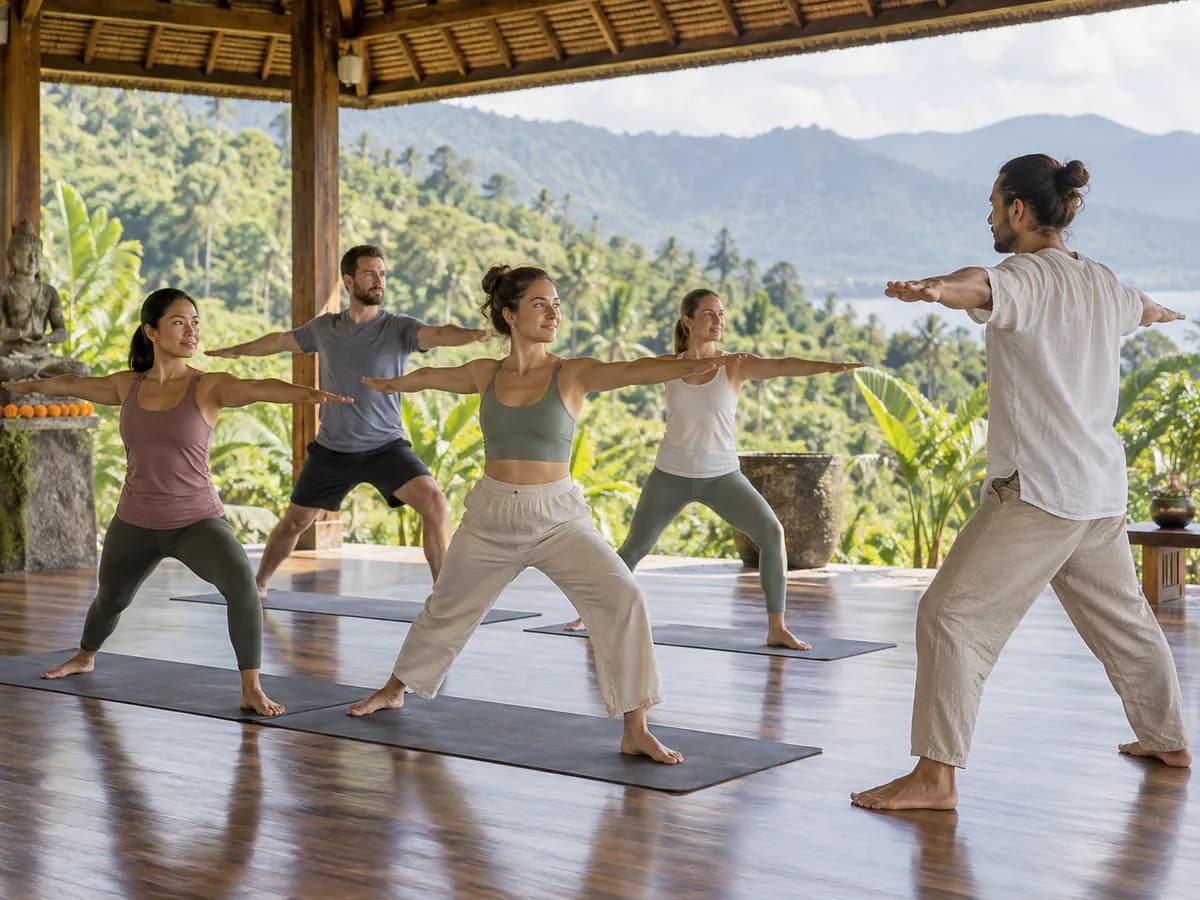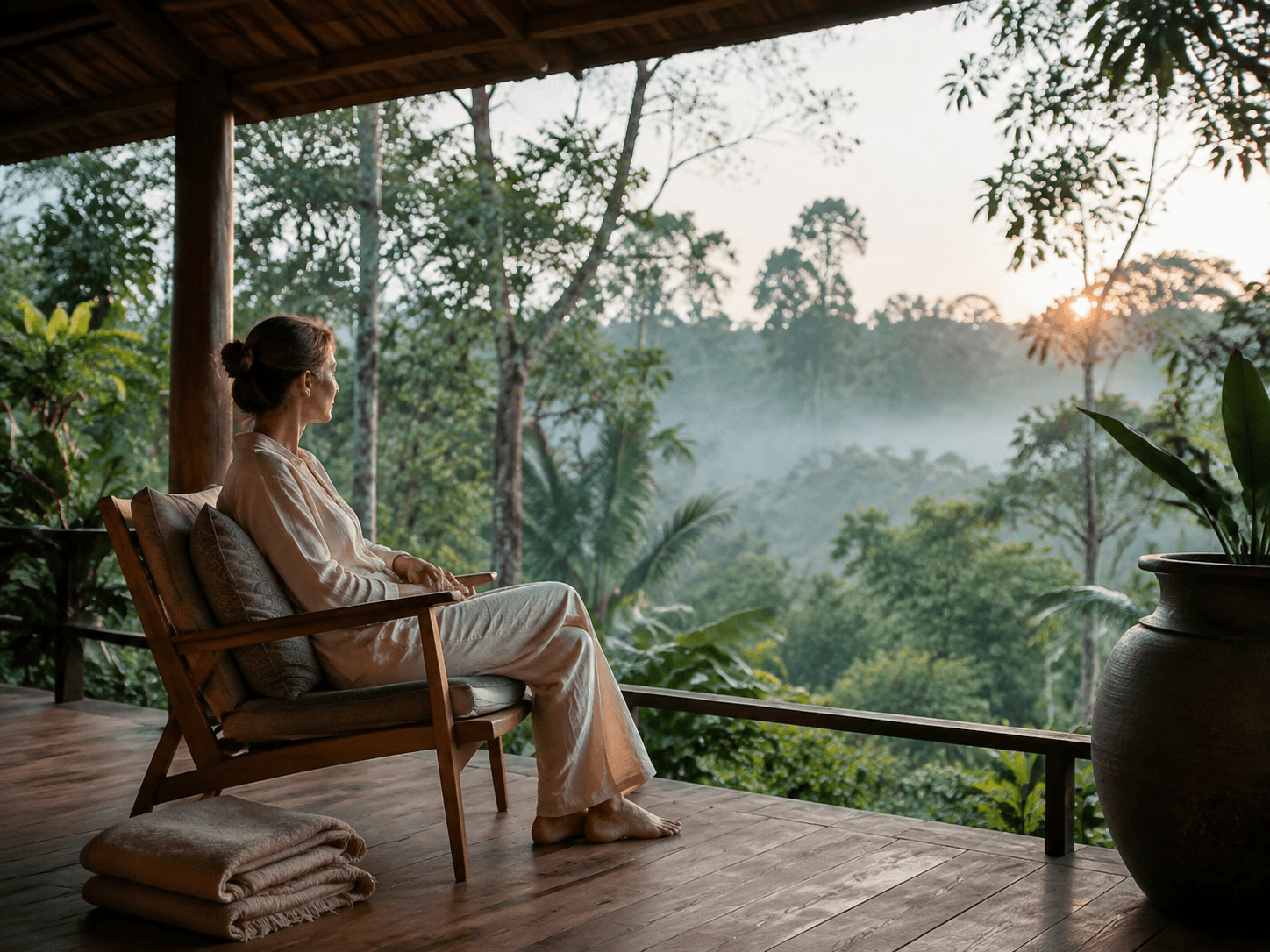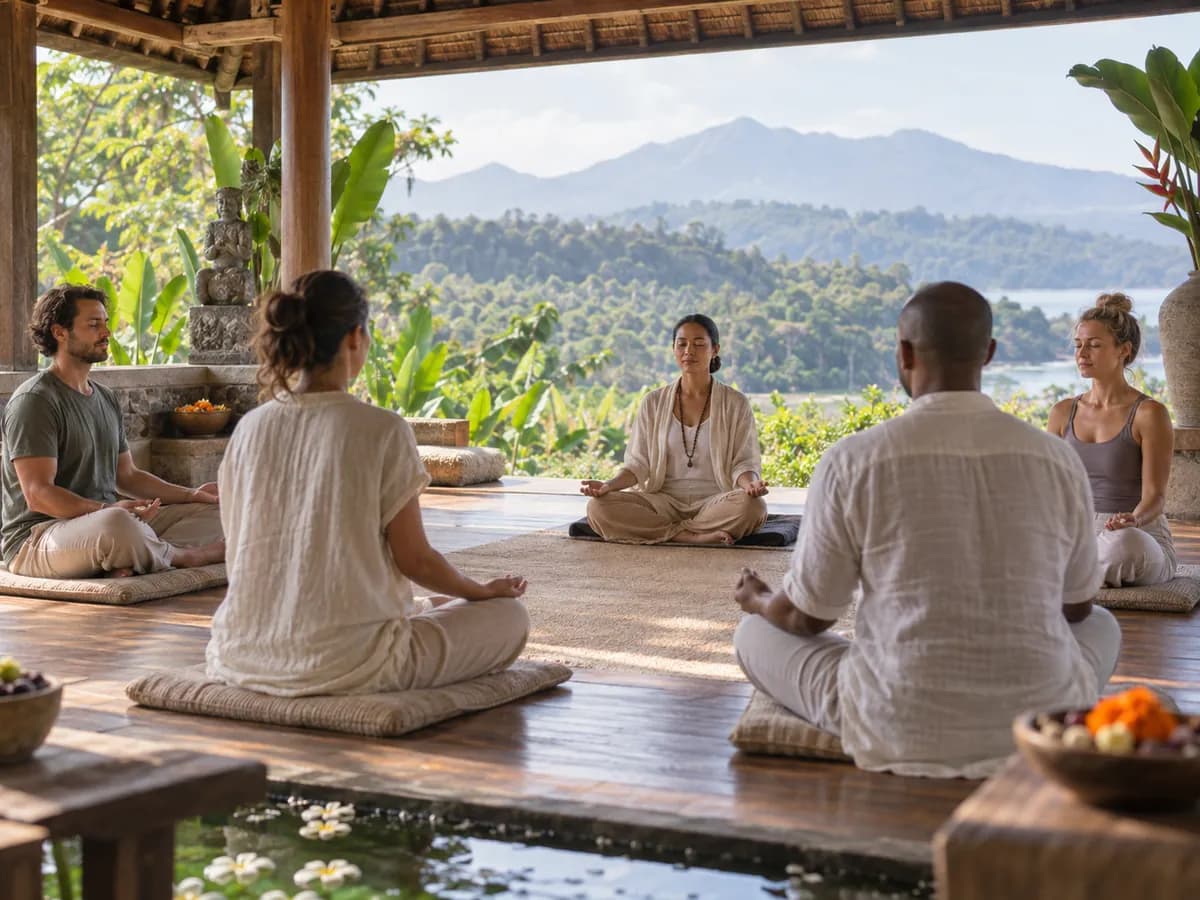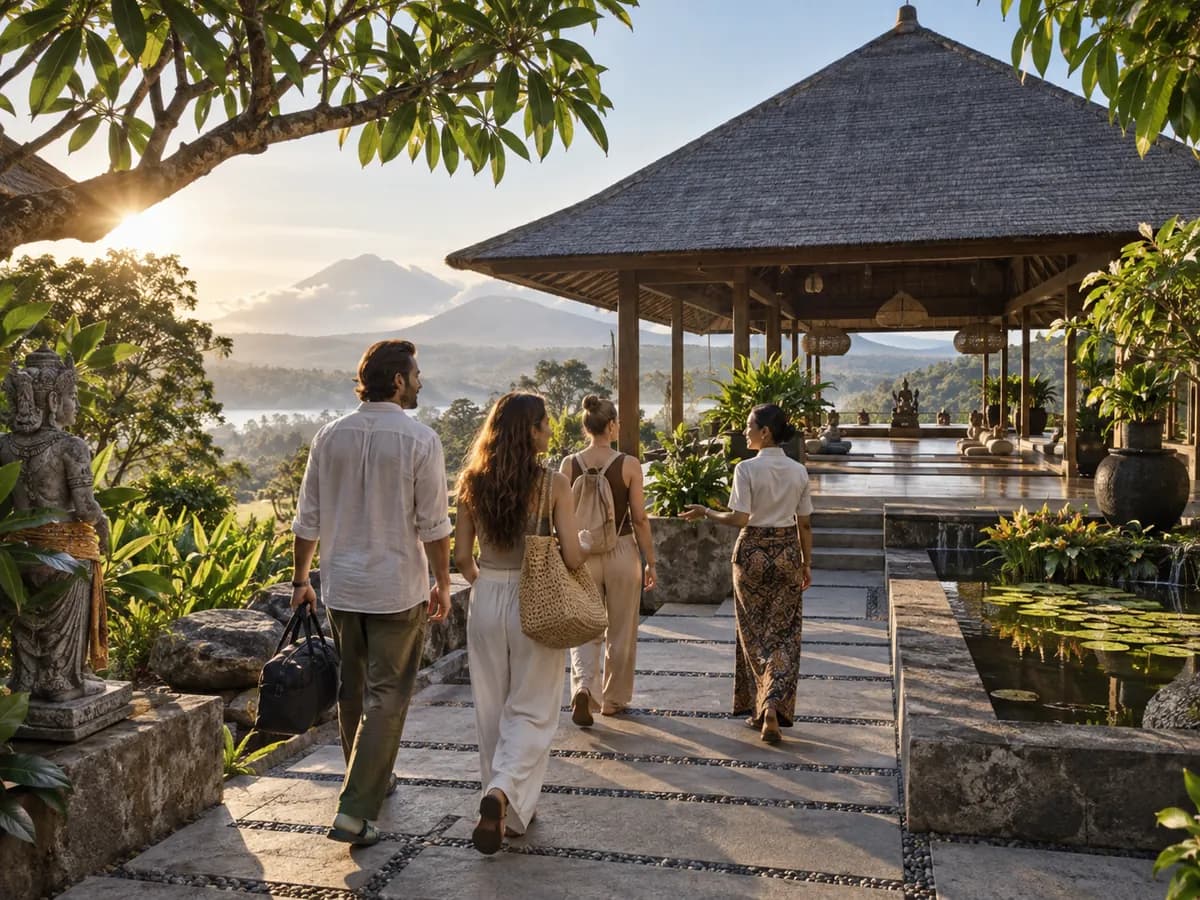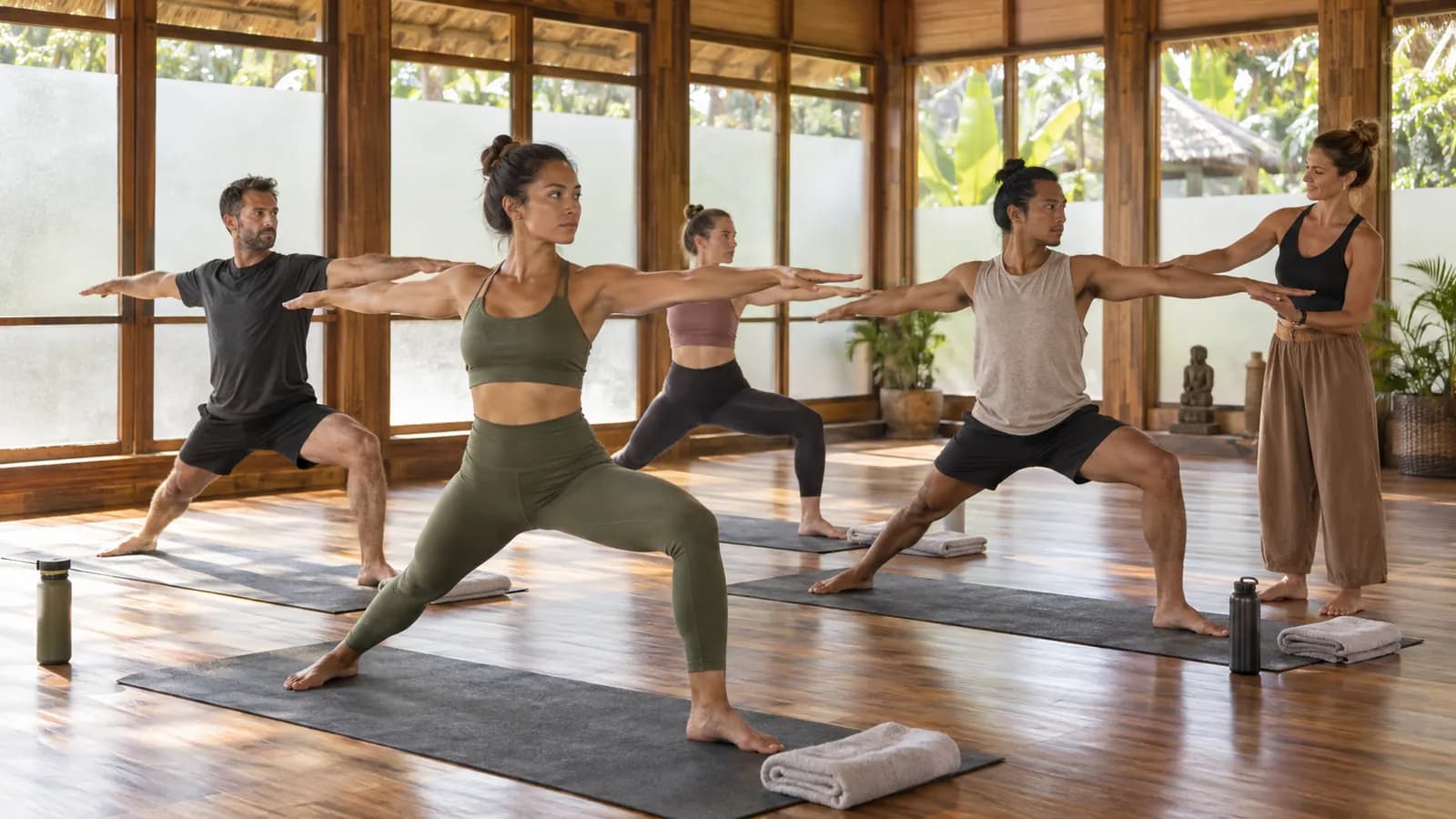
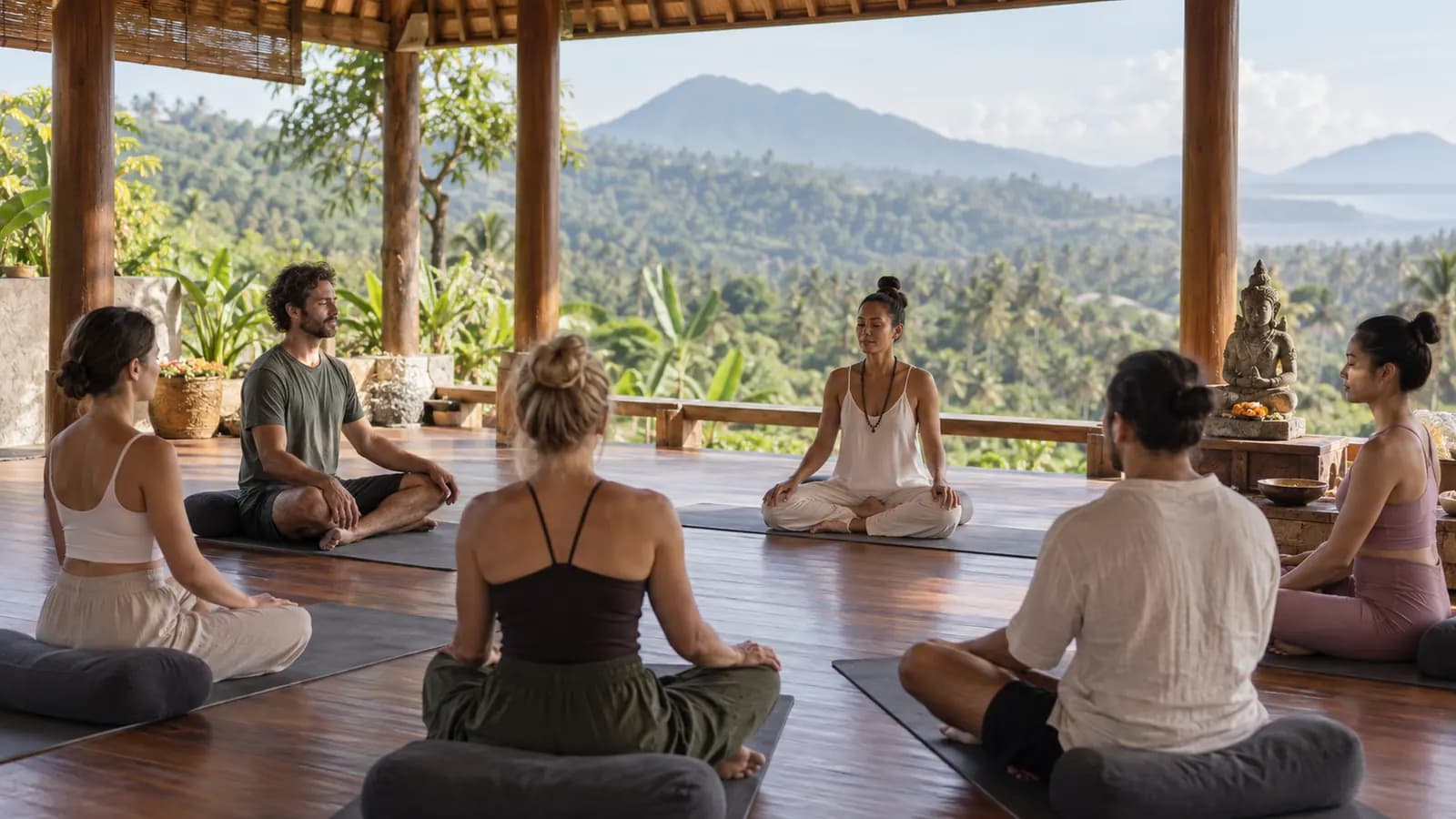
A breathwork and yoga retreat in Bali combines intentional breathing, guided movement and time away from everyday routines. At YogaFX Retreats, both practices sit inside a broader six-day North Bali programme with rest, meals, workshops and recovery experiences, rather than operating as isolated classes or promises of instant transformation.
This guide focuses on what a participant may do, what is already confirmed and what still needs to be asked before booking.
What Is a Breathwork and Yoga Retreat?
Breathwork is a broad label for exercises that deliberately direct attention to breathing or change its pace, depth, route or rhythm. The label alone does not tell you whether a practice is gentle, intensive, seated, moving or supported by music.
Breathing within yoga usually helps coordinate movement and posture. A standalone breathwork practice makes breathing itself the main activity. Meditation may simply observe breathing without deliberately changing it.
Those boundaries are not rigid. A yoga class may include a separate breathing exercise, while a breathwork session may begin with movement or end in stillness.
| Practice | Main activity | Useful question |
|---|---|---|
| Breathing during yoga | Breath supports posture, movement and pacing | How should breath coordinate with movement? |
| Standalone breathwork | A defined breathing pattern is the practice | What method, pace and duration will be used? |
| Meditation | Attention may rest on breath without changing it | Am I observing breath or controlling it? |
A retreat adds accommodation, repeated sessions, meals and time for recovery. That context can make it easier to learn, but it does not make every breathing technique appropriate for every person.
How Breathwork and Yoga Fit into YogaFX Retreats
The YogaFX programme page confirms morning breathwork designed to prepare guests for later movement and heat-based practice. It also confirms that the wider team includes certified breathwork coaches.
Yoga can include natural-heat practice, Somatic Decompression Yoga and Integration Yoga Mobility. Tai Chi also connects slow movement, balance, breathing and attention.
Breathwork is therefore one part of a sequence. It is not presented as a standalone certification, an intensive respiratory intervention or the only focus of the six days.
Current public information does not name a guaranteed breathing technique, exact duration, intensity or session count for every intake. Those details can affect both experience and suitability, so confirm them directly.
Read the YogaFX Retreats programme for the broader structure and use the retreat itinerary to understand how different days progress.
What to Expect During a Guided Session
A well-oriented session should explain the purpose, body position, breathing pattern, expected sensations, reasons to pause and how the practice will close.
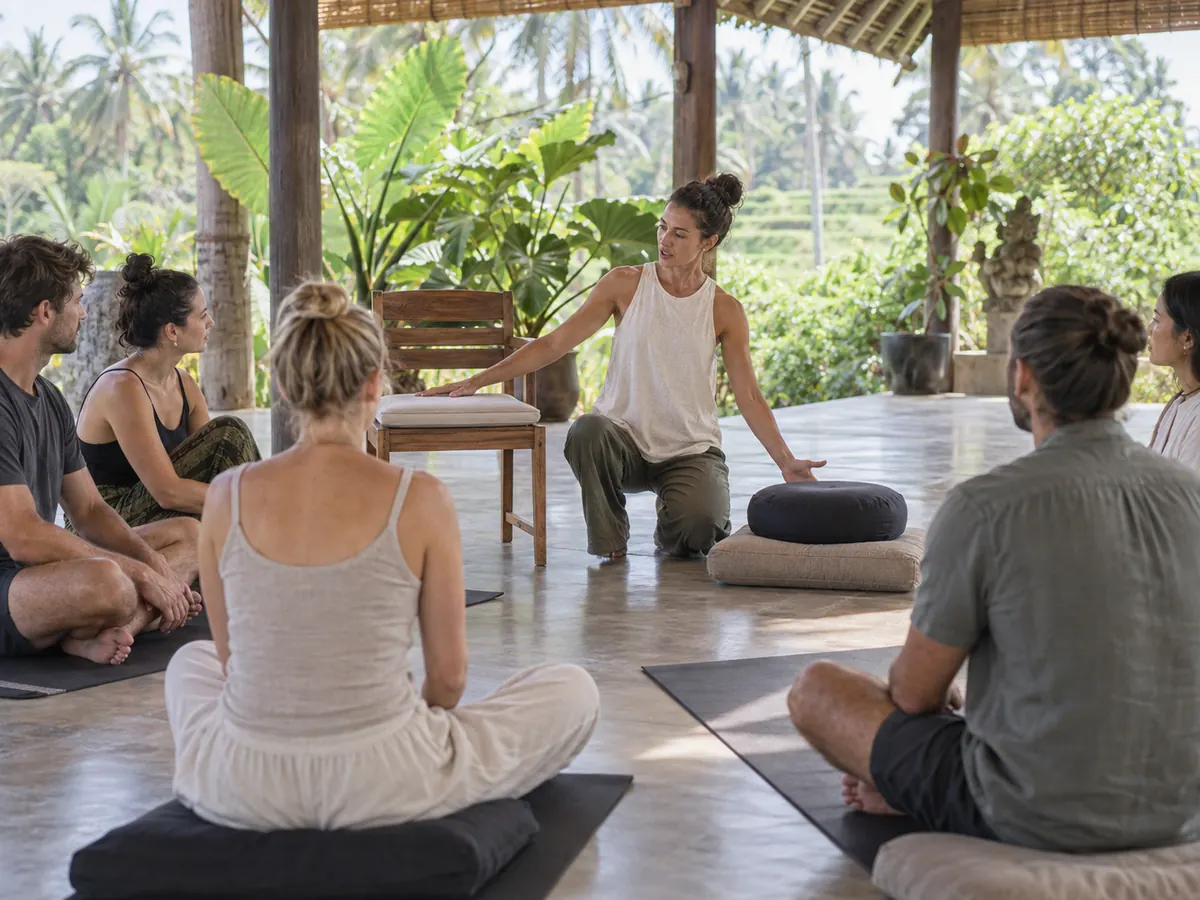
You may be seated on a chair or cushion, lying down or moving gently. The correct position depends on the actual technique and your comfort, so no single posture should be assumed before the facilitator explains it.
The facilitator may demonstrate the pattern before asking the group to follow. Listen for whether breathing is through the nose or mouth, whether the pace changes and whether any pauses are involved.
You remain responsible for communicating. If the instructions are unclear, ask. If you feel uncomfortable, return to ordinary unforced breathing, pause and notify the facilitator.
A closing period may allow breathing to settle before standing, walking or moving into the next activity. The exact YogaFX sequence should come from the coach leading that intake, not from a generic online script.
Do You Need Previous Breathwork or Yoga Experience?
No previous breathwork or advanced yoga experience is required to apply. A beginner should not be expected to recognise technique names or copy a breathing rhythm without explanation.
Tell the team if you are new, have found breathing exercises uncomfortable before or need a chair rather than extended floor sitting. Ask how to signal discreetly if you want to stop.
Beginner-friendly means instructions and expectations should be clear. It does not guarantee that every technique, posture, heat session or excursion will suit every health circumstance.
The guide to yoga retreats in Bali for beginners covers movement, heat exposure, mobility and the wider application process.
Choosing a Comfortable Pace for Your Practice
Breathwork is not a competition. Stronger sensations, longer breath holds or a more emotional response do not prove that someone is doing better work.
Stay attentive to how the practice feels rather than comparing yourself with the person beside you. A group may contain people with very different experience, lung capacity, stress levels and comfort with inward attention.
Fast or unusually deep breathing can produce tingling, dizziness, faintness, headache, chest sensations or a feeling of breathlessness. Guy's and St Thomas' NHS Foundation Trust explains these possible effects in its guidance on breathing patterns.
Pause, return to normal breathing and tell the facilitator if symptoms appear. New, severe or persistent symptoms may require medical assessment rather than an attempt to continue the session.
What to Discuss Before Joining
Suitability depends on the technique. Quiet breath awareness is different from rapid breathing, extended breath holding or an emotionally intensive practice.
Ask a healthcare professional who knows your history if you have respiratory or cardiovascular disease, seizures, fainting, uncontrolled blood pressure, recent surgery, pregnancy, panic attacks or another concern that breathing practices may affect.
Disclose medication and relevant physical or mental health history during application. Do not stop or change prescribed medication to take part.
Cleveland Clinic's beginner's breathwork overview notes that methods differ and describes intensive holotropic practice as something not to attempt without a trained facilitator.
YogaFX is a wellness and educational retreat, not respiratory therapy, psychotherapy, trauma treatment or medical care. For a fuller but still non-clinical explanation, read understanding nervous system regulation.
How to Prepare for Your Retreat Sessions
Bring comfortable clothing that does not restrict the ribcage or abdomen. Layers are useful because a quiet session can feel cooler than active yoga.
Ask whether you will sit on the floor, use a chair, lie down or move. Confirm which mats, cushions, bolsters, blankets and eye coverings are supplied rather than carrying unnecessary equipment.
Follow the YogaFX team's preparation instructions for food, hydration and timing. Do not arrive after using alcohol or recreational drugs, and do not invent fasting requirements that the programme has not provided.
Keep the facilitator informed about pain, limited mobility, reflux, nasal obstruction or anxiety around lying down or closing your eyes. A practical adjustment is easier to discuss before a session begins.
Beyond the Session: Rest and Reflection at YogaFX Retreats
A breathing session is not the whole retreat. The private North Bali programme places it alongside accommodation, chef-prepared Cellular Cleanse Nutrition, yoga, somatic movement, workshops, heat and hydrotherapy, Balinese cultural experiences, sound healing and nature immersion.
Rest and reflection give participants space to notice what was useful without forcing an interpretation. Journalling may capture simple observations such as comfort, energy, questions or a practice worth discussing again.

Shared meals, quiet transitions and sleep are part of the programme rhythm rather than empty time between headline activities. See what your retreat includes for the current published categories.
Featured Breathwork and Wellness Retreat in Bali
YogaFX Retreats
- Date: January 31 to February 4, 2027, with check-in from 2 pm on Day 1
- Venue: private North Bali sanctuary, maximum 20 guests per intake
- Description: six-day structured wellness and burnout reset combining breathwork, yoga, somatic practice, workshops, recovery experiences, culture and nature
- Cost: single occupancy $3,799 USD, or $3,499 early bird; twin share $2,799 per person, or $2,499 early bird
- Booking: a $500 deposit is requested after acceptance; the balance is due 60 days before Day 1; four monthly instalments are available
- Website: view the official programme
Questions to Ask Before Booking a Breathwork and Yoga Retreat
- Which breathing techniques will this intake use?
- Who facilitates each session, and what relevant training do they have?
- How large is the group?
- How long and how intense is each breathing practice?
- Will guests sit, lie down, stand or move?
- Are breath holds, rapid breathing or mouth breathing involved?
- How can someone pause, opt out or request an adjustment?
- Which props and equipment are supplied?
- What health information should be disclosed before acceptance?
- What accommodation, meals, transfers and activities are included?
A trustworthy answer should describe the actual intake. Broad phrases such as healing breathwork or nervous-system reset do not replace technique, facilitator and safety details.
Explore Breathwork and Yoga with YogaFX Retreats
This programme may suit beginners and experienced practitioners who want breathing and yoga inside a wider, structured retreat rather than as a standalone intensive.
Before reserving, compare the programme, itinerary and inclusions. Then ask the team to confirm the current breathing method, facilitator, duration, intensity and available comfort options.
A breathwork and yoga retreat in Bali should give you clear instructions, a comfortable way to participate and honest information about the exact practices before you book.