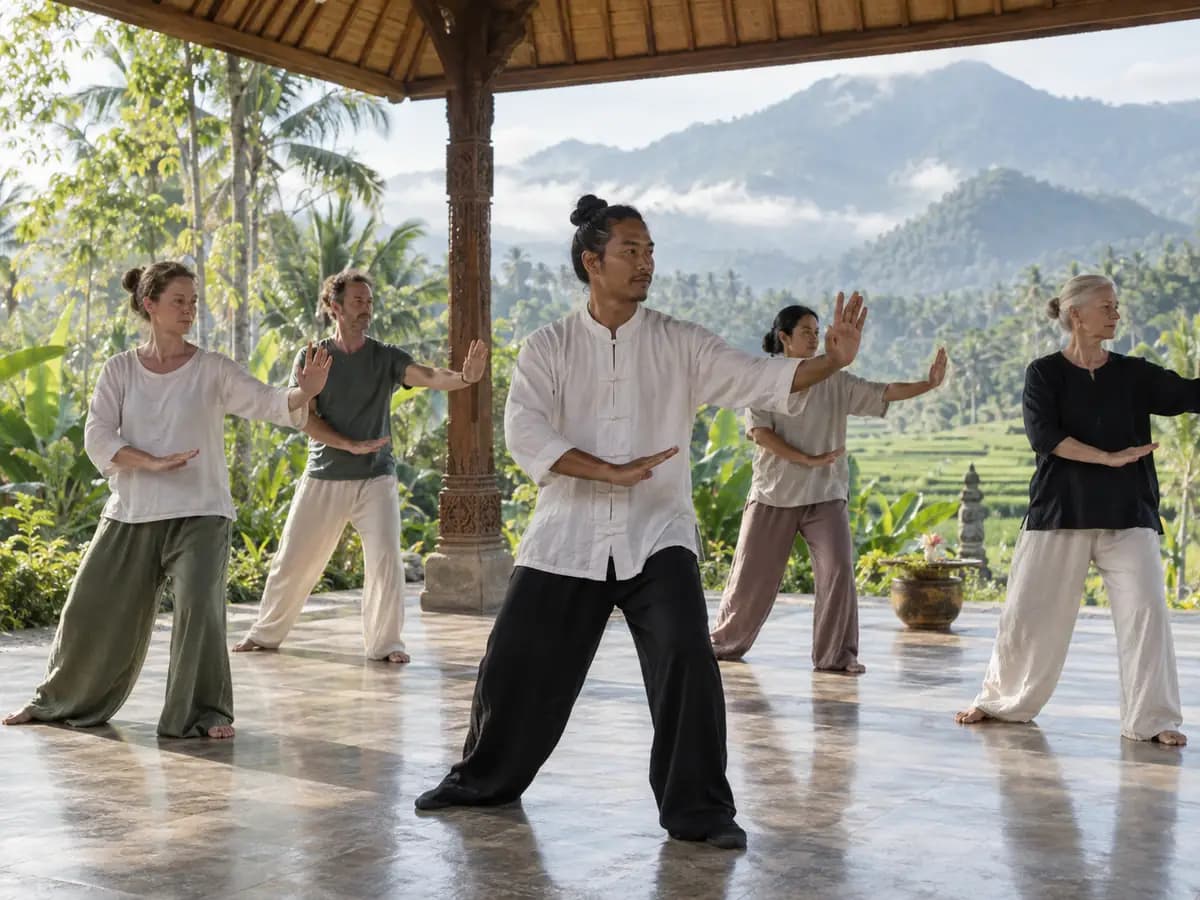
A Tai Chi retreat in Bali gives beginners time to learn slow, coordinated movement, breathing and attention without previous experience. At YogaFX, Tai Chi is one part of a six-day reset, combined with yoga, somatic work, recovery practices and integration.
Tai Chi retreats in Bali often offer beginner-friendly programmes blending gentle movement, meditation and, at some specialist retreats, Qigong in mountain, village or rice-field settings.
What to Expect From a Tai Chi Retreat in Bali
- Pacing: Gentle, low-impact movements focus on balance, deep breathing and structural alignment rather than martial-arts combat.
- Environment: Quiet natural settings may include misty mountains, waterfalls, tropical gardens or rice fields.
- Inclusions: Multi-day programmes commonly combine accommodation and meals with meditation, massage, spa experiences or other wellness activities.
Inclusions differ between providers. Confirm whether Qigong is taught, whether meals are fully vegetarian and which treatments cost extra before booking.
YogaFX confirms Tai Chi within its programme but does not currently list Qigong as a separate scheduled modality.
You Don't Need Experience, and Why That Matters
Tai Chi can look effortless, but its coordination may feel unfamiliar at first.
A beginner-friendly session introduces one movement at a time, uses clear demonstrations and leaves room for questions.
YogaFX requires no advanced yoga or Tai Chi experience.
The goal is not a perfect shape. It is to notice balance, weight transfer, breath and unnecessary effort.
Slow practice still has physical demands. Guests should disclose injuries, balance concerns and mobility needs before attending.
Tai Chi's Role in the Reset
Tai Chi sits within the Reboot Your Body pillar of the YogaFX programme.
Its measured pace counters stronger yoga, heat exposure and the urgency many professionals bring into the retreat.
Guests practise moving with less excess tension and more deliberate attention rather than chasing intensity.
This is wellness education, not medical rehabilitation or treatment for burnout, pain or neurological conditions.
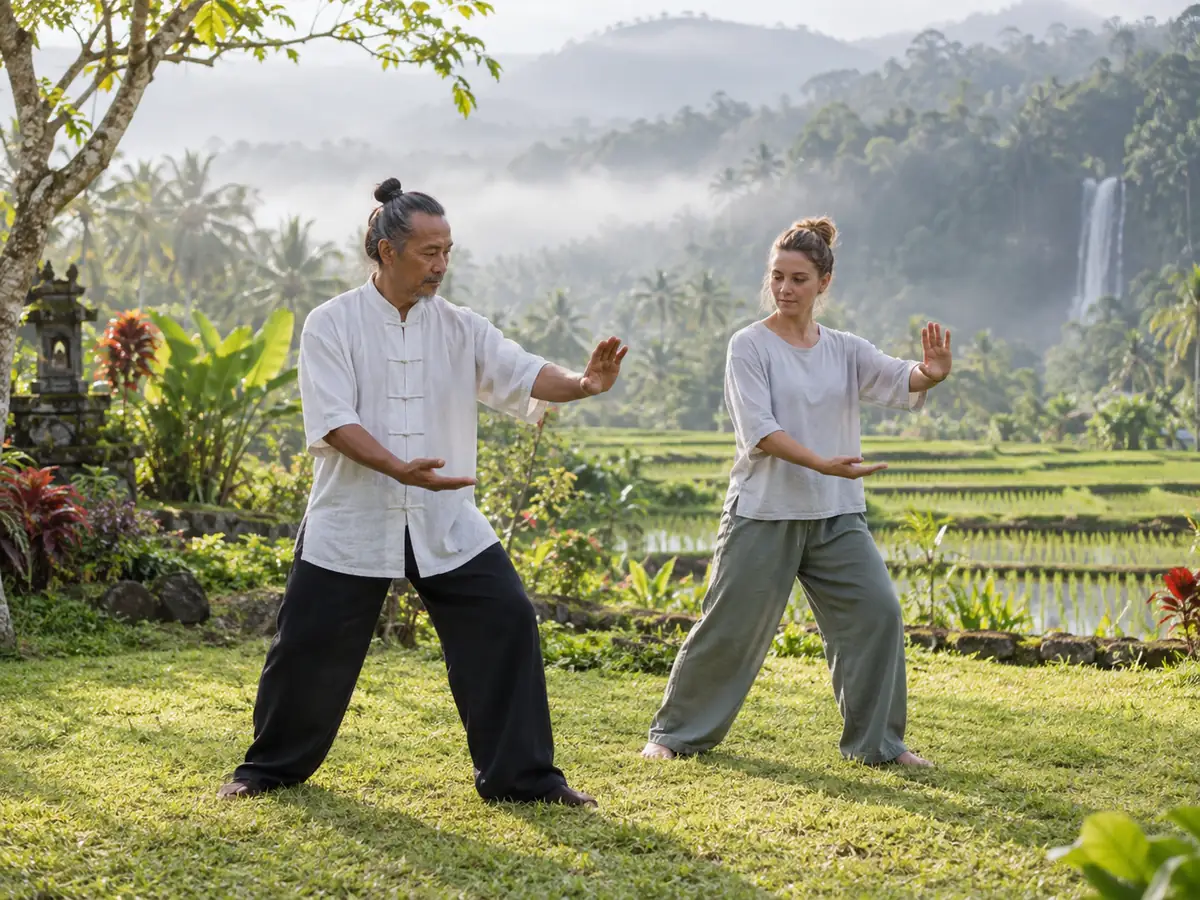
What a Beginner's First Session Looks Like
| Stage | What happens | What to notice |
|---|---|---|
| Arrival | Easy stance and breathing | Contact with the ground |
| Learning | One slow pattern | Weight transfer |
| Repetition | Short guided sequence | Breath and tension |
| Closing | Pause and reflect | How effort changed |
Instructions remain simple enough for curiosity instead of anxiety about memorising a long form.
Guests may pause or request a modification. Completing every movement is not a commitment test.
Why Combine Tai Chi With Yoga?
Tai Chi and yoga are distinct traditions, not interchangeable versions of mindful movement.
Tai Chi commonly emphasises continuous standing transitions and weight transfer.
Yoga may include held postures, floor work, mobility, breathing and stronger heat-based practice.
Combining both lets guests explore different relationships with pace, stability, effort and attention.
The schedule also includes rest, nutrition, hydrotherapy, nature, workshops and sound healing.
Who Is This Tai Chi Retreat For?
This format can suit beginners, yoga practitioners and professionals who find completely unstructured rest difficult.
It may suit couples or friends who want a shared retreat without identical movement experience.
Anyone seeking intensive Tai Chi lineage training or long-form practice should choose a specialist programme.
Pricing and How to Apply
Single occupancy is $3,799 USD, with an early-bird rate of $3,499 USD.
Twin share is $2,799 USD per person, with an early-bird rate of $2,499 USD per person.
A $500 USD deposit is requested after application acceptance. Four-installment plans are available.
Review the complete inclusions and six-day itinerary before applying.
A Tai Chi retreat in Bali can welcome beginners when instruction values attention, choice and steady learning over performance.